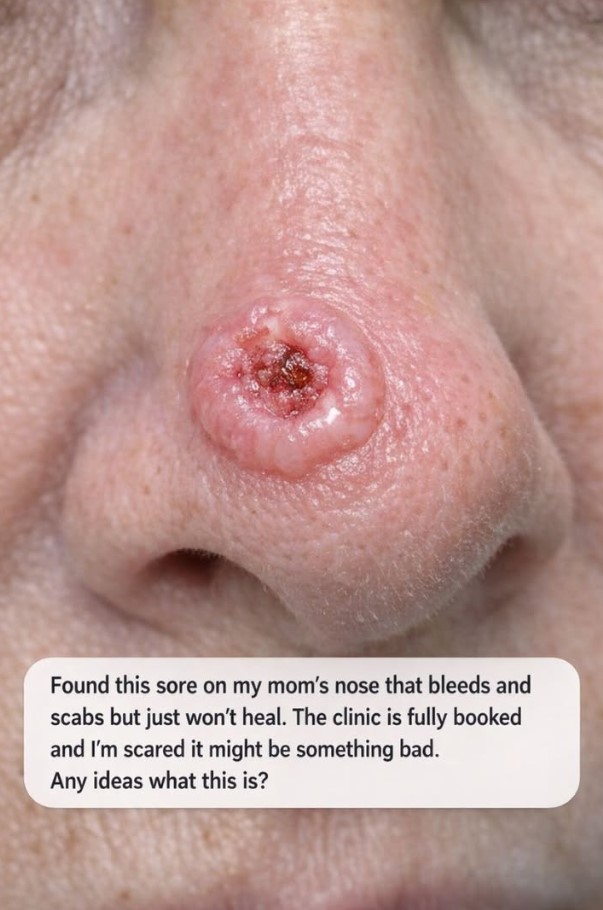
Discovering a sore on a loved one’s nose that repeatedly bleeds, forms a scab, and refuses to heal can be very worrying. At first, it might seem like a minor skin issue—something caused by dryness, irritation, or a small injury. But when the same spot keeps coming back or never fully heals, it’s natural to start thinking that something more serious could be going on.
The nose is particularly vulnerable because it is constantly exposed to sunlight, weather changes, and physical contact. Because of this, both harmless and more concerning conditions can appear in this area. The key is understanding the difference between something temporary and something that needs medical attention.
While it’s not possible to diagnose the exact cause without a doctor, certain patterns—like repeated bleeding, scabbing, and failure to heal—are important signals that shouldn’t be ignored.
Common Causes of a Non-Healing Nose Sore
1. Minor Irritation or Injury
Sometimes, a sore on the nose can come from something simple like:
- Scratching or picking the skin
- Dry or cracked skin
- A small cut or irritation
These types of sores usually heal within days or a couple of weeks. If they keep reopening or don’t improve, something else may be causing it.
2. Infection or Skin Irritation
Bacterial infections or inflamed skin can also lead to sores that crust and bleed. These may:
- Form scabs repeatedly
- Feel tender or irritated
- Take longer than usual to heal
Infections often improve with proper care, but persistent cases still need evaluation.
3. A Warning Sign: Skin Cancer (Basal Cell Carcinoma)
One of the most important possibilities doctors consider with a non-healing, bleeding sore on the nose is a type of skin cancer called basal cell carcinoma.
This is actually the most common form of skin cancer, and it often appears on sun-exposed areas like the face and nose.
Typical warning signs include:
- A sore that does not heal
- A spot that bleeds easily and forms a scab
- A lesion that heals and then comes back again
- A shiny bump, patch, or open sore on the skin
In many cases, people mistake it for a small cut, pimple, or irritation at first because it develops slowly. However, the key difference is that it persists over time instead of healing normally.
Why This Shouldn’t Be Ignored
Even though basal cell carcinoma usually grows slowly, it still needs medical treatment. If left untreated, it can:
- Spread into nearby skin and tissue
- Cause damage to the nose structure
- Become more difficult to treat later
The good news is that when caught early, it is highly treatable.
What You Can Do Right Now
While waiting for a clinic appointment, here are some safe steps:
1. Keep the Area Clean
Gently wash with mild soap and water to prevent irritation.
2. Avoid Picking or Scratching
This can cause more bleeding and delay healing.
3. Protect the Skin
Try to avoid sun exposure on the area, as sunlight can worsen certain conditions.
4. Monitor Changes
Pay attention to:
- Growth in size
- Increased bleeding
- Changes in color or shape
When It’s More Urgent
Try to seek medical care sooner (urgent care if needed) if you notice:
- The sore keeps coming back in the same spot
- It bleeds frequently or easily
- It’s been present for several weeks without healing
- It starts to grow or change appearance
These are important warning signs that should be checked as soon as possible.
Conclusion :
A sore on the nose that repeatedly bleeds, scabs, and refuses to heal is not something to ignore. While it can sometimes be caused by simple irritation or infection, it may also be an early sign of a more serious condition like basal cell carcinoma—especially when it persists over time.
What makes this situation concerning is the pattern: healing slightly, then reopening again. That cycle is one of the most important clues that the skin isn’t recovering normally. The nose, being highly exposed to the sun, is a common place for these types of issues to develop.
The reassuring part is that many of these conditions, even the more serious ones, are very treatable when caught early. The most important step is not to delay evaluation for too long. In the meantime, gentle care and close monitoring can help prevent further irritation.
In the end, your concern is valid—this is exactly the kind of symptom that deserves attention. Getting it checked when possible is the best way to ensure your mom stays safe and gets the right treatment if needed.