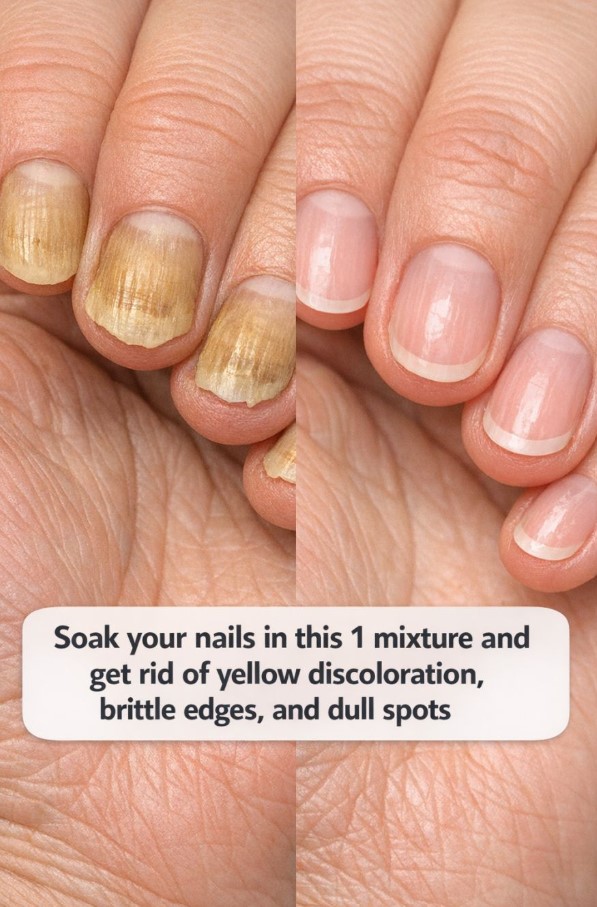
Yellow discoloration, brittle edges, and dull-looking nails are common concerns that many people notice over time. These changes can be frustrating, especially when nails stop looking smooth, clean, and healthy. In most cases, this isn’t a serious problem—it’s usually linked to everyday habits like frequent nail polish use, exposure to chemicals, or dryness.
Because of this, many people turn to simple home nail soaks made from ingredients like lemon juice, baking soda, vinegar, or hydrogen peroxide. These DIY methods are popular because they’re easy, inexpensive, and use common household items.
However, while these mixtures may help improve the appearance of nails, it’s important to understand what they can—and cannot—do.
Why Nails Become Yellow or Brittle
Nail discoloration and weakness can happen for several reasons:
- Frequent use of dark nail polish
- Harsh nail polish removers
- Dryness or dehydration
- Repeated exposure to water and cleaning chemicals
- Minor fungal or bacterial issues in some cases
Experts note that pigments from nail polish can gradually stain the nail surface, especially without a protective base coat. Over time, this can make nails look yellow or dull.
Brittle or weak nails may also develop when nails lose moisture or are exposed too often to harsh products.
Common “Soak” Mixtures People Use
1. Lemon Juice Soak
Lemon juice is often used because it acts as a natural brightening agent.
Typical method:
- Mix lemon juice with warm water
- Soak nails for 10–15 minutes
- Rinse and moisturize afterward
Lemon contains natural acids that may help reduce surface stains on nails.
2. Baking Soda Paste or Soak
Baking soda is another popular option because it gently exfoliates the nail surface.
Common use:
- Mix baking soda with water or lemon juice
- Apply as a paste or soak briefly
- Gently scrub and rinse
It is often used to help lift surface discoloration.
3. Hydrogen Peroxide Soak
Hydrogen peroxide is known for its lightening effect and is sometimes used for stained nails.
Typical method:
- Mix diluted hydrogen peroxide with warm water
- Soak nails for a few minutes
- Rinse and moisturize
It is commonly included in DIY nail-whitening routines for surface staining.
4. Vinegar Soak
Diluted vinegar (white or apple cider) is also used by some people.
- Usually mixed with water
- Nails are soaked briefly
- Followed by rinsing and moisturizing
Important Things to Know Before Trying These Mixtures
While these remedies are popular, they should be used carefully:
- They may dry out nails if used too often
- They work mainly on surface stains, not deep nail damage
- Sensitive skin may react to acidic ingredients
- Overuse can make nails more fragile instead of stronger
Dermatology sources often emphasize that nail health improves most with consistent care, protection, and allowing new nail growth rather than quick fixes.
Better Long-Term Nail Care Habits
Instead of relying only on soaks, these habits help nails recover more effectively:
- Use a base coat before nail polish
- Give nails breaks between polish applications
- Moisturize nails and cuticles regularly
- Wear gloves when cleaning or using chemicals
- Avoid over-filing or harsh buffing
These small changes often make a bigger difference than any single DIY treatment.
When Nail Changes Should Be Checked
Sometimes nail discoloration or brittleness can signal something more than cosmetic issues. It’s best to get checked if:
- Discoloration spreads or worsens
- Nails become thick or painful
- There is separation from the nail bed
- No improvement over time
Persistent changes may need medical attention to rule out infection or other underlying conditions.
Conclusion :
Soaking nails in simple mixtures like lemon juice, baking soda, vinegar, or diluted hydrogen peroxide can help improve the surface appearance of yellow or dull nails. These remedies are popular because they are easy and affordable, and they may gently lift stains caused by polish or everyday wear.
However, they are not instant fixes, and they don’t replace proper nail care habits. Healthy nails depend more on protection, moisture, and allowing time for natural growth than on quick treatments.
In the end, the best approach is a balance: gentle home care, smart nail habits, and patience. Over time, nails usually grow out stronger, clearer, and healthier on their own.