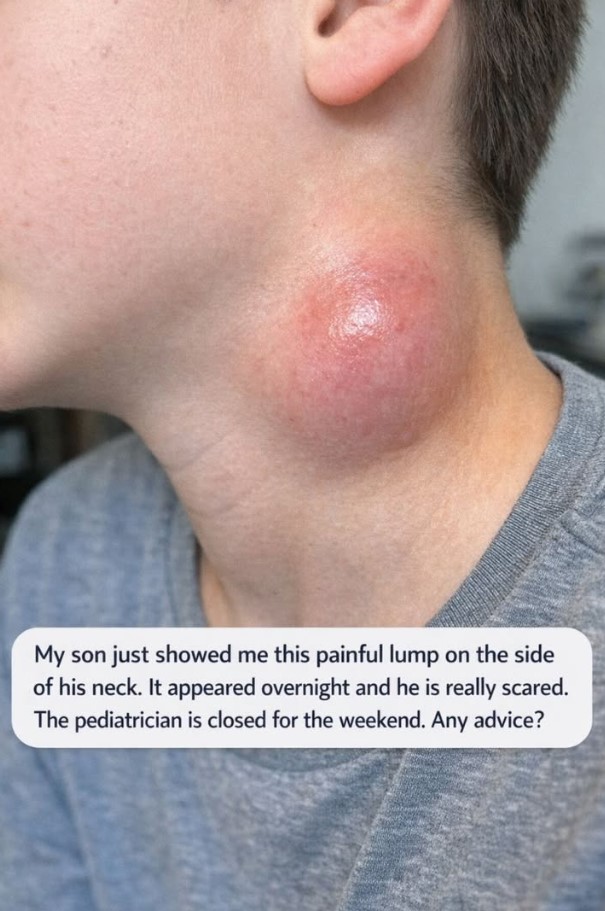
Finding a sudden, painful lump on a child’s neck can be very frightening—especially when it seems to appear overnight. It often leads to worry about infections, swelling, or more serious conditions, and when a pediatrician isn’t immediately available, the anxiety can grow quickly.
In many cases, however, a fast-forming neck lump in children is related to swollen lymph nodes, which are part of the body’s immune system. These nodes can become enlarged very quickly when the body is fighting off an infection. Health sources confirm that swollen lymph nodes are one of the most common causes of neck lumps in children and are often linked to minor infections.
Still, because neck lumps can have different causes, it’s important to understand what might be happening and what signs to watch for.
What a Sudden Neck Lump Usually Means
The most common explanation for a painful lump on the side of the neck is a swollen lymph node.
Lymph nodes are small immune “filters” found throughout the body. When the body detects an infection—such as a cold, sore throat, or ear infection—these nodes can swell and become tender.
In children, this reaction can sometimes appear quickly, even within hours, which is why it may seem like the lump “came out of nowhere.”
Why It Can Appear Overnight
A neck lump can seem sudden because:
- The immune system reacts quickly to infection
- A recent virus or sore throat may have gone unnoticed
- Swelling becomes more visible after inflammation builds
- The area may become tender before any other symptoms show
Even if the child was feeling fine earlier, the immune response can develop rapidly once the body starts fighting an infection.
Common Causes in Children
Most neck lumps in children are not dangerous. Common causes include:
1. Viral or bacterial infections
- Colds
- Sore throat
- Ear infections
- Minor respiratory infections
These are the most frequent triggers.
2. Local irritation or minor injury
A small cut, scratch, or skin infection near the head or neck can cause nearby lymph nodes to swell.
3. Less common causes
Rarely, persistent or unusual lumps may be linked to:
- Chronic infections
- Cysts
- Other medical conditions
But these are much less common compared to simple infections.
Signs That Usually Suggest a Swollen Lymph Node
A typical reactive lymph node often feels:
- Soft or rubbery
- Slightly tender or painful
- Movable under the skin
- Located on one side of the neck
It may also come with mild fever, fatigue, or recent illness symptoms.
When It’s More Important to Get It Checked
Even though most cases are harmless, medical evaluation is recommended if you notice:
- The lump is growing quickly
- Severe or worsening pain
- Hard, fixed lump that doesn’t move
- High fever or child looks very unwell
- The lump lasts longer than a couple of weeks
- Trouble swallowing or breathing
Doctors often check size, firmness, and duration to decide if further testing is needed.
What You Can Do While Waiting for a Doctor
If the child is otherwise stable, supportive care may include:
- Monitoring the size of the lump
- Checking for fever or sore throat
- Encouraging rest and fluids
- Avoiding pressing or repeatedly touching the lump
- Using mild pain relief if advised by a healthcare provider
Avoid trying to massage or squeeze the lump, as this can increase irritation.
Conclusion :
A painful neck lump that appears suddenly in a child is understandably worrying, but in most cases, it is caused by a swollen lymph node reacting to a common infection. These nodes can enlarge quickly as the immune system responds, which makes the lump seem like it appeared overnight.
While most cases are not serious and improve on their own, it’s still important to watch for warning signs like rapid growth, persistent pain, or unusual hardness. If anything feels concerning or the lump does not improve, medical evaluation is always the safest step.
In the end, the body’s immune system is often the reason behind these sudden changes—and in children, it is usually doing exactly what it is supposed to do: protecting them.