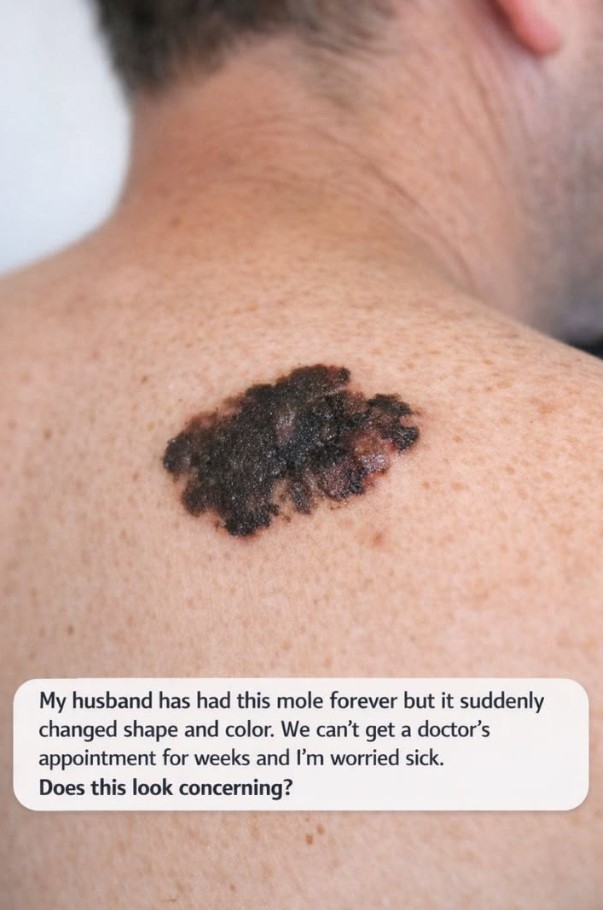
Noticing a change in a mole—especially one that has been present for years—can be very unsettling. When a mole suddenly starts changing shape, darkening, or developing uneven colors, it naturally raises concern and often leads people to wonder if something serious is happening.
Most moles are harmless, and many people have between 10 and 40 moles on their body that remain stable throughout life. However, medical experts emphasize that changes in a mole’s appearance are one of the most important warning signs to pay attention to, because they can sometimes indicate abnormal skin growth.
The key is not to panic—but to understand what changes matter and when it’s important to seek medical advice.
Why Moles Can Change Over Time
Moles are clusters of pigment-producing cells in the skin. While many remain stable, some can naturally change slightly with age, sun exposure, or hormonal shifts.
However, certain changes deserve closer attention because they may indicate abnormal cell activity.
Doctors often use a simple guide called the ABCDE rule to evaluate suspicious moles:
- A – Asymmetry (one half looks different from the other)
- B – Border (edges become irregular or blurred)
- C – Color (multiple shades or uneven coloring)
- D – Diameter (growth larger than about 6 mm or increasing size)
- E – Evolving (any noticeable change over time)
Among these, “Evolving” is considered one of the most important warning signs, especially when changes happen quickly.
What “Sudden Change” Might Look Like
A mole that is becoming concerning may show signs such as:
- Rapid change in shape
- Darkening or multiple colors appearing
- Irregular or jagged edges
- Becoming raised or thicker
- Itching, tenderness, or occasional bleeding
A key warning sign doctors mention is when a mole looks different from others on the body or clearly changes over weeks or months.
Common Causes (Not Always Cancer)
It’s important to remember that not all changing moles are dangerous. Some harmless causes include:
- Normal aging of the skin
- Sun exposure over time
- Minor irritation from clothing or shaving
- Hormonal changes
- Benign skin growths that resemble moles
Even experienced doctors sometimes need a close examination or biopsy to confirm what a changing mole actually is.
When a Mole Should Be Checked Quickly
You should try to get medical advice sooner rather than later if:
- The mole changes quickly in size, shape, or color
- It starts bleeding without injury
- It becomes painful or crusted
- It looks very different from other moles
- It continues changing over a short period
Experts strongly recommend checking any mole that shows these kinds of changes rather than waiting for it to settle on its own.
What You Can Do While Waiting for an Appointment
If a doctor’s visit is delayed, the safest approach is:
- Take clear photos of the mole for comparison
- Avoid scratching or irritating the area
- Monitor it for further changes
- Note when the changes first started
- Watch for any new symptoms like bleeding or pain
This helps the doctor understand how quickly the mole is changing once it is evaluated.
Conclusion :
A mole that suddenly changes shape or color should always be taken seriously, but it does not automatically mean something dangerous is happening. Many skin changes are harmless, but because some can be linked to abnormal growth, it’s important to pay attention.
Medical guidelines consistently highlight that changes in size, shape, color, or appearance—especially rapid changes—are the key warning signs to watch for.
The most important step is simple: don’t ignore it. Document the change, monitor it closely, and have it checked by a healthcare professional as soon as possible.
In the end, early attention is the safest approach when it comes to changing moles, because when skin issues are caught early, they are much easier to evaluate and manage.