Waking up to something unusual on your body can be unsettling—but when it looks painful, swollen, and clearly out of the ordinary, it’s even more alarming. A red, cord-like vein that feels warm and tender isn’t something most people see every day, and it’s completely normal to feel worried—especially if medical care isn’t immediately available.
If your grandfather (or anyone) suddenly develops a vein that looks raised, inflamed, and painful to the touch, it’s important to take it seriously—but not panic. While this kind of symptom can look dramatic, the cause is often something identifiable and manageable.
That said, it can sometimes signal a condition that needs medical evaluation sooner rather than later. Understanding what this might be—and how urgent it is—can help you make the right decision.
What This Symptom Most Likely Is
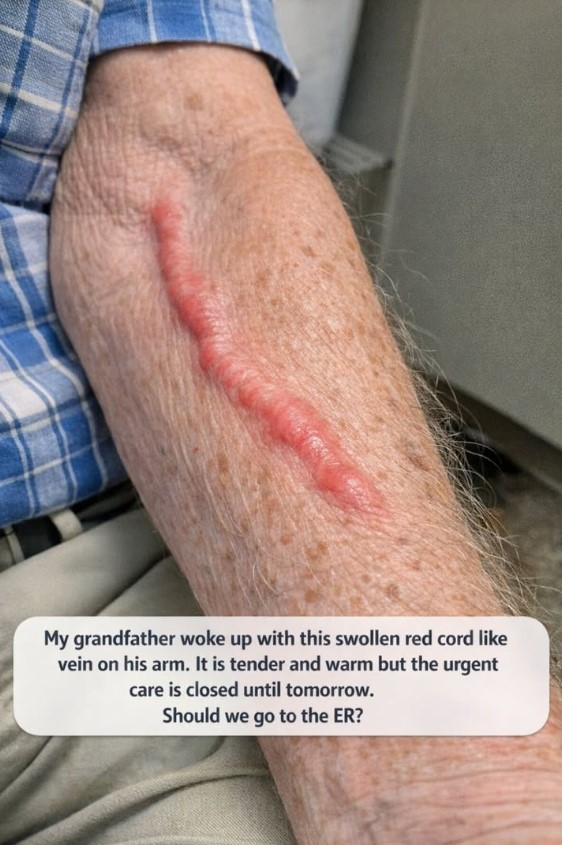
A swollen, red, cord-like vein that is warm and tender is most commonly associated with a condition called superficial thrombophlebitis.
This condition happens when a blood clot forms in a vein close to the surface of the skin, causing inflammation.
It often appears exactly as described:
- A red or discolored line following a vein
- A firm, cord-like feeling under the skin
- Warmth, tenderness, and pain
- Sometimes mild swelling around the area
It can occur in the legs more often, but it can also happen in the arms, especially after irritation, injury, or even something like an IV line.
Why It Happens
Superficial thrombophlebitis is usually caused by a blood clot combined with inflammation in the vein.
Common triggers include:
- Minor injury to the vein
- Reduced movement (long periods of inactivity)
- Recent medical procedures (like IVs or injections)
- Underlying circulation issues
Sometimes, it can even appear without a clear cause.
Is It Dangerous?
Here’s the important part:
Most cases of superficial thrombophlebitis are not life-threatening.
They often improve with simple care and resolve within a few weeks.
However, it’s not something to ignore completely—because in some cases, it can be linked to deeper clots.
A more serious condition called deep vein thrombosis (DVT) involves clots in deeper veins and carries higher risks.
Warning Signs That Make It More Urgent
Even if urgent care is closed, you should seek emergency help immediately if any of the following appear:
- Sudden shortness of breath
- Chest pain
- Coughing up blood
- Severe swelling of the entire arm
- Rapid worsening of pain or redness
These could indicate a clot traveling to the lungs (a medical emergency).
What You Can Do Right Now (Until Medical Care Is Available)
If the symptoms are limited to a localized red, tender vein and there are no emergency signs, you can take some safe, supportive steps:
1. Apply Warm Compresses
Gently placing a warm (not hot) compress on the area can help reduce discomfort and improve circulation.
2. Keep the Arm Elevated
Raising the arm slightly can help reduce swelling.
3. Encourage Gentle Movement
Light movement (not strain) can help blood flow and prevent stiffness.
4. Avoid Pressure on the Area
Try not to press, massage, or irritate the vein—it can make inflammation worse.
5. Monitor Closely
Keep an eye on:
- Size of the redness
- Level of pain
- Any spreading
If things worsen, don’t wait—seek care sooner.
What a Doctor Will Likely Do
When medical care is available, a doctor may:
- Examine the vein physically
- Possibly order an ultrasound (to rule out deeper clots)
- Recommend anti-inflammatory medication
- In some cases, prescribe blood thinners
Treatment depends on whether the clot is superficial or involves deeper veins.
Why It Feels So Scary
The appearance of this condition can be dramatic—especially the “cord-like” vein under the skin.
That visual alone often makes people think something is about to burst or that it’s immediately dangerous.
But in reality, that “cord” is usually a firm, inflamed vein caused by a clot, which is a known and treatable condition.
A Balanced Perspective
It’s important to strike the right balance:
- ❌ Don’t ignore it
- ❌ Don’t panic immediately
- ✅ Take it seriously
- ✅ Monitor symptoms carefully
- ✅ Seek medical advice as soon as possible
Even when it’s not an emergency, it still deserves proper evaluation.
The Bottom Line
A swollen, red, tender, cord-like vein in the arm is most commonly a sign of superficial thrombophlebitis—a condition involving inflammation and a small clot in a surface vein.
While it often isn’t dangerous and can improve with simple care, it should still be checked by a healthcare professional—especially if symptoms change or worsen.
If urgent care is closed, you can safely monitor and manage symptoms overnight as long as there are no severe warning signs. But don’t delay getting it checked the next day.
Conclusion :
Seeing a painful, swollen vein appear suddenly can be frightening, especially when it looks severe and medical help isn’t immediately available. But in many cases, this symptom has a known and manageable cause.
The key is awareness—knowing what’s normal, what’s not, and when to act. Most importantly, trust your judgment: if something feels wrong or symptoms escalate, it’s always better to err on the side of caution.
Because when it comes to possible blood clots, staying informed—and acting at the right time—can make all the difference.