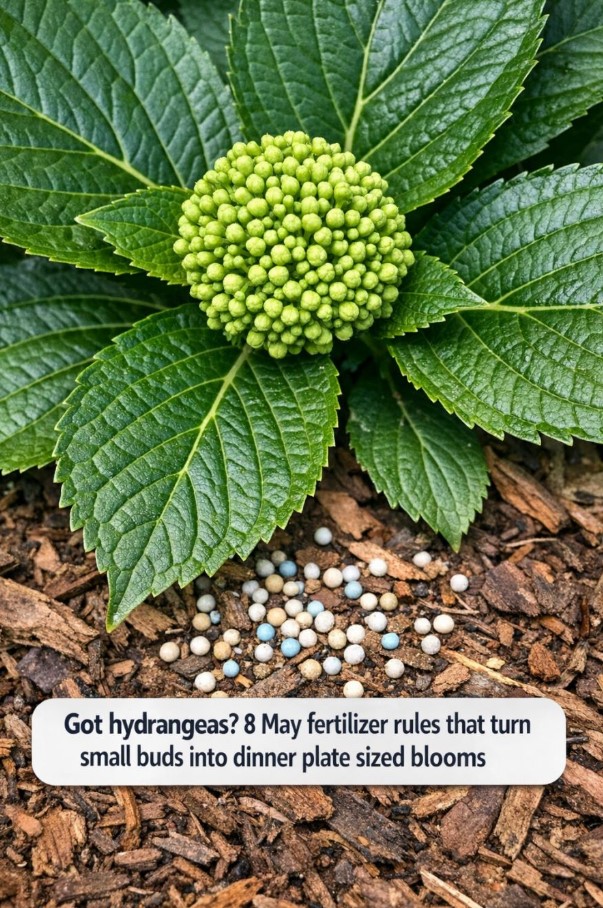
Hydrangeas are one of the most stunning flowering shrubs you can grow in a garden. Their oversized blooms, rich colors, and full leafy structure make them a favorite for borders, hedges, and decorative landscapes. But while hydrangeas look impressive when they’re healthy, many gardeners struggle with small flowers, weak buds, or plants that produce more leaves than blooms.
The truth is that hydrangeas are highly responsive to care — especially during spring. What you do in May plays a major role in how big and beautiful your summer flowers will be. Fertilizing at the right time, with the right balance of nutrients, can dramatically influence bloom size, strength, and overall plant health. Experts note that proper feeding in early growth stages supports stronger stems and better flowering later in the season.
However, hydrangeas are also sensitive plants. Over-fertilizing, using the wrong nutrient balance, or feeding at the wrong time can actually reduce flowering. Too much nitrogen, for example, encourages leafy growth at the expense of blooms.
In this article, we’ll break down 8 essential fertilizer rules for May that can help transform small hydrangea buds into large, healthy, dinner-plate-sized flowers throughout summer.
1. Feed Early in the Active Growth Phase
May is a key month because hydrangeas are transitioning into active growth and preparing flower buds. This is the ideal time to give them a nutrient boost.
A balanced slow-release fertilizer helps support both root development and flower formation. Many gardening experts recommend formulas like 10-10-10 or similar balanced blends for steady, controlled feeding.
Feeding too early (while soil is still cold) or too late (when buds are fully formed) can reduce effectiveness, so timing is everything.
2. Use Balanced Fertilizer — Not High Nitrogen
One of the most common mistakes gardeners make is using fertilizer that is too rich in nitrogen. While nitrogen encourages leafy growth, it can actually reduce blooming.
Hydrangeas need a balance of:
- Nitrogen for stems and leaves
- Phosphorus for flower development
- Potassium for overall plant strength
A balanced fertilizer ensures the plant doesn’t focus only on greenery but also produces strong flower buds.
3. Avoid Over-Fertilizing
More fertilizer does NOT mean more flowers. In fact, overfeeding can stress hydrangeas and lead to fewer blooms.
Research shows that excessive nutrients, especially nitrogen, often cause lush leaves but poor flowering performance.
A light, controlled application is always better than frequent heavy feeding.
4. Choose Slow-Release Fertilizer for Steady Growth
Slow-release fertilizers are ideal because they provide nutrients gradually over several weeks or months. This helps avoid sudden growth spikes that can weaken the plant.
These fertilizers also reduce the risk of nutrient burn and help maintain consistent growth throughout the blooming season.
For hydrangeas, consistency is more important than intensity.
5. Water Before and After Feeding
Hydrangeas absorb nutrients best when soil is moist. Applying fertilizer to dry soil can damage roots or reduce nutrient uptake.
Before fertilizing:
- Water the plant lightly
- Apply fertilizer evenly around the base (not directly on stems)
- Water again to help nutrients soak into the soil
This simple step improves absorption and prevents fertilizer burn.
6. Focus on Root Health, Not Just Blooms
Strong flowers start with strong roots. Fertilizer doesn’t just influence blooms — it supports the entire plant structure.
Healthy roots help hydrangeas:
- Absorb water efficiently
- Resist heat stress
- Support larger flower heads
- Grow stronger stems that don’t droop easily
Without strong roots, even well-fed plants may produce weak blooms.
7. Don’t Fertilize Too Late in the Season
One important rule many gardeners overlook is stopping fertilizer at the right time.
Feeding too late in the growing season can encourage tender new growth that is vulnerable to stress and may not bloom properly. Experts recommend avoiding late-season nitrogen feeding once flowering is underway.
May and early summer are ideal — after that, the focus should shift to maintenance, not growth stimulation.
8. Combine Fertilizer With Good Soil Care
Even the best fertilizer won’t work well in poor soil. Hydrangeas perform best in soil that is:
- Moist but well-draining
- Rich in organic matter
- Slightly acidic (for many varieties)
Adding compost around the base of the plant improves soil structure and helps nutrients stay available longer.
Good soil health enhances the effects of fertilizer and supports long-term blooming success.
Why Hydrangeas Need the Right Feeding Strategy
Hydrangeas are unique because their flowering depends heavily on both timing and nutrition. Unlike some plants that bloom easily regardless of care, hydrangeas respond directly to how they are treated in spring.
Incorrect feeding can lead to:
- Lots of leaves but few flowers
- Weak or small blooms
- Poor stem strength
- Delayed flowering
On the other hand, proper fertilizing in May helps set the stage for:
- Larger flower clusters
- Stronger stems
- Longer-lasting blooms
- Healthier overall growth
Conclusion :
Hydrangeas are one of the most rewarding garden plants when cared for properly, but they require attention at the right time. May is a critical month where fertilizing decisions can directly shape the size and beauty of summer blooms.
By using balanced fertilizer, avoiding overfeeding, improving soil health, and focusing on steady growth instead of rapid results, you can help your hydrangeas produce fuller, more impressive flowers.
At the end of the day, successful hydrangea care is not about doing more — it’s about doing the right things at the right time. With these simple fertilizer rules, your plants can transform from modest buds into breathtaking summer displays.