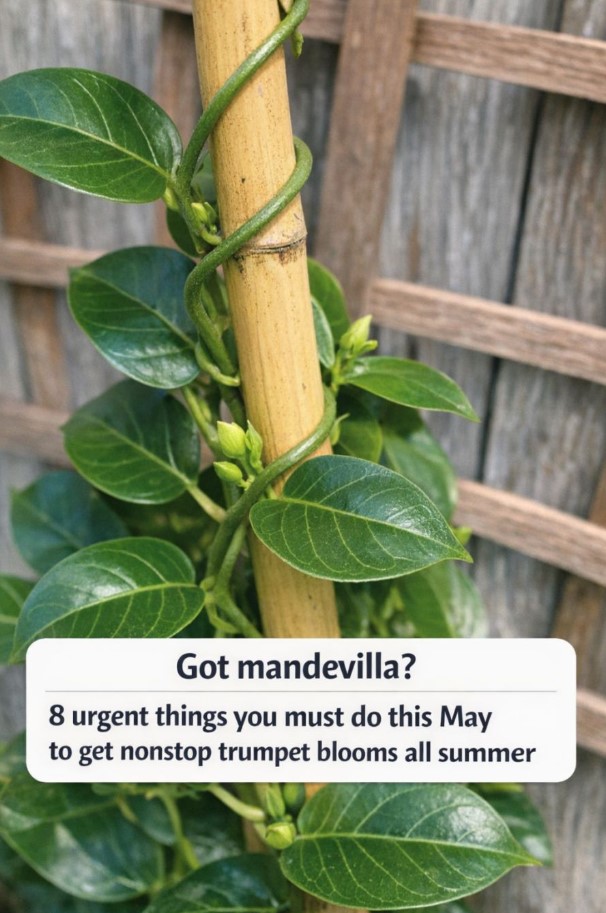
Mandevilla is one of the most eye-catching flowering vines you can grow, known for its bright, trumpet-shaped blooms and lush green climbing stems. When it’s healthy, it can completely transform a balcony, patio, or garden wall into a tropical display of color. These plants are especially popular in warm seasons because they can bloom continuously from late spring through summer when conditions are right.
But many gardeners run into the same problem: the plant grows leaves but produces few flowers, or the blooms are small and short-lived. The truth is that mandevilla is a tropical plant that responds very strongly to care routines, especially in May when it begins its strongest growth phase. Small mistakes in watering, feeding, or light exposure can dramatically affect how many flowers it produces later in the season.
In this guide, we’ll break down 8 important May care rules that help encourage strong growth and nonstop blooming all summer long.
1. Give It Full Sun for Maximum Blooms :
Mandevilla needs plenty of light to produce flowers. It typically requires at least 6 hours of bright sunlight each day to bloom well. Without enough sun, the plant tends to focus on leafy growth instead of producing flowers. In shaded areas, you may notice fewer blooms or delayed flowering. Strong sunlight is one of the most important triggers for bud formation.
2. Avoid Cold Night Temperatures :
Since mandevilla is a tropical plant, it reacts quickly to temperature changes. Cool nights can slow down growth and reduce flowering. It performs best in warm conditions, and consistent warmth helps it stay active and blooming. If temperatures drop too much in spring, growth may stall until conditions improve.
3. Water Consistently but Don’t Overdo It :
Proper watering is essential for healthy blooms. The soil should stay lightly moist but never soggy. Too much water can damage the roots and reduce flowering, while too little water can stress the plant and stop bud formation. A steady watering routine helps the plant maintain energy for continuous blooming.
4. Feed With the Right Fertilizer :
Fertilizer plays a major role in flower production. Mandevilla responds best to feeding during its active growing season in spring and summer. A balanced fertilizer or one slightly higher in phosphorus helps encourage more blooms instead of just leaf growth. Feeding regularly during May supports strong bud development for the months ahead.
5. Avoid Too Much Nitrogen :
One of the most common mistakes is using fertilizer that is too rich in nitrogen. While nitrogen promotes green leaves, it can actually reduce flower production. When this happens, the plant looks healthy and full but produces very few blooms. Keeping nitrogen levels balanced helps shift energy toward flowering instead of just foliage.
6. Provide Strong Support for Climbing Growth :
Mandevilla is a climbing vine, and giving it proper support like a trellis or stake helps it grow upward and spread evenly. When the plant climbs well, it gets better airflow and sunlight exposure, both of which support healthier blooming. Without support, stems can tangle and reduce flower production in upper sections.
7. Prune Lightly to Encourage New Growth :
Light pruning in early growth stages can help stimulate new shoots, and mandevilla flowers mainly form on fresh growth. Removing weak or overcrowded stems allows the plant to redirect energy into stronger branches that produce more buds. However, heavy pruning should be avoided during peak blooming periods.
8. Watch for Stress Factors That Stop Blooming :
Stress is one of the main reasons mandevilla stops flowering. Common stress triggers include inconsistent watering, poor drainage, low light, or sudden temperature changes. Even small environmental issues can affect how many blooms appear. Keeping conditions stable helps the plant stay in continuous flowering mode.
Why Mandevilla Blooms Depend So Much on Care :
Mandevilla is not a “set and forget” plant. Its blooming cycle depends heavily on how well its basic needs are met. When light, water, temperature, and nutrients are balanced correctly, it can produce flowers continuously throughout the warm season. However, if even one factor is off, the plant may shift its energy away from flowering and focus more on survival growth instead.
Many gardeners notice that once they adjust their care routine in early spring or May, the plant quickly responds with stronger growth and more buds.
Conclusion :
Mandevilla is one of the most rewarding flowering vines when properly cared for, offering months of vibrant trumpet-shaped blooms that brighten any outdoor space. The key to success lies in understanding its tropical nature and meeting its needs consistently during its active growth period.
By providing enough sunlight, proper watering, balanced feeding, and stable growing conditions, you can encourage your mandevilla to produce continuous flowers throughout summer. Small adjustments in May can make a big difference in how full and colorful your plant becomes later in the season.
With the right care, this tropical vine can turn an ordinary garden or balcony into a stunning display of long-lasting blooms.