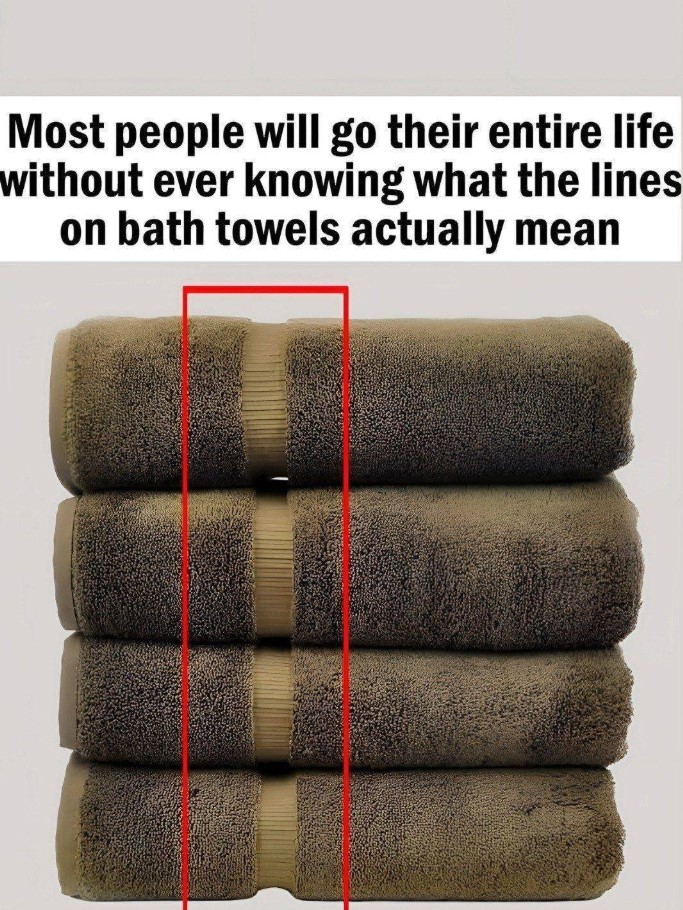
Most people use bath towels every single day without paying much attention to the small details woven into them. One feature that often goes unnoticed is the set of lines, bands, or textured strips that appear near the ends of many towels. Some people think these lines are simply decorative, while others assume they are part of the towel’s design with no real purpose.
In reality, those lines are often intentionally included during manufacturing and can serve several useful functions. They may help improve durability, maintain the towel’s structure, assist with folding, or even reduce wear over time. While towel designs vary depending on the manufacturer, these woven bands are far more practical than many people realize.
Understanding these details can help you better appreciate how towels are designed and why certain styles last longer than others.
What Are the Lines on Towels Called?
The decorative or textured strips found near the ends of towels are commonly known as dobby borders or woven bands.
These sections are created differently from the fluffy absorbent part of the towel. Instead of thick loops designed for drying, the woven border is flatter and tighter. This contrast gives the towel a cleaner appearance while also serving practical purposes.
Although many towels include these bands for visual appeal, they are not purely decorative.
1. They Help Prevent Fraying
One of the main purposes of towel bands is to strengthen the towel’s edges.
Bath towels experience repeated washing, drying, twisting, and pulling. Over time, this stress can cause edges to fray or unravel. The tightly woven border helps reinforce the towel and reduce wear in vulnerable areas.
Without reinforced sections, towels might lose their shape more quickly after repeated use.
2. They Help Towels Keep Their Shape
The woven lines also help towels maintain a more consistent structure.
Because the main body of the towel contains soft absorbent loops, it can stretch unevenly during washing and drying. The tighter border acts almost like a stabilizing frame that helps the towel stay balanced and rectangular over time.
This is one reason quality towels often keep their appearance longer after repeated laundering.
3. They Improve Folding and Storage
Some towel experts note that woven bands can make towels easier to fold neatly.
The flatter section creates a natural visual guide that helps towels stack more evenly in closets or on shelves. Hotels and luxury resorts often prefer towels with structured borders because they look cleaner and more organized when displayed.
This small detail contributes to the polished appearance associated with premium towels.
4. They Add Decorative Style
Of course, appearance still plays an important role.
Manufacturers often use dobby borders to add texture, patterns, or elegant visual contrast to towels. Some designs include simple stripes, while others use geometric patterns or embroidered details.
These decorative touches help towels look more stylish in bathrooms and allow brands to create distinctive designs.
5. They Can Reduce Bulkiness
The flatter woven areas are thinner than the absorbent looped sections of the towel.
This thinner material can help reduce bulk near the edges, making towels:
- Easier to fold
- Faster to dry
- Less heavy around the borders
- More flexible during storage
Some manufacturers intentionally design these bands to balance softness with practicality.
How Towels Are Constructed
To understand why towel lines matter, it helps to know how towels are made.
Most bath towels are woven using cotton loops called terry cloth. These loops are designed to absorb water efficiently while remaining soft against the skin. However, looped fabric is naturally thicker and more flexible than tightly woven fabric.
The woven borders create structure and support around this softer material, improving overall durability.
Why Some Towels Have Wider Bands Than Others
Not all towels are designed the same way.
Some towels feature:
- Thin decorative stripes
- Wide woven borders
- Multiple textured bands
- Embroidered edge sections
Luxury towels sometimes use wider dobby borders because they create a more elegant appearance and help the towel maintain structure. Meanwhile, simpler everyday towels may use narrow bands mainly for reinforcement.
Do the Lines Affect Absorbency?
The woven border itself is usually less absorbent than the fluffy terry cloth section because it lacks the thick cotton loops that trap water.
However, this does not significantly reduce the towel’s overall performance. The absorbent center area still performs the main drying function.
In fact, having a flatter border can sometimes help towels dry faster after use because less moisture becomes trapped at the edges.
How to Make Towels Last Longer
Even well-designed towels need proper care to maintain quality.
Here are a few useful habits:
- Wash towels in warm rather than extremely hot water
- Avoid excessive fabric softener, which may reduce absorbency
- Dry thoroughly to prevent mildew
- Avoid overloading the washing machine
- Trim loose threads carefully instead of pulling them
Proper towel care helps preserve both the absorbent loops and the woven borders.
Interesting Facts About Bath Towels
- Cotton towels are popular because cotton fibers absorb water effectively
- Egyptian and Turkish cotton towels are often considered premium options
- Terry cloth towels were developed specifically for high absorbency
- Hotel towels are often designed for durability and repeated washing
- Heavier towels generally feel more luxurious but may take longer to dry
Conclusion :
The lines on bath towels are much more than simple decoration. These woven bands help strengthen the towel, maintain its shape, reduce fraying, improve folding, and add visual style. What many people assume is just a decorative feature actually plays an important role in the towel’s durability and overall performance.
Modern towels are carefully designed to balance softness, absorbency, appearance, and long-term use. The fluffy terry cloth sections provide comfort and water absorption, while the woven borders create support and structure that help the towel withstand constant washing and drying. Without these reinforced areas, many towels would lose their shape more quickly or begin unraveling after repeated use.
Understanding these small details also gives a new appreciation for the craftsmanship behind everyday household items. Something as simple as a bath towel involves thoughtful design choices that improve comfort, practicality, and appearance all at the same time. The next time you fold or use a towel, you may notice these woven lines differently and realize they are there for a reason.
In many ways, the towel industry combines function with style. Manufacturers want towels to feel soft and luxurious while still remaining durable enough for daily use. The textured bands help achieve that balance by providing strength without sacrificing comfort.