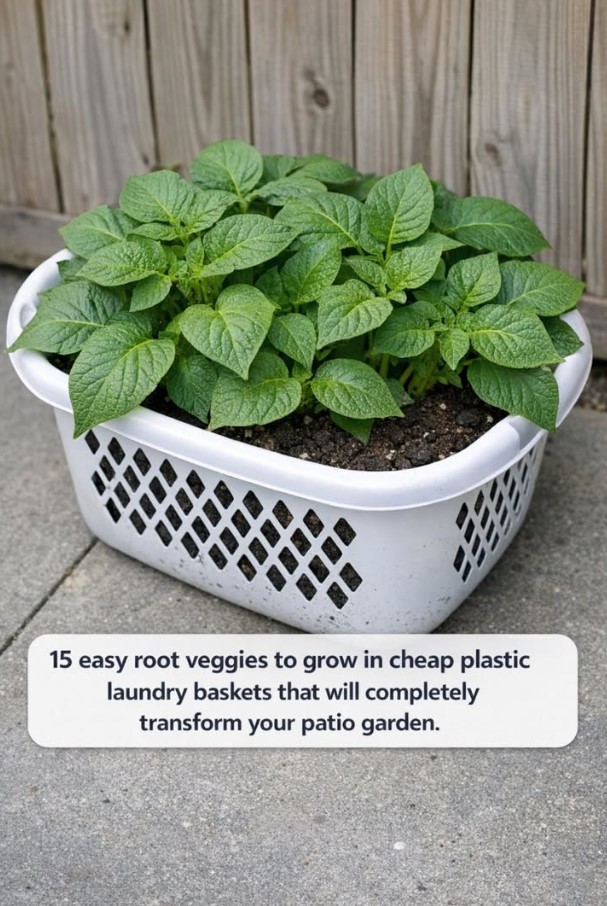
Growing your own vegetables doesn’t always require a large backyard, raised beds, or expensive gardening tools. In fact, one of the simplest and most creative gardening methods is using everyday items like plastic laundry baskets as growing containers. This budget-friendly approach has become popular among home gardeners because it makes it possible to grow fresh food even in small spaces like balconies, patios, or driveways.
Laundry baskets are surprisingly effective for gardening. Their built-in holes provide natural drainage and airflow, which helps prevent root rot and supports healthy plant growth. When filled with good soil and placed in a sunny spot, they can function like mini raised beds that are lightweight, movable, and easy to manage.
Root vegetables are especially well-suited for this type of container gardening. They grow downward into the soil, making them ideal for deep baskets, and many of them do not require much maintenance. With the right setup, you can grow a wide variety of fresh vegetables at home while saving money and enjoying homegrown flavor.
Below are 15 easy root vegetables that grow well in laundry baskets and can help transform even the smallest outdoor space into a productive mini garden.
1. Potatoes
Potatoes are one of the most popular vegetables for laundry basket gardening. They grow in layers, meaning you can add soil as the plant grows taller. This allows multiple tubers to form throughout the basket. Once the plant matures, you can simply dump out the soil and collect your harvest.
2. Carrots
Carrots grow beautifully in loose, well-drained soil. Laundry baskets give them enough depth to develop straight roots. Short or baby carrot varieties work especially well in containers and produce sweet, crisp results.
3. Radishes
Radishes are perfect for beginners because they grow extremely fast. In just a few weeks, you can harvest crunchy roots with a slightly peppery taste. They don’t require deep soil, making them ideal for shallow or medium baskets.
4. Beets
Beets are a dual-purpose crop, offering both edible roots and nutritious leafy greens. They grow well in baskets and develop rich, earthy flavor when given consistent watering and space to expand.
5. Turnips
Turnips are hardy and grow quickly in cooler weather. Both the root and the greens can be eaten, making them a productive choice for small-space gardening. They thrive in loose soil with steady moisture.
6. Onions
Onions are compact and adaptable. They don’t require much depth and can be grown densely in containers. Green onions can be harvested early, while bulb onions take longer to fully mature.
7. Garlic
Garlic is one of the easiest crops to grow in containers. Each clove produces a full bulb over time. It prefers well-drained soil and steady sunlight, making laundry baskets a practical choice.
8. Ginger
Ginger grows from rhizomes and thrives in warm conditions. It takes time to mature but rewards patience with fresh, aromatic roots that are widely used in cooking and drinks.
9. Turmeric
Similar to ginger, turmeric grows underground and develops bright orange roots. It prefers warm temperatures and rich soil. It is a slow-growing crop but very rewarding.
10. Parsnips
Parsnips are long-season vegetables that develop a sweet, nutty flavor after exposure to cooler weather. They need deep soil, making laundry baskets a good fit for their root structure.
11. Rutabagas
Rutabagas are larger root vegetables that grow well in spacious containers. They are hardy and produce dense, flavorful roots that can be used in soups, stews, and roasted dishes.
12. Horseradish
Horseradish is a strong-flavored root that grows vigorously. It is often easier to control in containers because it can spread aggressively in garden beds. In baskets, it stays contained and manageable.
13. Celeriac
Celeriac, also known as celery root, develops a large bulb beneath the soil. It has a mild celery-like flavor and grows best in rich, consistently moist soil.
14. Jerusalem Artichokes
These productive tubers grow well in containers and produce tall plants above the soil. They are hardy and can spread quickly, so a basket helps keep growth under control while still producing a good harvest.
15. Fennel
Fennel develops a bulb-like base with a light anise flavor. It grows best in deep containers with plenty of sunlight and regular watering. Both the bulb and leaves are edible.
Tips for Growing Root Vegetables in Laundry Baskets
To get the best results, a few simple practices can make a big difference:
- Use high-quality, loose potting soil for healthy root development
- Ensure baskets have strong drainage to prevent water buildup
- Place baskets in a sunny location (at least 6 hours of sunlight)
- Water regularly since container soil dries faster than garden soil
- Choose vegetable varieties suited for container growth
Laundry baskets can dry out quickly, so consistent watering is key to strong plant growth.
Why Laundry Basket Gardening Works So Well
This method is effective because it combines simplicity with functionality. The holes in the basket allow excess water to drain while still letting air reach the roots. This improves oxygen flow and reduces the risk of soil diseases.
Another advantage is mobility. You can move your garden to follow sunlight, protect plants from storms, or rearrange your patio layout whenever needed. It is a flexible system that works especially well in small urban spaces.
Conclusion :
Growing root vegetables in laundry baskets is a simple, affordable, and surprisingly effective way to start a home garden. With just a few basic materials, you can turn everyday household items into productive growing containers that produce fresh food right outside your door.
From fast-growing radishes to slow-developing parsnips and ginger, there are many vegetables that adapt well to this method. Each one offers a unique flavor and harvest experience, making gardening both practical and enjoyable.
This approach proves that you don’t need a large space or expensive equipment to grow your own food. With a little creativity, even a simple laundry basket can become a thriving mini garden that brings freshness, flavor, and satisfaction straight to your table.