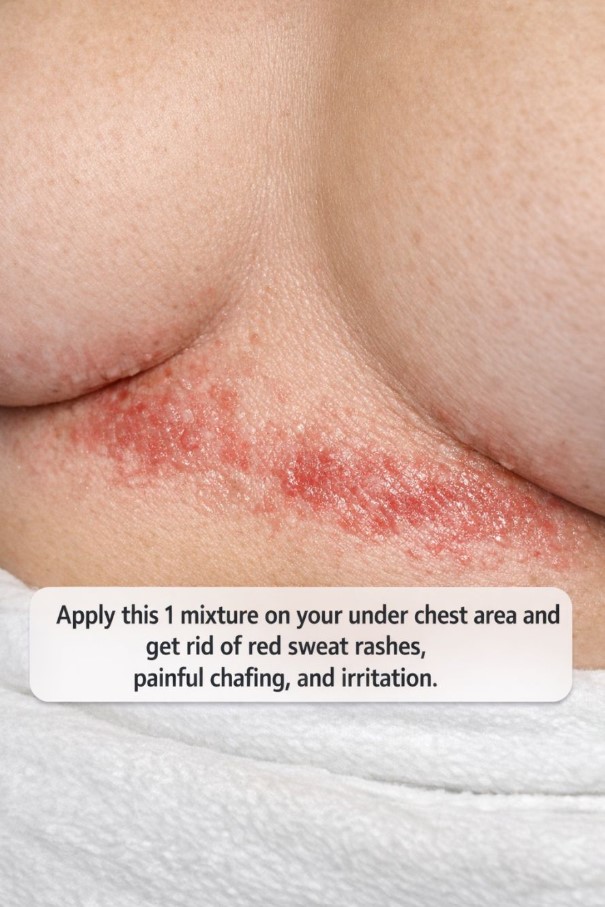
Skin irritation under the chest is a common issue that many people experience, especially in warm, humid conditions or during long periods of physical activity. This area of the body naturally traps heat and moisture, which can lead to redness, itching, discomfort, and painful chafing.
While it is not usually a serious medical condition, it can still be very uncomfortable and affect daily life. The constant friction between skin and clothing, combined with sweat buildup, often makes the irritation worse if not properly managed.
For this reason, many people look for simple, gentle methods to help soothe the skin, reduce inflammation, and prevent further discomfort in this sensitive area.
WHY UNDER-CHEST RASHES AND CHAFING HAPPEN
1. Moisture and sweat buildup
One of the main causes of irritation under the chest is trapped moisture. Sweat naturally collects in skin folds, and when it stays in contact with the skin for long periods, it can lead to redness and irritation.
This warm and damp environment can also make the skin more sensitive over time.
2. Friction from movement
Daily movement causes the skin under the chest to rub against itself or clothing. This repeated friction can damage the skin barrier, leading to soreness, chafing, and discomfort.
Tight or non-breathable clothing can make this even worse.
3. Heat and lack of airflow
Poor airflow in this area increases heat buildup, which contributes to sweating and irritation. During hot weather or when wearing layered clothing, the problem can become more noticeable.
4. Skin sensitivity
Some people naturally have more sensitive skin, which can react more easily to sweat, fabrics, or environmental changes. This makes them more prone to rashes and irritation in skin-fold areas.
COMMON WAYS PEOPLE TRY TO MANAGE THE ISSUE
1. Keeping the area clean and dry
One of the most important steps is maintaining good hygiene. Gently cleaning the area with mild soap helps remove sweat, bacteria, and irritants that can worsen the rash.
Drying the skin thoroughly afterward is equally important to prevent moisture buildup.
2. Wearing breathable clothing
Loose-fitting clothes made from breathable fabrics like cotton can reduce friction and improve airflow. This helps minimize sweating and allows the skin to stay cooler.
3. Reducing heat exposure
Avoiding excessive heat and staying in cooler environments when possible can help prevent sweating and irritation from getting worse.
4. Avoiding irritation triggers
Harsh soaps, scented products, or rough fabrics can sometimes make the skin more sensitive. Choosing gentle, skin-friendly products can help reduce flare-ups.
WHY SIMPLE SKIN CARE HABITS MATTER
1. Preventing worsening irritation
Small changes in daily habits can prevent minor irritation from turning into painful or persistent rashes. Early care is often the most effective approach.
2. Supporting skin recovery
When the skin is kept clean, dry, and protected from friction, it has a better chance of healing naturally without complications.
3. Improving long-term comfort
Consistent care routines help reduce the frequency of irritation episodes, making the condition easier to manage over time.
WHEN TO SEEK EXTRA CARE
1. Persistent or worsening symptoms
If redness, pain, or itching continues for an extended period or becomes worse, it may require professional evaluation.
2. Signs of infection
If there are unusual symptoms such as swelling, discharge, or strong discomfort, it is important to seek medical advice promptly.
Conclusion :
Under-chest irritation, redness, and chafing are common skin issues that many people experience due to a combination of sweat, friction, heat, and sensitivity. Although uncomfortable, these conditions are usually manageable with simple and consistent care.
Keeping the area clean and dry, wearing breathable clothing, and reducing friction are some of the most effective ways to soothe irritation and support skin healing. These small habits can make a significant difference in comfort and help prevent the problem from returning frequently.
It is also important to understand that skin in folded areas of the body is naturally more prone to moisture and friction. This means that regular care and prevention are more effective than trying to treat irritation only after it appears.
In some cases, however, persistent or severe symptoms should not be ignored, as they may require medical attention. Early care can help prevent complications and ensure proper healing.
In the end, managing under-chest irritation is about consistency and awareness. With the right daily habits and gentle care, it is possible to reduce discomfort, protect the skin, and maintain long-term comfort in sensitive areas.