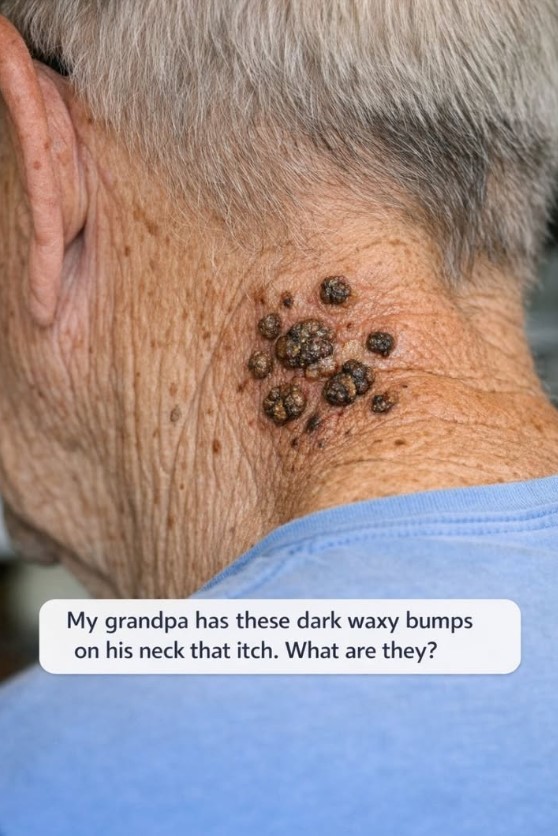
Noticing unusual skin changes on the body can be worrying, especially when they appear suddenly or start to itch. Dark, waxy-looking bumps on the neck are one of those skin concerns that often raise questions and anxiety.
These types of growths can vary in appearance, texture, and size, and while some may look unusual, many are actually harmless and develop slowly over time. Still, because skin changes can have different causes, it is important to understand what they might represent and when they should be checked.
Learning about common skin conditions that match this description can help reduce fear and guide people toward appropriate care and attention.
COMMON POSSIBLE CAUSES OF DARK WAXY BUMPS
1. Seborrheic keratosis (most common cause)
One of the most common reasons for dark, waxy, raised bumps on the skin is a condition called seborrheic keratosis. These growths often appear as people age and can look like they are “stuck on” the skin.
They may be brown, black, or tan in color and can have a rough or waxy texture. Although they can look concerning, they are typically non-cancerous and harmless.
2. Skin tags with pigmentation changes
Skin tags are small, soft growths that commonly appear on the neck, armpits, or other areas where skin folds occur. Sometimes they can become darker due to friction, irritation, or changes in blood supply.
While usually harmless, they can occasionally become itchy if irritated by clothing or jewelry.
3. Irritated or inflamed skin growths
Some bumps may become itchy or darker simply because of irritation. Constant rubbing from collars, necklaces, or sweat can cause skin changes that make growths more noticeable or uncomfortable.
4. Other benign skin conditions
There are several other non-serious skin conditions that can cause raised, dark patches or bumps, including harmless pigment changes or minor skin overgrowths that develop with age.
WHY THESE BUMPS MAY ITCH
1. Friction and irritation
The neck is an area that is constantly exposed to movement, clothing, and accessories. This friction can irritate existing skin growths and make them itchy.
2. Dry or sensitive skin
Dry skin can make bumps feel more noticeable and uncomfortable. When the surrounding skin becomes dry, itching can increase even if the growth itself is harmless.
3. Inflammation of the skin
If a skin growth is irritated, it can become slightly inflamed, leading to temporary itching or sensitivity.
WHEN SHOULD YOU PAY ATTENTION?
1. Sudden changes in appearance
If a bump changes size, shape, or color quickly, it should be checked by a healthcare professional.
2. Persistent itching or discomfort
Ongoing itching that does not improve may indicate irritation or another skin condition that needs attention.
3. Bleeding or pain
Any skin growth that bleeds easily or becomes painful should be evaluated to rule out more serious causes.
GENERAL SKIN CARE TIPS FOR COMFORT
1. Avoid constant rubbing
Reducing friction from clothing or jewelry can help prevent irritation and itching.
2. Keep skin moisturized
Using gentle moisturizers can help reduce dryness and improve overall skin comfort.
3. Maintain good hygiene
Keeping the area clean helps reduce sweat buildup and irritation.
4. Avoid scratching
Scratching can worsen irritation and may cause further inflammation or skin damage.
Conclusion :
Dark, waxy bumps on the neck that itch can be alarming at first sight, but in many cases, they are linked to common and generally harmless skin conditions such as seborrheic keratosis or skin tags. These growths often develop slowly over time and may become more noticeable due to friction, aging, or skin irritation.
Although they are usually not dangerous, changes in appearance, persistent itching, or discomfort should not be ignored. Paying attention to how the skin changes over time is important for identifying when professional evaluation may be needed.
Simple care steps such as reducing friction, keeping the skin moisturized, and avoiding irritation can help improve comfort and prevent worsening symptoms. However, these measures are mainly supportive and do not replace medical assessment when necessary.
In the end, most cases of dark, waxy skin bumps are benign and manageable, but understanding the possible causes helps reduce worry and encourages better skin awareness. When in doubt, seeking professional advice is always the safest approach to ensure proper identification and peace of mind.