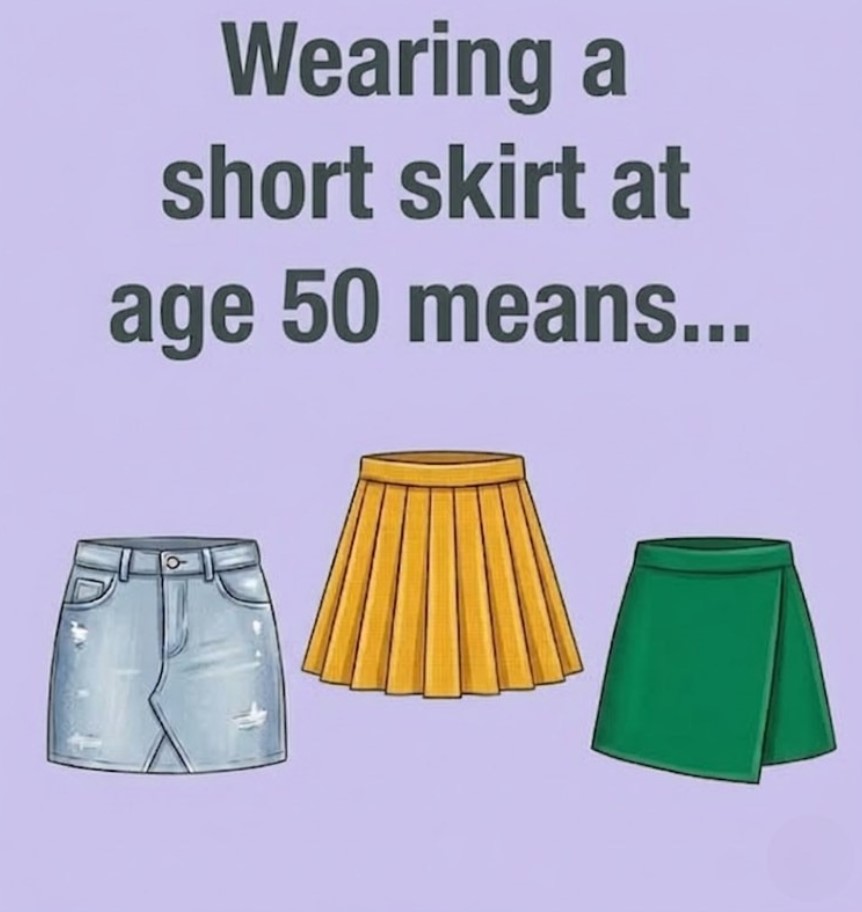
Fashion has always been a form of self-expression rather than a strict set of rules. Over time, clothing choices have become more about comfort, confidence, and individuality than age-based expectations. However, certain topics still spark discussion online, especially when it comes to what is “appropriate” to wear at different ages.
One example often seen in viral content is the idea that wearing a short skirt at age 50 “means” something specific about a person’s character or lifestyle. These interpretations are usually symbolic and not based on any real or scientific truth.
In reality, clothing choices are deeply personal and influenced by taste, confidence, lifestyle, and cultural background rather than age alone. Understanding this helps separate outdated stereotypes from modern thinking about fashion and self-expression.
WHY PEOPLE ASSOCIATE CLOTHING WITH MEANING
1. Society creates fashion stereotypes
For many years, society has linked certain clothing styles with specific age groups or behaviors. These stereotypes often suggest what is “appropriate” or “expected,” even though personal style does not follow strict rules.
This is why some outfits are sometimes given symbolic meanings that do not reflect reality.
2. Social media exaggerates interpretations
Online posts often turn simple fashion choices into symbolic messages. A basic outfit can be described as having a “hidden meaning,” even when there is none.
This type of content spreads quickly because it encourages curiosity and debate.
3. People enjoy personality-based interpretations
Humans are naturally drawn to personality analysis, even when it is based on appearance. This is why fashion-related “meaning” articles often go viral—they feel personal and relatable.
THE TRUTH ABOUT STYLE AT ANY AGE
1. Clothing is about personal comfort
The most important factor in fashion is comfort. People choose clothing that makes them feel good physically and emotionally, regardless of age.
A short skirt, like any other outfit, is simply a clothing choice based on preference.
2. Confidence matters more than age
Confidence plays a bigger role in how clothing looks than age does. When someone feels comfortable in what they wear, it naturally reflects in their posture, expression, and overall presence.
3. Fashion evolves with personality
Personal style changes over time. Some people prefer more relaxed outfits as they grow older, while others continue to enjoy bold or youthful styles. Both choices are normal and valid.
BREAKING AGE-BASED FASHION RULES
1. Modern fashion is inclusive
Today’s fashion world is more open than ever. Designers and brands promote styles for all ages, body types, and lifestyles.
There is no single rule that defines what people should wear after a certain age.
2. Self-expression is more important than rules
Clothing is one of the easiest ways to express personality. Whether someone chooses elegant, casual, bold, or youthful outfits, it reflects their individuality rather than their age.
3. Personal happiness comes first
The most important aspect of fashion is how it makes someone feel. If an outfit brings happiness and confidence, it serves its purpose regardless of outside opinions.
WHY THIS TOPIC GOES VIRAL
1. It challenges social expectations
Content about age and fashion often sparks discussion because it challenges traditional beliefs about how people “should” look or dress.
2. It encourages debate
People have different opinions about age-appropriate clothing, which leads to engagement and sharing on social media.
3. It connects to identity and confidence
Fashion is closely linked to self-image, so topics like this naturally attract attention and emotional responses.
Conclusion :
The idea that wearing a short skirt at age 50 “means something” is more of a social interpretation than a factual statement. In reality, clothing choices are personal decisions shaped by comfort, confidence, and individual style rather than age-based rules.
Modern fashion continues to move away from strict limitations and toward inclusivity and self-expression. People today are encouraged to wear what makes them feel confident and happy, regardless of societal expectations.
It is also important to recognize that assigning meaning to clothing can reinforce unnecessary stereotypes. What one person wears does not define their personality, values, or life choices.
In the end, fashion should be seen as a form of freedom. Whether someone chooses a short skirt, a formal outfit, or casual wear, the most important factor is how they feel in it. Confidence and authenticity will always matter more than age or external judgment.