
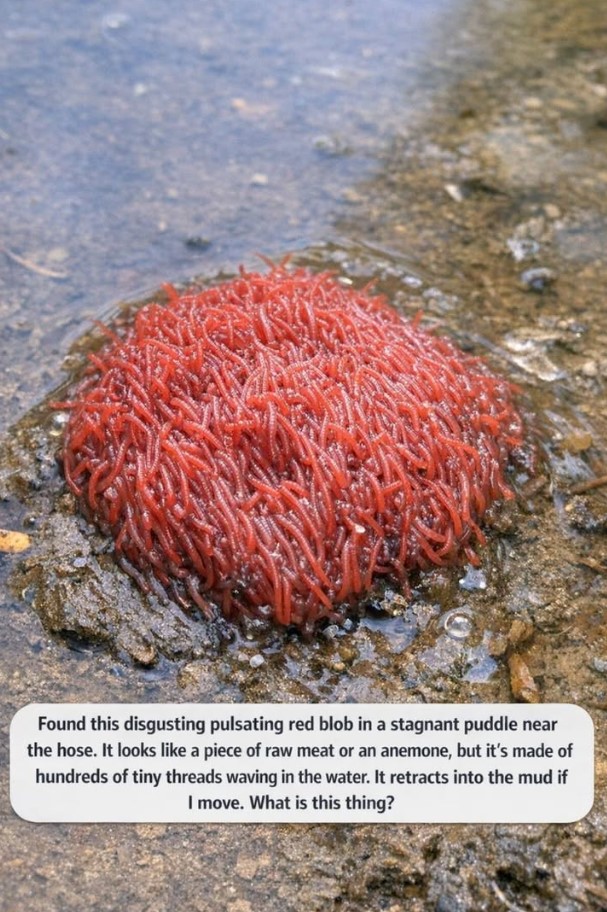
Discovering something unusual in your garden or around your home can be both fascinating and unsettling. Many people have reported stumbling upon strange shapes in puddles, soil, or damp areas that look like something out of a science fiction movie. One particularly disturbing sight is a pulsating red blob floating or sitting in stagnant water near garden hoses or outdoor areas.
At first glance, it might resemble raw meat, coral, or even some kind of alien organism. Its unusual movement and texture can easily trigger fear or confusion. However, in most cases, these strange-looking growths are natural organisms or environmental formations that thrive in moist, organic-rich conditions.
Understanding what you are looking at is the key to removing fear and responding appropriately. In this article, we’ll explore what this mysterious red blob could be, why it appears, and whether it poses any danger.
Why Strange Organisms Appear in Stagnant Water
Warm, Moist Conditions Encourage Growth
Stagnant water provides the perfect environment for bacteria, algae, and fungi to grow. When combined with organic debris such as leaves, soil, or decaying matter, these conditions can quickly lead to unusual biological formations.
Lack of Water Movement
Flowing water naturally cleans itself. Stagnant water, on the other hand, allows microorganisms to multiply without disruption.
Exposure to Sunlight and Heat
Sunlight warms the water, speeding up biological activity and encouraging rapid growth of algae or microbial colonies.
What Could the Red Pulsating Blob Be?
1. Algae or Cyanobacteria Bloom
One of the most common explanations is a bloom of algae or cyanobacteria. Some species can appear reddish or brown and may form gelatinous clusters.
These organisms can sometimes trap gas bubbles, giving the appearance of slight movement or “pulsing.”
2. Slime Mold
Slime molds are fascinating organisms that often appear in damp, shady environments.
They can:
- Change shape over time
- Appear red, orange, or brown
- Move very slowly as they search for nutrients
Some species may look like a blob of living tissue, especially in early growth stages.
3. Fungal Growth
Certain fungi can develop strange, jelly-like structures in wet environments. These can appear soft, swollen, and even slightly translucent.
Fungi thrive on decaying organic matter, which may be present in soil or stagnant water.
4. Bacterial Colonies
Some bacteria form biofilms—thick, slimy layers that can appear colorful or gelatinous. When disturbed, they may seem to shift or ripple slightly.
5. Insect Larvae or Egg Clusters (Less Common)
In rare cases, insect eggs or larvae grouped together can create unusual formations in water. These may appear clustered, moving, or “alive.”
Is It Dangerous?
Usually Not Directly Harmful
Most of the organisms that appear in stagnant water are not dangerous to touch, but that does not mean they are safe.
Potential Risks Include:
- Skin irritation
- Exposure to harmful bacteria
- Allergic reactions
- Contamination if ingested or transferred to food surfaces
It is always best to avoid direct contact.
Why It Looks Like It’s “Pulsating”
One of the most confusing aspects of these blobs is their movement. Several natural factors can create this illusion:
Gas Release
Decomposition can produce gas bubbles that rise and shift within the mass.
Water Movement
Even slight vibrations or wind can cause the water surface to ripple, making the blob appear alive.
Biological Expansion and Contraction
Some organisms absorb and release moisture, causing subtle shape changes.
How to Safely Handle the Situation
1. Do Not Touch It Barehanded
Always avoid direct skin contact with unknown biological growths.
2. Remove Stagnant Water
Eliminating standing water prevents further growth.
3. Clean the Area
Use disinfectants or natural cleaning solutions to remove residues.
4. Wear Protective Gear
If you must handle it, use gloves and proper tools.
5. Monitor the Area
Check regularly to ensure it does not return.
How to Prevent Future Occurrences
Improve Drainage
Make sure water does not collect in puddles or low areas.
Keep Outdoor Areas Clean
Remove leaves, dirt, and organic debris that feed microbial growth.
Maintain Water Flow
If you have hoses or outdoor containers, avoid leaving water standing for long periods.
Regular Inspection
Frequent checks can help you spot early signs of unusual growth.
Why These Discoveries Feel So Disturbing
Human brains are naturally wired to recognize patterns—especially those that resemble living creatures. When something looks organic, moves slightly, or has a strange texture, our instinct is to assume it is alive or dangerous.
This reaction is completely normal. It is a survival instinct designed to protect us from potential threats.
However, in most garden environments, these strange sights are simply part of natural decomposition and microbial life cycles.
Conclusion :
Finding a pulsating red blob in stagnant water can certainly be alarming at first glance. Its strange appearance and movement may suggest something unnatural or dangerous, but in reality, it is usually the result of natural biological processes such as algae growth, slime mold development, or bacterial activity.
While most of these organisms are harmless, it is still important to treat them with caution and avoid direct contact. More importantly, their presence is a sign that conditions in the area are ideal for microbial growth—especially stagnant water and organic buildup.
By improving drainage, keeping outdoor areas clean, and removing standing water, you can greatly reduce the chances of encountering similar formations in the future.
Ultimately, what seems frightening at first is often just another example of how complex and surprising nature can be.