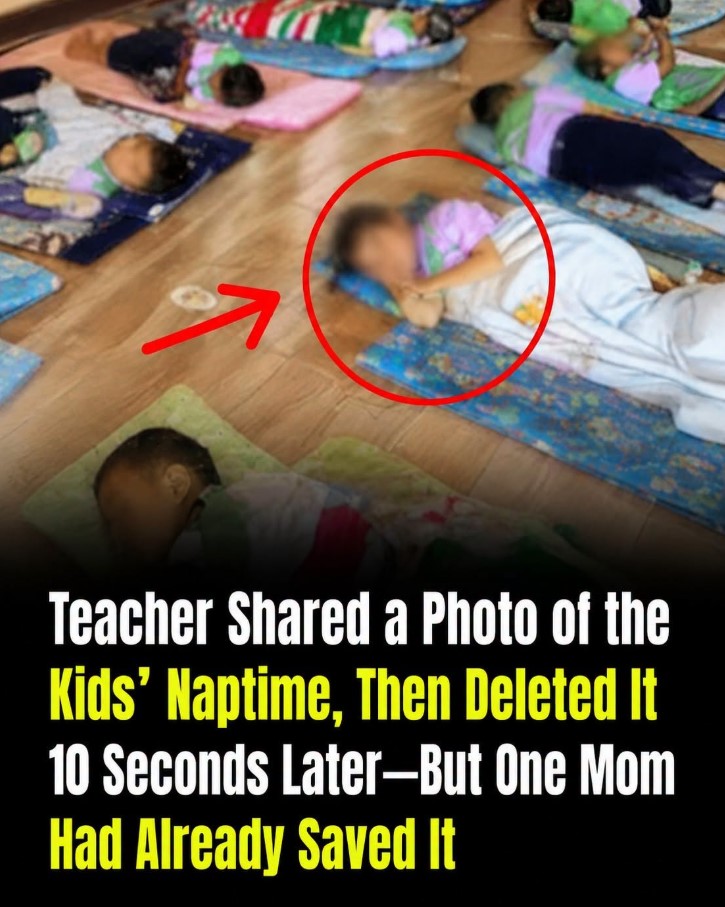
A classroom photo can seem harmless at first glance. A teacher may capture a sweet or funny moment during the school day, post it for families or a classroom community, and then realize moments later that something about the image should not have been shared. Perhaps a child was visible who did not have permission to be photographed, another student appeared in the background, or the image was posted to the wrong audience.
That is why stories about a teacher deleting a classroom photo shortly after posting it can quickly become a lesson in something much bigger: once a digital image has been shared, deleting it does not necessarily mean it has disappeared.
A parent, teacher, student, or anyone else who sees the image may already have saved it, taken a screenshot, downloaded it, or shared it with someone else. Even when the original post vanishes, copies may continue to exist elsewhere.
The situation is a useful reminder that photographs involving children deserve particular care. A seemingly ordinary nap-time picture can contain identifying details such as faces, names on classroom materials, school logos, artwork, schedules, or even information visible in the background.
Why a Teacher Might Delete a Classroom Photo
There can be many explanations for a quickly deleted photograph, and it is important not to assume that the deletion automatically means something inappropriate happened.
Teachers work in busy environments. A photo might be uploaded quickly and then reviewed more carefully afterward. Once the teacher notices that a student without photo permission appears in the frame, the natural response may be to remove the post immediately.
Other possibilities include posting the wrong photograph, selecting the wrong audience, accidentally revealing another student’s information, or simply realizing that the image was not appropriate for public sharing.
The important point is that deleting a post can be a responsible corrective action. It does not necessarily prove wrongdoing.
The Problem With Digital Photos: Deletion Isn’t the Same as Disappearance
One of the most important lessons from situations like this is that digital content can be copied extremely quickly.
Imagine that a photo is uploaded at 10:00:00 and deleted at 10:00:15. During those 15 seconds, someone could have:
- Taken a screenshot
- Downloaded the image
- Forwarded it to another person
- Saved it to a device
- Shared it in a private group
- Used a screen-recording feature to capture it
Once a copy exists somewhere else, deleting the original post cannot automatically remove those copies.
This is why people should think carefully before posting photographs, even when the original intention is completely innocent.
Why Classroom Photos Require Extra Care
Children are not simply subjects in ordinary social-media photographs. Schools and educators have a responsibility to protect students’ privacy and follow applicable school policies, consent requirements, and local regulations.
A classroom photo can reveal much more than a child’s face.
Look closely at a seemingly innocent picture and you might find:
- Student names written on desks
- Name tags
- School uniforms or logos
- Classroom schedules
- Artwork containing children’s names
- Medical or behavioral information displayed in the room
- Other students in the background
- School locations or identifying details
A photo taken during nap time, for example, could unintentionally show several children rather than just the student the photographer intended to capture.
That is why teachers and school staff generally need to consider both the subject of the photograph and everything else visible within the frame.
What Happens When a Parent Has Already Saved the Image?
This is where the situation becomes more complicated.
If a parent legitimately saw the photograph before it was deleted and saved a copy, the original poster may no longer control that copy. However, that does not mean the parent automatically has the right to distribute it publicly.
There is a major difference between saving something for personal reference and reposting or distributing it.
If the image involves children, sharing it beyond the original intended audience can create additional privacy concerns. A person who saved the photo should think carefully before forwarding it, posting it to social media, or using it in an online discussion.
In many cases, the most responsible response is to avoid further distribution and raise concerns directly with the school or teacher if necessary.
A Screenshot Can Change the Situation
Screenshots are particularly important in today’s digital environment.
People sometimes assume that a disappearing story, deleted post, or removed photograph is automatically gone forever. In reality, viewers can capture content before it disappears.
This applies far beyond schools. The same principle applies to:
- Social-media stories
- Group chats
- Temporary posts
- Online comments
- Shared documents
- Photos sent through messaging applications
Anything that appears on a screen can potentially be captured.
That doesn’t mean people should live in fear of posting anything. It simply means that privacy should be considered before sharing rather than after something has gone wrong.
What Parents Can Do If They See a Questionable Classroom Photo
Parents who notice a classroom photograph that concerns them do not necessarily need to react publicly or immediately assume the worst.
A calmer approach can be much more productive.
First, consider what exactly is concerning about the image. Is your child visible? Is another child’s face identifiable? Does the photo reveal names or other private information? Was it posted publicly or within a restricted classroom group?
If there is a genuine concern, contact the teacher or school directly.
Ask what happened and whether the image was intended for a specific audience. In many cases, a simple conversation can clarify the situation without turning an understandable mistake into a larger public controversy.
If the image involves a serious privacy concern, the school’s administration or designated privacy official may be the appropriate person to contact.
What Teachers Can Do Before Posting Photos
A few extra seconds of caution can prevent many problems.
Before uploading a classroom photograph, teachers can ask themselves:
Who is visible?
Check the entire image, including the background and reflections.
Do I have appropriate permission?
Make sure the students shown are covered by the relevant school photography policies and permissions.
Where am I posting it?
A private classroom platform and a public social-media account are very different audiences.
Does the photograph reveal unnecessary information?
Names, schedules, paperwork, classroom locations, or other identifying details may need to be removed or avoided.
Would I be comfortable with this image being copied?
Because once something is posted, there is always a possibility that someone else will save it.
That final question is especially valuable.
Why Posting to a Smaller Audience Isn’t a Guarantee
A common misconception is that privacy concerns disappear when something is shared with a small group.
A restricted audience certainly offers more protection than a completely public post, but it is not an absolute guarantee.
People can still take screenshots or save photographs. Someone who receives an image may also forward it to another person.
Therefore, access controls should be treated as one layer of protection, not a substitute for careful judgment.
The Importance of Avoiding Online Speculation
Stories involving children and schools can attract strong reactions very quickly.
A short headline may leave out important context, while social-media comments can encourage people to fill in the missing details themselves. Before long, a simple mistake can turn into a much larger story based largely on assumptions.
That is why it is important to distinguish between what is actually known and what people are merely guessing.
A deleted photograph does not, by itself, establish why it was deleted.
Likewise, someone saving a photograph does not automatically mean that the image was distributed improperly.
The most responsible response is to focus on the facts, protect the privacy of the children involved, and allow the appropriate adults or school officials to address genuine concerns.
What This Story Can Teach Us About Digital Privacy
The biggest lesson is not necessarily about one teacher or one photograph. It is about how quickly digital information can escape our control.
A photo can be created in seconds. It can be uploaded instantly. It can be copied almost immediately.
Deleting the original afterward may still be the right thing to do, but it cannot guarantee that every copy has vanished.
This is true for parents, teachers, students, businesses, and virtually anyone who uses digital platforms.
Before sharing an image, it is worth asking whether everyone shown has appropriate permission, whether the photograph reveals anything private, and whether the image could cause embarrassment or concern if it were seen outside its intended audience.
A Better Approach When Mistakes Happen
Mistakes are inevitable, especially in busy environments. What matters is how people respond to them.
If a teacher realizes that a photo should not have been posted, removing it promptly is a sensible first step. The teacher can then determine whether anyone needs to be notified and whether additional action is appropriate.
Parents can likewise approach concerns calmly rather than immediately sharing the photograph or accusing someone publicly.
The goal should always be the same: protect the children and resolve the issue responsibly.
Conclusion :
The story of a teacher deleting a classroom nap photo only seconds after posting it is a powerful reminder of how different the digital world is from the physical one. In the past, removing a photograph from a wall might have meant the photograph was no longer available to viewers. Online, the situation is very different.
A picture can be copied before its creator has time to realize there is a problem. A screenshot can preserve something that was intended to disappear. And a photograph that seemed completely harmless can sometimes contain far more personal information than the person posting it realized.
At the same time, a quickly deleted photo should not automatically be treated as evidence of misconduct. There can be perfectly understandable reasons for removing an image, including privacy concerns, accidental posting, or realizing that the wrong audience could see it.
The most useful lesson is therefore a simple one: think carefully before posting, respect children’s privacy, and remember that deleting digital content does not always erase every copy. Teachers, parents, and anyone else sharing photographs can help protect children by checking images carefully, following appropriate consent and school policies, and treating every child’s privacy with the care it deserves.
In a world where a single screenshot can preserve an image indefinitely, a few seconds of caution before pressing “post” can make a significant difference.