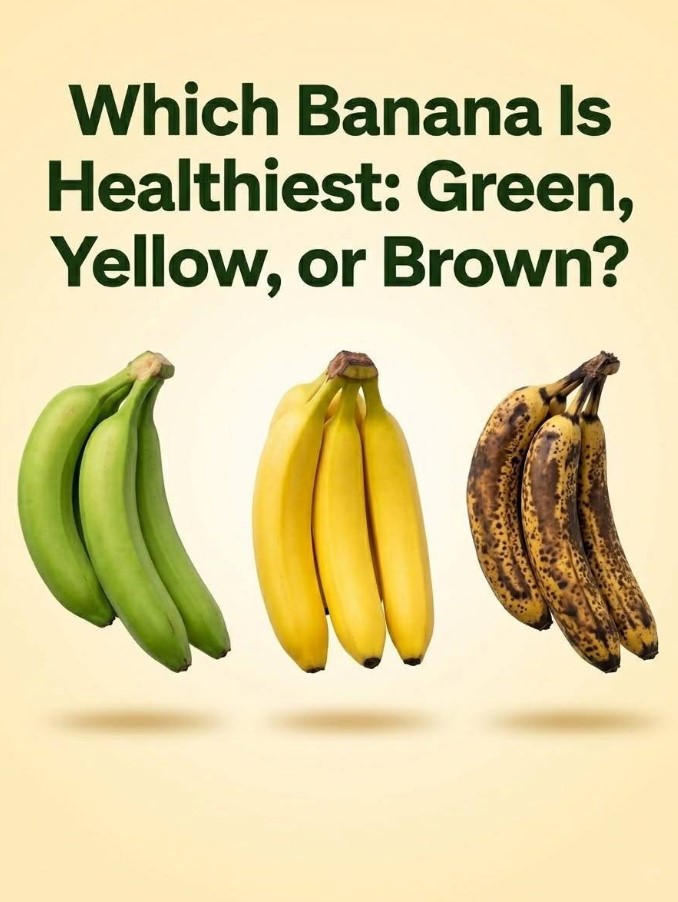
Bananas are one of the most popular fruits in the world, loved for their convenience, natural sweetness, and impressive nutritional profile. They are affordable, available year-round, and can be enjoyed in countless ways, from smoothies and oatmeal to baked goods and simple grab-and-go snacks.
However, one question continues to spark debate among health-conscious individuals: which banana is the healthiest to eat? Should you choose a firm green banana, a bright yellow one, or those brown-speckled bananas that many people mistakenly throw away?
The truth is that every stage of banana ripeness offers its own unique benefits. Rather than having a single “best” option, each stage serves a different purpose depending on your nutritional goals, digestive needs, and lifestyle.
Understanding how bananas change as they ripen can help you make smarter choices and get the most out of this incredibly versatile fruit.
How Bananas Change as They Ripen
As bananas mature, their internal composition changes dramatically.
The biggest transformation involves carbohydrates. In green bananas, most carbohydrates exist as resistant starch. As the fruit ripens, these starches gradually convert into simple natural sugars, making the banana sweeter and softer.
At the same time, texture, digestibility, and antioxidant levels also change.
This is why green, yellow, and brown bananas can each provide different advantages.
Green Bananas: The Gut Health Powerhouse
Green bananas are harvested before reaching full ripeness and contain large amounts of resistant starch.
Resistant starch behaves similarly to dietary fiber because it passes through the digestive system without being fully digested.
Benefits of Green Bananas
Excellent for Digestive Health
The resistant starch acts as a prebiotic, feeding beneficial bacteria in the gut and supporting a healthier digestive system.
Better Blood Sugar Control
Because green bananas contain less sugar, they tend to have a lower impact on blood glucose levels.
Increased Fullness
The high fiber and resistant starch content may help you stay satisfied longer, making them a helpful option for people trying to manage their appetite.
Improved Mineral Absorption
A healthier gut environment may support the body’s ability to absorb important nutrients such as calcium and magnesium.
Potential Drawbacks
Green bananas are not ideal for everyone.
Some people experience:
- Bloating
- Gas
- Mild digestive discomfort
They also have a firmer texture and a much less sweet flavor than ripe bananas.
Yellow Bananas: The Perfect Balance
Yellow bananas are often considered the most popular stage because they provide a balance between taste and nutrition.
At this stage, much of the resistant starch has transformed into natural sugars.
Benefits of Yellow Bananas
Excellent Source of Quick Energy
The natural sugars provide readily available energy, making yellow bananas a favorite among athletes and active individuals.
Easy to Digest
Their softer texture and reduced starch content make them gentler on the digestive system.
Rich in Essential Nutrients
Yellow bananas are an excellent source of:
- Potassium
- Vitamin B6
- Vitamin C
- Magnesium
These nutrients support heart health, nerve function, metabolism, and overall wellness.
Higher Antioxidant Content
As bananas ripen, antioxidant levels increase, helping the body combat oxidative stress.
Natural Prebiotic Support
Although they contain less resistant starch than green bananas, they still support beneficial gut bacteria.
Potential Drawbacks
The increased sugar content means they may raise blood sugar more quickly than green bananas.
People managing blood sugar levels may prefer smaller portions.
Brown Bananas: The Overlooked Superfood
Many people throw away bananas once brown spots appear, but this may be a mistake.
Overripe bananas are actually packed with valuable nutrients.
Benefits of Brown Bananas
Maximum Antioxidant Activity
Brown bananas often contain higher concentrations of antioxidants that help protect cells from damage.
Extremely Easy to Digest
Their soft texture makes them ideal for:
- Older adults
- Children
- Individuals with sensitive digestion
Natural Sweetness
The sugars become more concentrated, making them perfect for recipes without needing additional sweeteners.
Great for Baking
Brown bananas are ideal for:
- Banana bread
- Muffins
- Pancakes
- Smoothies
- Healthy desserts
Potential Drawbacks
Brown bananas contain the highest amount of natural sugars, which may not be suitable for everyone in large quantities.
Which Banana Is Best for Weight Management?
The answer depends on your goals.
Green bananas may help support appetite control due to their higher resistant starch content.
Yellow bananas offer balanced energy and nutrients.
Brown bananas can satisfy sweet cravings naturally without processed sugar.
No single stage is automatically superior.
Which Banana Is Best for Athletes?
Athletes often prefer yellow bananas because they provide quick energy before or after exercise.
The natural sugars help replenish energy stores while potassium supports proper muscle function.
Which Banana Is Best for Gut Health?
Green bananas are generally the top choice for gut health because of their high resistant starch content.
This beneficial starch feeds healthy bacteria and supports overall digestive balance.
Creative Ways to Use Every Stage
Green Bananas
- Slice into savory dishes
- Air fry them
- Use them in soups and stews
Yellow Bananas
- Eat them fresh
- Add them to oatmeal
- Blend them into smoothies
Brown Bananas
- Bake banana bread
- Make muffins
- Freeze for smoothies
- Create healthy desserts
Common Banana Myths
Myth 1: Brown Bananas Are Bad
Brown spots simply indicate ripeness, not spoilage.
Myth 2: Green Bananas Are Unhealthy
Green bananas offer unique digestive benefits.
Myth 3: Only Yellow Bananas Are Nutritious
Every stage contains valuable nutrients.
Conclusion :
Bananas are one of nature’s most versatile foods because their nutritional benefits evolve as they ripen. Instead of searching for a single perfect stage, it is more helpful to choose the banana that matches your personal health goals.
Green bananas are excellent for gut health and blood sugar management. Yellow bananas provide balanced nutrition and quick energy, while brown bananas deliver powerful antioxidants and natural sweetness.
Each stage has its own advantages, and incorporating all three into your diet can provide a wide range of benefits. Rather than throwing away bananas as they change color, learn to appreciate how each stage serves a different purpose.
Ultimately, the healthiest banana is the one that fits your body’s needs, your lifestyle, and your nutritional goals. Sometimes, the fruit sitting on your kitchen counter is already exactly what your body needs at that moment.