Few things can ruin a beautiful summer evening faster than a swarm of mosquitoes. You sit outside to enjoy dinner, relax with a cup of coffee, or spend time with family, and within minutes you’re swatting at your arms and wondering why these tiny insects seem determined to find you.
Mosquitoes are more than an annoying outdoor pest. Some species can transmit diseases, which makes reducing mosquito activity around your home worthwhile. While commercial repellents, screens, traps, and other control methods can be useful, many gardeners also enjoy using fragrant plants as part of their outdoor pest-management strategy.
The idea behind mosquito-repellent plants is simple: several aromatic plants contain oils and compounds that mosquitoes may find unpleasant or that can interfere with the scents mosquitoes use when locating hosts. The original article highlights 12 popular choices, including citronella, lavender, marigolds, basil, peppermint, catnip, rosemary, lemongrass, scented geraniums, sage, eucalyptus, and lantana.
There is one important point to keep in mind, however. Simply putting a potted plant on the patio will not create an invisible force field that keeps every mosquito away. The effectiveness of these plants can vary considerably depending on the species, growing conditions, weather, and how the plant is used. They are best considered one part of a broader mosquito-control strategy rather than a guaranteed replacement for proven repellents.
With that in mind, these plants can still be valuable additions to a garden because they provide fragrance, flowers, herbs, greenery, and—in some cases—useful culinary ingredients while potentially helping make outdoor areas less attractive to mosquitoes.
1. Citronella
Citronella is probably the plant most closely associated with mosquito control.
Its distinctive lemon-like aroma is familiar from many outdoor candles and commercial insect-repellent products. The original article lists citronella among its top choices and recommends growing it in a sunny location with good drainage.
One thing gardeners should know is that the word “citronella” can be confusing. True citronella grass is different from some ornamental plants marketed as “citronella-scented.” The scent alone does not necessarily mean a plant will provide the same protection as a concentrated citronella oil or a formulated repellent.
Still, citronella grass can be an attractive addition to a warm, sunny patio or garden.
Grow it in a container if you want to keep it manageable, especially if you’re gardening in a climate where it can grow vigorously.
2. Lavender
Lavender combines beauty and fragrance, making it one of the most appealing choices for a patio or garden.
Its purple flowers can transform an ordinary outdoor space, while its aromatic foliage produces the familiar scent that people associate with relaxation and essential oils.
The original article recommends placing lavender in sunny, well-drained soil.
That advice is especially important because lavender generally dislikes sitting in constantly wet soil. If you are growing it in a container, use a well-draining growing medium and make sure excess water can escape.
Lavender can be planted around seating areas, along walkways, or near sunny entrances.
Even if you don’t depend on it as your only mosquito-control method, it is an attractive plant that adds considerable visual appeal.
3. Marigolds
Marigolds are another classic garden favorite.
Their bright yellow, orange, and golden flowers can bring immediate color to flower beds and containers. They are also easy enough for many beginner gardeners to grow.
The original article points to the strong scent of marigolds and their association with compounds used in insect-control products.
However, it is important not to assume that simply planting marigolds will create a completely mosquito-free yard.
Their biggest advantage may be that they are attractive, inexpensive, and easy to incorporate into a larger garden plan.
Place containers of marigolds around patios, balconies, and other areas where you want additional color.
4. Basil
Basil is especially useful because it serves two purposes.
It is a popular culinary herb, and its strong aroma is also traditionally associated with mosquito deterrence.
The original article recommends growing basil in warm, sunny conditions with well-drained soil.
That makes basil an excellent choice for containers near an outdoor kitchen or dining area.
Imagine stepping onto the patio to pick fresh basil for dinner while also enjoying the pleasant scent of the plant.
Basil does require regular harvesting and care. Pinching off flower buds can encourage continued leaf production, which is useful if you’re primarily growing it for cooking.
Because basil is generally easy to grow from seed or young plants, it can be an affordable way to add more greenery around your outdoor living space.
5. Peppermint
Peppermint has one of the strongest aromas on this list.
Its cool, refreshing scent comes from aromatic compounds in the plant, and the original article identifies peppermint as another plant that mosquitoes may find unpleasant.
There is a practical warning, though: peppermint can spread aggressively.
If you plant it directly in the garden, it may eventually move beyond the area where you originally intended it to grow.
For that reason, a container is often the easiest solution.
Place the pot near a patio, outdoor seating area, or doorway where you can enjoy its fragrance without allowing the plant to take over your garden beds.
6. Catnip
Catnip may seem like an unusual choice, especially if you have cats, but it contains a compound called nepetalactone that has attracted attention for its insect-repelling properties.
The original article specifically highlights research suggesting strong mosquito-repellent activity associated with catnip.
However, gardeners with cats should think carefully before planting large quantities.
Many cats are strongly attracted to catnip, and they may roll around on the plant, chew it, or flatten it.
If you want to grow it, consider placing it in an area where your cat can enjoy it without destroying the rest of your garden.
Catnip is also relatively easy to grow, making it a practical option for gardeners who want a low-maintenance perennial herb.
7. Rosemary
Rosemary is another plant that earns its place in the garden for reasons beyond mosquito control.
Its woody stems and needle-like leaves produce a strong aroma, and it is one of the most useful culinary herbs for outdoor cooking.
The original article recommends growing rosemary in sunny, well-drained conditions.
Rosemary is particularly useful for patios because it can be grown in containers and shaped into attractive shrubs.
Place a pot near an outdoor kitchen, grill, or dining area.
You’ll have a convenient supply of fresh herbs while adding another strongly scented plant to your outdoor space.
Just remember that rosemary generally prefers soil that drains well rather than constantly wet conditions.
8. Lemongrass
Lemongrass has a fresh citrus-like aroma and a tall, grassy appearance.
It is often associated with citronella because of its fragrance, although the plants are not identical.
The original article recommends growing lemongrass in warm, sunny conditions with good drainage.
For gardeners in warm climates, lemongrass can become an impressive clump of tall foliage.
It is also useful in cooking, particularly in many Southeast Asian-inspired dishes, teas, soups, and marinades.
A large container of lemongrass can make an attractive natural-looking screen around part of a patio.
9. Scented Geraniums
Geraniums are valued for their flowers, but some varieties are also known for fragrant foliage.
The original article specifically mentions lemon- or citronella-scented geraniums as options for outdoor spaces.
These plants can be especially attractive in containers, window boxes, and patio planters.
Their colorful flowers provide visual interest while the scented leaves add another aromatic element.
Keep in mind that not all geraniums have the same scent or potential insect-repellent properties. If you’re specifically interested in fragrance, look for a variety that is clearly labeled as scented.
10. Sage
Sage is another multipurpose herb that can earn its place in a backyard garden.
Its gray-green leaves and distinctive aroma make it attractive as an ornamental plant, while its leaves are useful in cooking.
The original article also mentions burning sage as a way to produce aromatic smoke that may discourage mosquitoes.
If you choose to burn any dried plant material outdoors, use appropriate fire safety precautions. Never burn herbs near dry vegetation, structures, children, or anything that could easily catch fire.
Simply growing sage is the easier option.
Like rosemary and lavender, sage generally prefers plenty of sunlight and soil that doesn’t remain excessively wet.
11. Eucalyptus
Eucalyptus is known for its powerful, refreshing aroma.
Certain eucalyptus oils and compounds are used in commercial insect-repellent products, which is one reason the plant is often included in discussions about mosquito control.
The original article recommends sunny, well-drained growing conditions.
However, eucalyptus deserves some extra consideration before planting.
Some species can become very large trees, so they may not be appropriate for a small backyard or patio.
If you want the appearance and fragrance of eucalyptus, research the particular species carefully and consider whether its mature size is appropriate for your space.
A plant that looks manageable in a small nursery container can eventually become much larger.
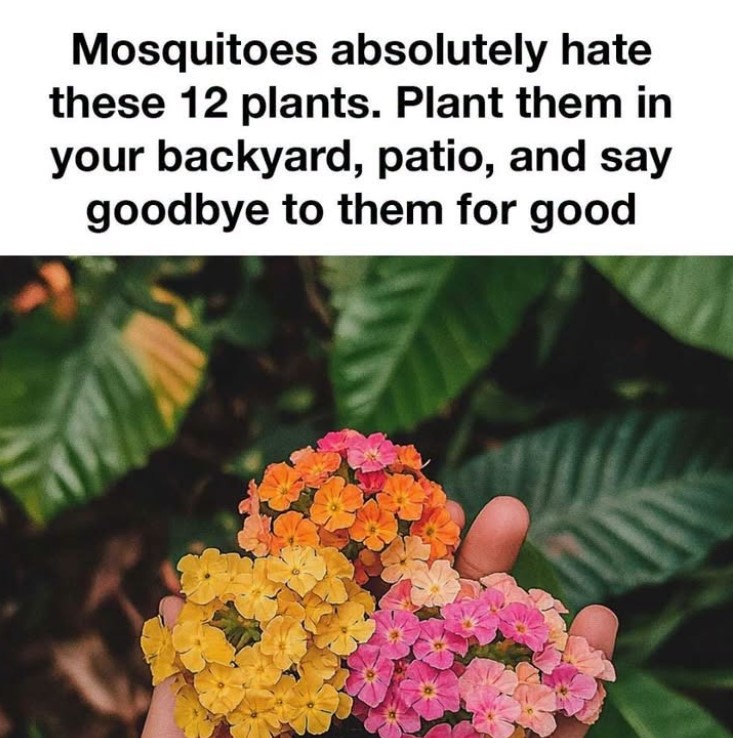
12. Lantana
Lantana adds something different to this list: abundant color.
Its clusters of flowers can attract butterflies and other pollinators, making it an appealing choice for gardeners who want to create a lively outdoor environment.
The original article includes lantana among its mosquito-repellent plant suggestions and notes its preference for sunny, well-drained locations.
Because lantana can thrive in warm conditions, it can be a strong performer during summer.
However, its behavior varies by species and climate, so gardeners should choose varieties appropriate for their region.
Where Should You Plant These Mosquito-Repelling Plants?
Plant placement matters.
Rather than scattering the plants randomly throughout your yard, think about where you actually spend time.
If your family eats dinner on the patio, place attractive containers nearby.
If mosquitoes are particularly annoying around the front door, consider fragrant plants near the entrance, provided the location offers suitable growing conditions.
Window areas, outdoor seating zones, balconies, and garden paths can all be useful locations.
The original article recommends grouping several mosquito-associated plants together around seating areas, doors, and windows.
Just remember that plants alone won’t create a guaranteed mosquito barrier.
Don’t Forget Standing Water
This may be more important than adding another plant.
Mosquitoes need water to reproduce, and surprisingly small amounts can provide breeding opportunities.
Check your yard regularly for water collecting in buckets, plant saucers, clogged gutters, toys, wheelbarrows, old containers, and other objects.
Empty standing water whenever possible.
Keep rain barrels properly covered and maintain swimming pools and decorative water features according to their care requirements.
If you reduce breeding sites while also using appropriate outdoor repellents and managing vegetation, you’ll have a much more effective overall strategy than relying on plants alone.
Keep Your Plants Healthy
A stressed plant may not produce the same amount of healthy foliage or aromatic compounds as a vigorous one.
Give each plant the conditions it actually needs.
Lavender and rosemary generally prefer drier, well-drained conditions.
Basil prefers warmth and consistent moisture.
Peppermint tolerates more moisture but can spread quickly.
Lemongrass likes warmth and sunlight.
Understanding the differences between these plants is more useful than treating all 12 as though they have identical requirements.
Healthy plants are also more attractive additions to the garden.
A Natural Garden Can Do More Than Repel Pests
One of the best things about these plants is that many have additional benefits.
Lavender provides beautiful flowers.
Basil and rosemary can be harvested for cooking.
Marigolds add bright color.
Lantana can attract butterflies.
Catnip can entertain cats.
Lemongrass can be used in cooking.
So even if their mosquito-repellent effects are modest in your particular garden, you’re not necessarily losing anything.
You’re still creating a more diverse and attractive outdoor space.
The Best Strategy Is a Combination
The biggest mistake would be treating these 12 plants as a guaranteed substitute for mosquito repellent.
Mosquito behavior is complicated, and simply surrounding yourself with fragrant plants won’t necessarily stop mosquitoes from landing on you.
For outdoor activities during periods of high mosquito activity, consider combining several approaches.
Wear appropriate clothing that covers exposed skin.
Use a proven insect repellent according to its label.
Install or maintain screens around outdoor living areas where practical.
Remove standing water.
Keep vegetation reasonably maintained.
And use fragrant plants as an attractive supplement to those measures.
This layered approach is far more realistic than expecting one lavender plant or pot of basil to solve the problem.
Final Thoughts
Mosquitoes can turn an otherwise beautiful backyard into a frustrating place, especially during warm evenings when everyone wants to spend more time outdoors. Fortunately, there are plenty of ways to make your garden less inviting to these unwanted visitors.
The 12 plants featured in the original article—citronella, lavender, marigolds, basil, peppermint, catnip, rosemary, lemongrass, scented geraniums, sage, eucalyptus, and lantana—are all interesting additions to consider.
What makes them especially appealing is that they can contribute something beyond their potential pest-deterring properties. Some provide beautiful flowers, some offer wonderful fragrances, and several can be harvested for cooking. With the right placement and growing conditions, they can make patios, balconies, walkways, and garden beds more attractive while potentially helping reduce mosquito activity nearby.
But don’t expect a completely mosquito-free yard simply because you’ve planted a few aromatic herbs and flowers. Plants are only one piece of the puzzle. Eliminating standing water, maintaining the yard, using screens where possible, and choosing effective personal repellents when necessary are all important parts of responsible mosquito control.
The smartest approach is to think of your garden as a layered defense rather than a single solution.
Choose plants that suit your climate and lifestyle. Place them near the areas where you actually spend time. Keep them healthy and well maintained. At the same time, inspect your property for places where mosquitoes can breed.
With a little planning, your backyard can become more colorful, more fragrant, more useful—and potentially less welcoming to mosquitoes.
And perhaps that’s the best reason to plant these varieties: even if they don’t make every mosquito disappear, they can turn your outdoor space into a garden you’ll genuinely enjoy spending time in.