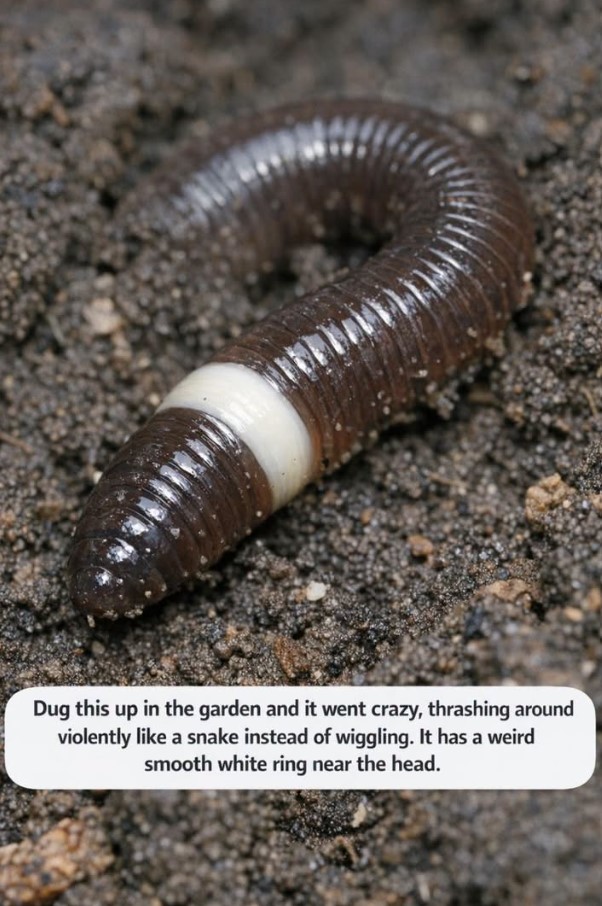
Gardening often comes with unexpected discoveries. Sometimes you dig into the soil expecting to find roots, worms, or stones—and instead you uncover something that looks unusual, moves aggressively, and can even be a little alarming. Many gardeners have reported finding strange creatures that twist, thrash, or resemble small snakes when disturbed. While the first reaction is often fear or confusion, most of these findings are completely harmless and play important roles in the soil ecosystem. Understanding what these creatures are can turn surprise into curiosity and even appreciation.
A Strange Discovery in the Soil
When something is pulled from the ground and immediately begins moving in a rapid, twisting motion, it can easily be mistaken for a snake or dangerous pest. Some larvae and soil-dwelling insects react strongly when exposed to light or touch, causing sudden movement that looks dramatic. In many cases, what appears to be a “violent” reaction is simply a defense mechanism.
One common feature reported is a smooth or ring-like marking near the head area. This detail often helps identify the organism, as many insect larvae have segmented bodies or distinct bands that become visible when they move.
What It Usually Turns Out To Be
In most cases, these mysterious garden creatures are not dangerous at all. They are often one of the following:
- Beetle larvae (such as June bug grubs)
- Soil-dwelling fly larvae
- Mole cricket nymphs
- Earthworms reacting unusually due to disturbance
These organisms all share one thing in common: they live underground and are highly sensitive to changes in light, vibration, and air exposure. When dug up, their instinct is to move quickly to escape and return to the soil.
Why It Moves So Violently
The sudden twisting or “thrashing” motion is not aggression—it is survival behavior. Underground creatures are adapted to dark, stable environments. When exposed, their nervous system reacts strongly to stress.
This movement may look alarming, but it is simply:
- A response to light exposure
- A reaction to temperature change
- An attempt to burrow back into soil
- A natural defense mechanism
What seems dramatic to humans is actually a normal biological reaction.
Is It Dangerous?
In almost all garden cases, these creatures are harmless to humans. They do not bite, sting, or attack. However, some larvae—like certain beetle grubs—can affect plant roots if present in large numbers.
Most of the time, though, they are simply part of the soil ecosystem, helping with decomposition and nutrient cycling.
The Role These Creatures Play in the Garden
Even though they may look strange or unpleasant at first, many soil organisms are beneficial. They help:
- Break down organic matter
- Improve soil aeration
- Support nutrient recycling
- Maintain healthy soil balance
A healthy garden soil is full of life, even if that life sometimes looks unusual.
What You Should Do If You Find One
If you come across one of these creatures while gardening, there is usually no need to panic. You can simply:
- Place it back into the soil
- Move it to a compost area
- Observe it briefly before returning it to its habitat
Avoid harming it unless you are certain it is a known plant pest affecting your garden.
Conclusion :
Discovering a strange, wriggling creature in your garden can be surprising, especially when it moves in a way that resembles a snake or shows unusual markings near its head. However, most of these organisms are harmless soil dwellers simply reacting to being disturbed. What may appear alarming at first is actually a natural survival response.
Instead of fear, these moments offer a chance to learn more about the hidden ecosystem beneath your feet. Soil is full of life, and each creature—no matter how strange it looks—plays a role in keeping the environment balanced and healthy. By understanding these organisms, gardeners can better appreciate the complex and fascinating world that exists just below the surface.