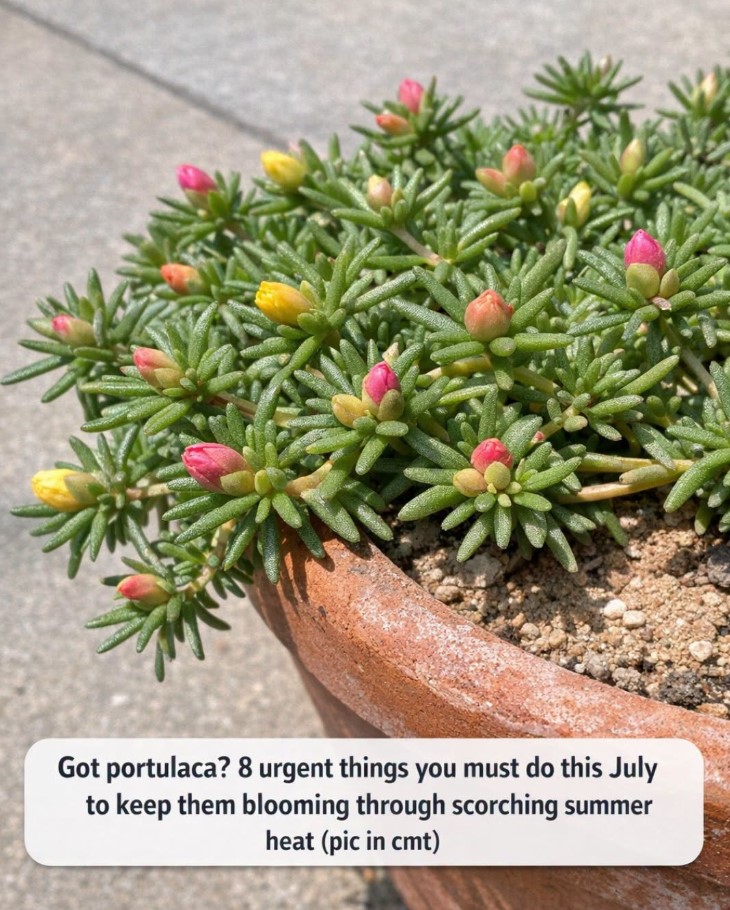
Portulaca, commonly known as moss rose, is one of the easiest and most rewarding flowering plants to grow during the hottest months of the year. Loved for its bright, rose-like blooms and succulent foliage, this hardy annual thrives in full sun and tolerates dry conditions better than many other bedding plants. Whether planted in containers, hanging baskets, window boxes, or garden beds, portulaca can provide a spectacular display of color from late spring until the first frost.
However, even though these heat-loving plants are incredibly resilient, July often brings extreme temperatures that can test their limits. Long stretches of intense sunshine, drying winds, and soaring daytime temperatures can reduce flowering if your plants aren’t receiving the right care. Fortunately, keeping portulaca healthy during midsummer doesn’t require complicated gardening techniques. A few timely maintenance tasks can encourage continuous blooming while helping your plants remain vigorous despite the scorching heat.
If you want your portulaca to stay lush, colorful, and full of flowers throughout July and beyond, here are eight essential care tips every gardener should know.
1. Water Deeply Instead of Watering Frequently
Although portulaca is highly drought tolerant, prolonged heat can dry out containers much faster than many gardeners realize.
Instead of giving your plants a small amount of water every day, aim for a deep watering whenever the soil has become dry several inches below the surface. Deep watering encourages stronger root development and helps plants withstand future hot weather.
When watering:
- Allow the water to soak the entire root zone.
- Make sure excess water drains freely from the container.
- Avoid leaving pots standing in water.
Remember that plants growing in containers usually need watering more often than those planted directly in the ground.
2. Water Early in the Morning
The time of day you water can make a significant difference during the peak of summer.
Morning watering gives roots plenty of time to absorb moisture before temperatures climb. It also allows excess moisture to evaporate throughout the day, reducing the likelihood of fungal problems.
Watering during the hottest part of the afternoon can lead to rapid evaporation, while watering late in the evening may leave soil damp overnight longer than necessary.
A consistent morning routine helps keep your plants hydrated and ready for the day’s intense sunshine.
3. Give Your Plants Plenty of Sun While Protecting Their Roots
Portulaca thrives in full sunlight and generally performs best with at least six to eight hours of direct sun every day.
However, extremely hot surfaces such as concrete patios, stone walkways, or dark-colored containers can cause root temperatures to rise dramatically.
If you’re growing portulaca in pots:
- Choose light-colored containers whenever possible.
- Elevate pots slightly to improve airflow underneath.
- Move containers away from heat-reflecting walls during extreme heat waves.
Healthy roots are the foundation of continuous flowering.
4. Remove Spent Blooms and Trim Leggy Growth
Regular grooming keeps portulaca looking fresh while encouraging additional flower production.
Although many varieties naturally shed old flowers, removing faded blooms and trimming overly long stems helps direct the plant’s energy toward producing new buds instead of maintaining aging growth.
If your plants have become stretched or sparse:
- Cut back long stems by about one-third.
- Remove any damaged or dried growth.
- Continue watering normally after pruning.
Within a couple of weeks, many plants respond with fuller growth and a new flush of blooms.
5. Feed Sparingly with a Bloom-Friendly Fertilizer
Unlike heavy-feeding annuals, portulaca performs well in relatively lean soil.
Applying excessive fertilizer—especially products high in nitrogen—often encourages leafy growth while reducing flower production.
For best results:
- Use a fertilizer formulated for flowering plants.
- Feed lightly every two to three weeks during active growth.
- Always follow the manufacturer’s recommended application rates.
A moderate feeding schedule provides enough nutrients without sacrificing blooms.
6. Make Sure Drainage Remains Excellent
One of the quickest ways to damage portulaca is allowing the roots to remain constantly wet.
Check containers regularly to ensure drainage holes remain open and unobstructed.
If the potting mix has become compacted or drains slowly:
- Loosen the top layer gently.
- Replace old, compacted soil if necessary.
- Consider repotting into a fast-draining cactus or succulent mix.
Good drainage is especially important after heavy summer rainstorms.
7. Watch Closely for Signs of Heat Stress
Even heat-loving plants can become stressed during prolonged periods of extremely high temperatures.
Keep an eye out for warning signs such as:
- Persistent wilting despite moist soil.
- Fewer flower buds.
- Yellowing foliage.
- Dry or scorched stem tips.
If you notice these symptoms, evaluate your watering routine, check drainage, and consider providing temporary afternoon shade during the hottest days.
Early intervention often prevents more serious problems later in the season.
8. Take Cuttings to Create New Plants
July is an excellent time to propagate healthy portulaca plants.
Simply cut several healthy stems a few inches long, remove the lower leaves, and place them in a well-draining rooting medium.
Keep the cuttings in bright, indirect light while maintaining lightly moist soil.
Within a couple of weeks, many cuttings will begin producing roots, giving you fresh young plants that can replace aging specimens or fill empty spaces in your containers before autumn arrives.
Propagation is an easy and economical way to enjoy even more blooms throughout the growing season.
Additional Tips for Long-Lasting Summer Color
Besides the eight essential tasks above, a few extra habits can make an even bigger difference.
- Avoid overcrowding containers with thirsty companion plants.
- Rotate pots occasionally so every side receives even sunlight.
- Inspect plants weekly for pests or damaged stems.
- Remove any diseased growth immediately.
- Clean containers regularly to prevent the buildup of algae and debris.
- Continue monitoring soil moisture during extended heat waves.
Small maintenance tasks performed consistently often produce the healthiest and most colorful displays.
Conclusion :
Portulaca has earned its reputation as one of the toughest flowering annuals for hot weather, but even these resilient plants benefit from a little extra attention during July’s most intense heat. Deep watering, proper drainage, light feeding, occasional pruning, and careful observation can keep your plants thriving when temperatures soar.
With just a few simple gardening habits, your containers and flower beds can remain filled with vibrant blooms well into late summer. Instead of watching your moss rose fade during the hottest weeks of the year, you’ll enjoy healthy plants that continue producing cheerful flowers day after day.
Give your portulaca the care they need now, and they’ll reward you with a spectacular display of color that brightens your outdoor space throughout the remainder of the season.