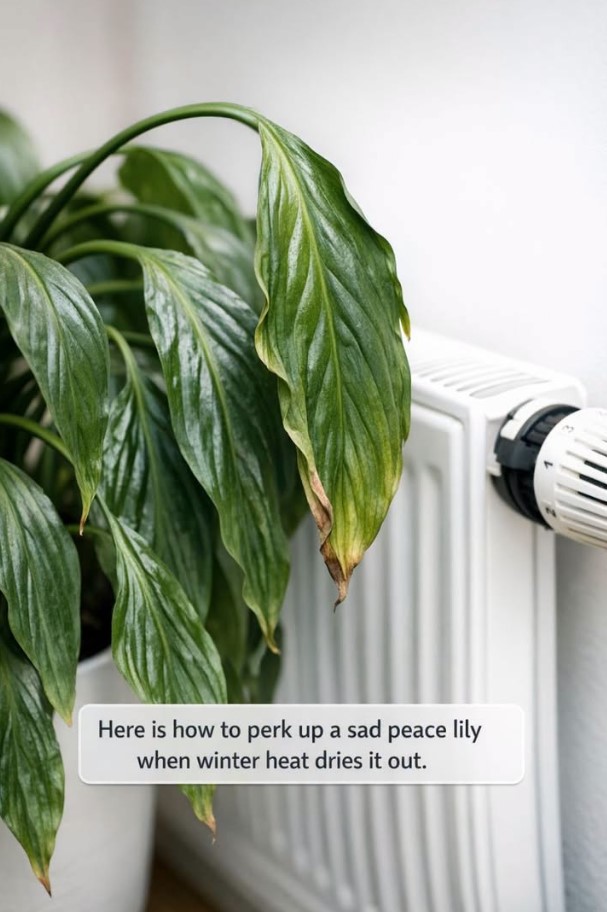
The peace lily is one of the most popular indoor plants, admired for its graceful white flowers, glossy green foliage, and ability to brighten almost any living space. Besides its elegant appearance, this tropical houseplant is appreciated for being relatively easy to care for, making it an excellent choice for both beginners and experienced plant enthusiasts. However, as temperatures drop and indoor heating systems begin running throughout the winter, many peace lily owners notice that their once-vibrant plant suddenly appears tired, droopy, or unhealthy.
Winter presents unique challenges for tropical houseplants. While your home may feel warm and comfortable, the heated indoor air often lacks the humidity that peace lilies naturally enjoy. Combined with shorter daylight hours and changes in watering needs, these conditions can leave your plant struggling to maintain its lush appearance.
Fortunately, a drooping peace lily isn’t always a sign that it’s beyond saving. In many cases, simple adjustments to its environment and care routine can help restore its health. By understanding what your plant needs during the colder months, you can encourage strong foliage, healthier roots, and even future blooms when spring arrives.
This guide explores practical ways to revive a stressed peace lily during winter while providing long-term care tips to help it remain healthy throughout the year.
Understanding Why Peace Lilies Struggle During Winter
Peace lilies are native to the warm, humid rainforests of Central and South America, where they grow beneath tall trees in filtered sunlight. Their natural environment provides consistent warmth, moist soil, and high humidity year-round.
Indoor winter conditions are dramatically different. Heating systems lower humidity levels, windows become colder, and sunlight becomes less intense due to shorter days. These environmental changes force the plant to adapt, often resulting in slower growth and visible signs of stress.
Rather than assuming the plant is dying, it’s helpful to recognize that many of these symptoms are simply the plant’s response to seasonal changes. With proper care, most peace lilies recover quickly once their growing conditions improve.
Common Signs That Your Peace Lily Needs Attention
Recognizing early warning signs allows you to address problems before they become severe.
Some of the most common symptoms include:
- Drooping or limp leaves
- Brown leaf tips
- Crispy leaf edges
- Yellowing older leaves
- Slower growth
- Fewer or no flowers
- Dry potting soil
- Leaves losing their deep green color
While these symptoms can seem alarming, they often point to manageable issues such as dry indoor air, inconsistent watering, or inadequate lighting rather than serious disease.
Step 1: Evaluate the Soil Before Watering
One of the biggest mistakes plant owners make during winter is watering on a fixed schedule. Because peace lilies grow more slowly during colder months, they generally require less water than they do during spring and summer.
Before reaching for the watering can, check the soil with your finger. Insert it about an inch into the potting mix. If the soil still feels damp, wait another day or two before watering again. If it feels dry at that depth, it’s usually time to water thoroughly.
Also pay attention to how the soil drains. Healthy potting mix should feel light and allow excess water to flow easily through the drainage holes. Soil that remains soggy for several days can deprive the roots of oxygen and eventually lead to root rot.
If the potting mix has become dense or compacted over time, gently loosen the surface with your fingers or a small gardening tool. Improved airflow helps water penetrate evenly while allowing the roots to breathe.
Step 2: Find the Best Location in Your Home
Where you place your peace lily during winter can have a tremendous impact on its health.
Many homes have areas that appear bright but expose plants to frequent temperature changes. Cold drafts from windows and blasts of warm air from heating vents create stressful conditions that tropical plants struggle to tolerate.
Instead, choose a location that offers:
- Bright, indirect sunlight
- Stable room temperatures
- Protection from heating vents
- Protection from exterior doors
- Good air circulation without strong drafts
A room that stays between 65°F and 80°F (18°C to 27°C) is generally ideal for maintaining healthy growth throughout the winter months.
Avoid placing your peace lily directly beside fireplaces, radiators, or space heaters, as these can rapidly dry both the leaves and the surrounding air.
Step 3: Increase Humidity Around the Plant
Humidity is one of the most overlooked aspects of winter houseplant care.
In tropical forests, humidity levels often remain above 60 percent. Inside heated homes, however, humidity can fall below 30 percent, creating conditions that encourage brown leaf tips and drooping foliage.
Fortunately, increasing humidity doesn’t have to be complicated.
One of the simplest methods is grouping several houseplants together. As plants naturally release moisture through transpiration, they create a small pocket of more humid air around one another.
Another effective option is placing a shallow tray filled with pebbles and water beneath or near the pot. As the water slowly evaporates, it increases the humidity surrounding the leaves without saturating the roots.
If your home becomes especially dry during winter, a small room humidifier can provide consistent moisture that benefits not only your peace lily but many other tropical houseplants as well.
Step 4: Adjust Your Winter Watering Routine
Winter watering differs significantly from summer watering.
Although peace lilies enjoy evenly moist soil, constantly wet roots can become problematic when growth slows during the colder months.
A better approach is to water deeply but less frequently. When the top inch of soil becomes dry, slowly add room-temperature water until it drains from the bottom of the pot. Empty any excess water from the saucer afterward so the roots are not left sitting in standing water.
Using water that is too cold may temporarily shock the root system, so allowing tap water to reach room temperature before watering can help reduce stress.
Pay attention to your plant’s behavior rather than following a strict weekly schedule. Every home has different humidity levels, temperatures, and lighting conditions, all of which influence how quickly the soil dries.
Step 5: Keep the Leaves Healthy and Clean
Healthy leaves allow peace lilies to absorb more light and efficiently produce energy during the darker winter months.
Dust naturally collects on indoor plants over time, reducing their ability to photosynthesize. Every few weeks, gently wipe each leaf with a soft, damp cloth to remove dust and restore its natural shine.
You can also lightly mist the leaves if your home’s air is particularly dry, although misting should supplement—not replace—proper humidity management.
Inspect the foliage while cleaning. Remove leaves that have become completely yellow, badly damaged, or dried out. Pruning these leaves allows the plant to direct its energy toward healthy new growth instead of trying to maintain tissue that can no longer recover.
Taking just a few minutes to care for the foliage can make a noticeable difference in the overall appearance and vigor of your peace lily throughout the winter season.
Step 6: Refresh the Potting Mix When Needed
Even if your peace lily doesn’t need a larger container, the potting mix itself can lose its structure over time. Repeated watering gradually compacts the soil, making it harder for water, oxygen, and nutrients to reach the roots.
If the surface of the soil has become dense or crusty, gently remove the top inch or two and replace it with fresh, high-quality indoor plant potting mix. This simple refresh provides new organic matter while improving moisture retention and drainage.
If your peace lily has completely outgrown its container, wait until spring to repot whenever possible. Repotting during the active growing season allows the roots to establish themselves much more quickly than during winter dormancy.
Step 7: Fertilize Sparingly During the Cold Months
Unlike spring and summer, winter is generally a period of slower growth for peace lilies. Because the plant isn’t producing as many new leaves or flowers, it requires fewer nutrients.
In most homes, fertilizing can be paused until temperatures begin warming and daylight hours increase. If your plant continues to produce healthy new leaves during winter, you may apply a balanced liquid houseplant fertilizer at half the recommended strength once every six to eight weeks.
Applying too much fertilizer while the plant is resting may lead to salt buildup in the soil, which can cause brown leaf tips and unnecessary stress.
When spring arrives, gradually resume your normal feeding schedule to encourage vigorous growth and flowering.
Step 8: Give Your Peace Lily More Light
Reduced daylight is one of the biggest challenges for indoor plants during winter.
Although peace lilies tolerate lower light conditions better than many tropical plants, they still benefit from bright, indirect light. Position your plant near an east-facing or north-facing window whenever possible, where it can receive gentle natural light without direct afternoon sun.
If your home receives very little natural light, consider using a full-spectrum LED grow light. Running the light for 10 to 12 hours each day can provide enough illumination to support healthy foliage throughout the darker months.
Remember that more light doesn’t necessarily mean direct sunlight. Harsh afternoon rays shining through glass can scorch the leaves, leaving behind pale or brown patches.
Step 9: Rescue a Severely Wilted Plant
If your peace lily has become dramatically wilted after accidentally drying out, don’t panic. These resilient plants often recover surprisingly well when watered correctly.
Begin by checking the soil. If it has become extremely dry and is pulling away from the sides of the pot, ordinary watering may not be enough because the soil can repel moisture.
Instead, place the entire pot into a basin filled with lukewarm water. Allow the root ball to absorb moisture from the bottom for approximately 20 to 30 minutes.
Once the soil feels evenly moist, remove the pot and allow excess water to drain completely before returning it to its usual location.
Most healthy peace lilies begin showing noticeable improvement within several hours, although severely dehydrated plants may need a day or two before their leaves fully recover.
Step 10: Maintain a Consistent Care Routine
Consistency is often more important than perfection.
Rather than making dramatic changes every week, establish a routine that includes:
- Checking soil moisture before watering.
- Wiping dust from the leaves every few weeks.
- Monitoring humidity levels.
- Rotating the pot occasionally for even growth.
- Inspecting the plant for pests or damaged foliage.
- Keeping temperatures stable.
These simple habits reduce stress and help your peace lily remain healthy throughout the winter season.
Common Mistakes to Avoid
Even experienced gardeners occasionally make mistakes during winter. Fortunately, most problems can be prevented with a little extra attention.
Watering Too Often
The most common mistake is watering before the soil has partially dried. Constantly wet roots can lead to root rot, one of the few conditions that can seriously damage a peace lily.
Ignoring Humidity
Many people focus entirely on watering while overlooking humidity. Dry indoor air often causes brown leaf tips even when watering is correct.
Placing the Plant Near Heat Sources
Warm air blowing directly onto the foliage quickly dries the leaves and may cause curling or crispy edges.
Using Cold Water
Very cold water can temporarily shock the roots. Room-temperature water is generally the safest choice.
Expecting Rapid Growth
Peace lilies naturally slow down during winter. Reduced growth isn’t necessarily a sign that something is wrong.
Frequently Asked Questions
Why are my peace lily’s leaves drooping even after watering?
Persistent drooping can result from overwatering, root damage, poor drainage, or low temperatures. Check the soil carefully before watering again and ensure excess water can drain freely.
Should I mist my peace lily every day?
Occasional misting can temporarily increase humidity, but it should not replace proper humidity management. A humidifier or pebble tray provides more consistent results.
Why are the leaf tips turning brown?
Brown tips are commonly caused by dry indoor air, inconsistent watering, mineral buildup from tap water, or excessive fertilizer. Identifying the underlying cause will help prevent further damage.
Can peace lilies bloom during winter?
Although flowering is less common during the colder months, healthy plants receiving sufficient light and proper care may occasionally produce blooms.
Is yellowing always a sign of overwatering?
Not necessarily. Older leaves naturally yellow and die over time. However, widespread yellowing often indicates excessive moisture or poor drainage.
Final Thoughts
Winter can be a challenging season for indoor plants, but it doesn’t have to mean the decline of your peace lily. By understanding how colder weather affects moisture, humidity, light, and growth, you can make simple adjustments that keep your plant healthy until spring returns.
The key is to observe your peace lily regularly and respond to its changing needs rather than following a rigid care schedule. Small actions—such as improving humidity, watering only when needed, cleaning the leaves, and providing bright indirect light—can dramatically improve the plant’s appearance and overall health.
With a little patience and consistent care, your peace lily can remain lush, vibrant, and attractive throughout the winter months. When warmer weather arrives and daylight increases, your efforts will be rewarded with vigorous new growth and, in many cases, the return of its beautiful white blooms. A healthy peace lily not only enhances your home with its elegant foliage but also serves as a lasting reminder that attentive care can help even the most stressed houseplants flourish year after year.