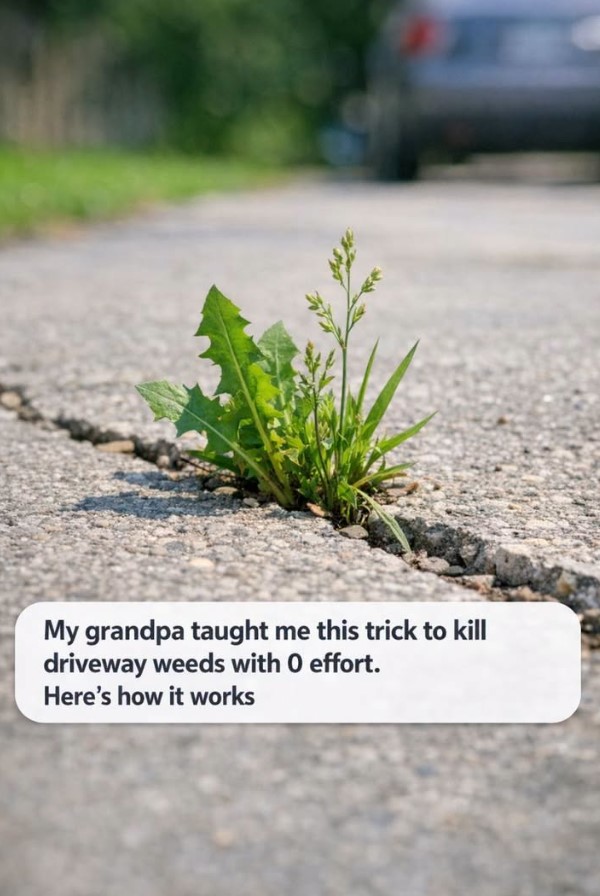
Weeds have an amazing ability to find the tiniest crack in a driveway and turn it into their new home. One week your driveway looks neat and tidy, and the next, stubborn green sprouts seem to appear overnight. While there are plenty of commercial weed killers available, many homeowners prefer simpler, less expensive methods that don’t require heavy labor or harsh chemicals. That’s where an old-fashioned trick, passed down through generations, comes in handy.
If your grandpa ever seemed to have the cleanest driveway on the block without spending hours pulling weeds, there’s a good chance he relied on a practical method that uses common household ingredients and a little patience. While no solution is completely effortless, this technique can make weed control much easier and help keep your driveway looking well maintained throughout the season.
Why Weeds Love Driveway Cracks
Driveway cracks provide nearly perfect conditions for weeds to grow. Tiny amounts of soil, dust, fallen leaves, and moisture collect inside these narrow spaces, creating just enough nutrients for seeds carried by the wind to germinate.
Because these cracks are difficult to reach with lawn equipment, weeds often establish themselves before homeowners even notice them. Once their roots spread deeper into the cracks, removing them becomes much more challenging.
The Simple Household Trick
One of the oldest home remedies for driveway weeds involves using boiling water. It may sound almost too simple, but extremely hot water can damage the leaves, stems, and root systems of many young weeds.
To use this method:
- Bring a pot or kettle of water to a rolling boil.
- Carefully pour the boiling water directly onto the weeds growing in the cracks.
- Make sure the water reaches the base of the plant for the best results.
- Repeat the treatment after several days if new growth appears.
This works especially well for young weeds that haven’t developed extensive root systems.
Why It Can Be Effective
Boiling water destroys plant cells almost instantly. The intense heat causes the leaves to wilt quickly and can travel down into the roots, weakening or killing the plant.
Unlike chemical herbicides, boiling water leaves no synthetic residue behind. It’s inexpensive, readily available, and requires no special equipment beyond a kettle or saucepan.
However, it’s important to remember that boiling water kills any plant it touches, so avoid pouring it near flowers, grass, or desirable landscaping.
For Tougher or Older Weeds
Some weeds develop thick, established roots that may survive a single treatment. In these cases, persistence is key.
For stubborn weeds:
- Apply boiling water multiple times over several days.
- Pull the weed after the roots have weakened.
- Remove as much of the root system as possible to slow regrowth.
Combining heat treatment with manual removal often produces better long-term results than either method alone.
Keeping New Weeds from Coming Back
Once you’ve cleared the existing weeds, preventing new ones from taking hold is much easier than constantly removing mature plants.
Some effective prevention strategies include:
- Sweeping dirt and leaves from the driveway regularly.
- Filling cracks with an appropriate crack filler or sealant.
- Applying polymeric sand between pavers if applicable.
- Inspecting the driveway every few weeks and removing tiny sprouts before they mature.
A little preventive maintenance can save hours of work later.
Other Natural Weed Control Options
If boiling water isn’t practical for every situation, several other household solutions are commonly used by gardeners.
These include:
- White vinegar sprayed directly onto weeds during hot, sunny weather.
- A small amount of dish soap mixed with vinegar to help it stick to leaves.
- Hand weeding after rain, when the soil is softer.
- Flame weeders designed specifically for outdoor weed control (used carefully and according to safety instructions).
Each method has advantages and limitations, so choosing the right one depends on your driveway and the surrounding landscape.
Safety Comes First
Although boiling water is a natural solution, it still requires caution.
Always:
- Wear closed-toe shoes.
- Carry hot water carefully to avoid spills.
- Keep children and pets away while treating weeds.
- Avoid pouring boiling water onto decorative plants or lawns.
Taking a few simple precautions helps prevent accidental burns or damage to nearby vegetation.
Is This Really a Zero-Effort Solution?
The phrase “zero effort” certainly grabs attention, but in reality, no weed-control method is completely maintenance-free. Even natural remedies require occasional retreatment because new weed seeds continuously arrive through wind, birds, and rain.
The real advantage of this old-fashioned trick is its simplicity. You don’t need expensive equipment, complicated chemicals, or hours of back-breaking labor. For many homeowners, a kettle of boiling water and a few minutes of attention are enough to keep driveway cracks looking much cleaner throughout the growing season.
Final Thoughts
Sometimes the best home maintenance tips aren’t the newest inventions—they’re the practical habits passed down through generations. Using boiling water to tackle driveway weeds is a straightforward, budget-friendly method that many people have relied on for years because it works surprisingly well on young, newly sprouted weeds. It’s quick to prepare, requires no specialized products, and can be an excellent first step before turning to stronger weed-control measures.
That said, it’s important to set realistic expectations. Deep-rooted or well-established weeds may need repeated treatments or manual removal, and preventing future growth by keeping cracks clean and sealed is just as important as eliminating the weeds you already have. Regular inspections and early action can make a noticeable difference over time.
Whether you choose boiling water, vinegar, hand-pulling, or another natural approach, consistency is the secret to success. Small maintenance tasks completed throughout the season are far easier than dealing with a driveway that’s become overrun with weeds. By combining simple prevention with proven home remedies, you can enjoy a cleaner, more attractive driveway while reducing the need for harsh chemicals and expensive products. Sometimes, Grandpa’s practical advice really does stand the test of time.