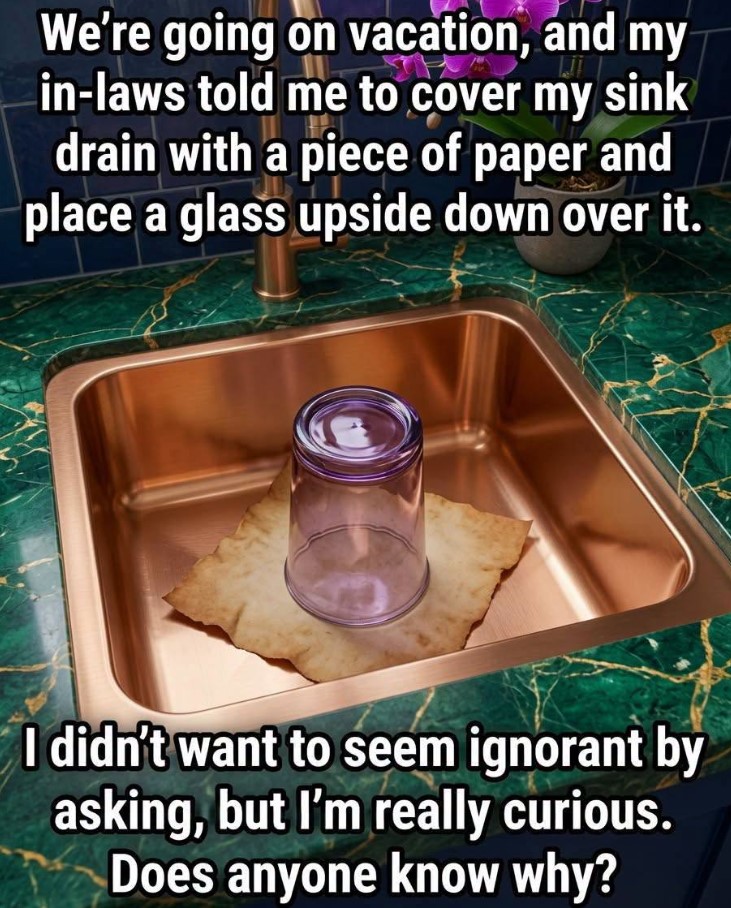
Before heading out on vacation, many homeowners have a familiar checklist: lock the doors, unplug unnecessary electronics, set the thermostat, take out the trash, and double-check that the windows are secure. Yet every so often, an old household tradition resurfaces online and leaves people wondering whether they’ve been missing an important step all along. One such practice is placing a sheet of paper over the kitchen sink drain and covering it with an upside-down glass before leaving home. It may look unusual, but countless people swear by it, claiming it helps keep unwanted odors, insects, or even mysterious plumbing issues at bay.
So, is this old-fashioned trick actually effective, or is it simply another household myth that’s been passed from generation to generation? The truth lies somewhere in between. While the “upside-down glass” method has some practical logic behind it, it isn’t a complete solution for protecting your home while you’re away. Understanding why people use it—and what modern experts recommend instead—can help you prepare your home with confidence before your next trip.
Where Did the Upside-Down Glass Sink Hack Come From?
Long before today’s plumbing systems and home maintenance products, families relied on simple techniques to prevent unpleasant surprises after returning from an extended trip.
The idea was straightforward:
- Cover the drain opening.
- Create a temporary seal.
- Reduce odors coming from the pipes.
- Discourage insects from entering through the drain.
Using a piece of paper underneath the glass helped create a tighter barrier while making it easy to see whether the glass had been disturbed during the homeowner’s absence.
Although this tradition may seem outdated today, it reflects practical problem-solving from a time when many homes had less reliable plumbing.
Does It Actually Work?
The answer is: sometimes—but only to a limited extent.
An upside-down glass can partially block airflow from the drain and may discourage certain insects from emerging through the opening.
However, it does not create an airtight seal.
If sewer odors are entering your home because a drain trap has dried out or there is a plumbing issue, simply placing a glass over the drain won’t solve the underlying problem.
Think of it as a temporary barrier rather than a true preventive measure.
Why Do Sink Drains Sometimes Smell After Vacation?
The most common culprit is a dry P-trap.
The curved pipe beneath every sink is designed to hold a small amount of water. That water acts as a barrier between your home and the sewer system, preventing unpleasant gases from entering your living space.
When a house sits unused for an extended period, especially in warm climates, the water inside the trap can slowly evaporate.
Once the water disappears, sewer gases have a direct path into the room.
This is one of the main reasons some people notice unpleasant odors after returning from vacation.
Can It Keep Bugs Out?
Some insects are attracted to damp plumbing systems.
Drain flies, cockroaches, and other pests may occasionally use drains as pathways into a home.
Covering the drain can make access more difficult.
However, determined insects can often find other routes if there’s an existing infestation or structural opening.
If pests are a recurring problem, it’s better to address the source rather than relying solely on a glass placed over the drain.
Better Ways to Prepare Your Sink Before Leaving
Modern home maintenance experts recommend several simple steps that are generally more effective.
Run Water Into Every Drain
Before leaving, let water run for several seconds in:
- Kitchen sinks
- Bathroom sinks
- Bathtubs
- Showers
- Laundry drains
- Floor drains
This refills every P-trap with fresh water.
Clean the Drain
Food particles and grease left inside kitchen drains can begin producing unpleasant odors over time.
Cleaning the drain before leaving helps minimize smells and reduces buildup.
Dispose of Garbage
Never leave food scraps sitting in the sink or garbage disposal.
Even small amounts can produce odors or attract insects while you’re away.
Empty the Trash
Taking out all indoor garbage before leaving is one of the easiest ways to prevent unpleasant surprises when you return.
Consider a Drain Stopper
Unlike an upside-down glass, a properly fitted drain stopper creates a more secure barrier against airflow and insects.
Should You Pour Bleach Down the Drain?
Many people believe bleach disinfects drains before vacation.
While bleach can temporarily reduce bacteria, it is generally not the best solution for routine drain maintenance.
It may not remove grease or food residue effectively, and frequent use can be harsh on certain plumbing systems.
Instead, cleaning the drain thoroughly and flushing it with water is often sufficient.
What About Pouring Oil Into the Drain?
Some homeowners pour a small amount of mineral oil into infrequently used drains before long trips.
The oil floats on top of the water inside the P-trap, slowing evaporation.
While this technique can be useful for drains that won’t be used for weeks or months, it’s generally unnecessary for short vacations.
Other Pre-Vacation Home Tips
Preparing your sink is only one part of protecting your home.
Before leaving, remember to:
- Turn off unnecessary appliances.
- Check for leaking faucets.
- Empty perishable food from the refrigerator if needed.
- Set your thermostat appropriately.
- Lock all doors and windows.
- Arrange for someone to collect your mail.
- Water indoor plants or ask a neighbor for help.
- Ensure smoke detectors have working batteries.
A few minutes of preparation can make returning home much more enjoyable.
Common Myths About the Sink Hack
Myth: The Glass Completely Blocks Sewer Gas
Not necessarily.
Unless an airtight seal is created, gases can still escape around the edges.
Myth: It Prevents All Insects
It may discourage some insects but won’t solve an existing pest problem.
Myth: Every Home Needs This Trick
Many modern homes with properly functioning plumbing don’t require it at all.
Frequently Asked Questions
Should I cover every drain before vacation?
It’s optional. If it gives you peace of mind, using drain stoppers is generally more effective than an upside-down glass.
How long does it take for a P-trap to dry out?
This varies depending on temperature, humidity, and how often the drain is used. In some homes, it may take several weeks, while in hot, dry conditions it can happen more quickly.
Is the paper necessary?
Not really. The paper was traditionally used to help stabilize the glass and provide a slight barrier, but it’s not essential.
What’s the best way to avoid odors?
Running water through every drain before leaving and ensuring your plumbing is functioning properly are usually the most effective preventive measures.
Conclusion :
The tradition of covering a sink drain with a piece of paper and an upside-down glass is one of those fascinating household habits that has survived through generations. While it may seem unusual today, the practice originated as a simple way to reduce odors and discourage insects from entering through drains during extended absences. Although the method isn’t entirely without merit, modern plumbing systems and better home maintenance practices have made it far less essential than it once was.
If you’re preparing for vacation, your best approach is to focus on proven preventive measures rather than relying on a single household trick. Running water through every drain, cleaning sinks and garbage disposals, removing food waste, taking out the trash, checking for leaks, and using proper drain stoppers when needed will do far more to keep your home fresh and protected while you’re away. These simple steps address the actual causes of odors and reduce the chances of returning to unpleasant surprises.
That doesn’t mean the upside-down glass tradition has no place. For some families, it’s a comforting ritual that’s been passed down over the years, and there’s nothing wrong with continuing it if it provides peace of mind. Just remember that it’s best viewed as an extra precaution—not a substitute for good home maintenance. By combining time-tested wisdom with today’s practical recommendations, you can leave for your trip knowing your home is well prepared, allowing you to relax and enjoy your vacation without unnecessary worries.