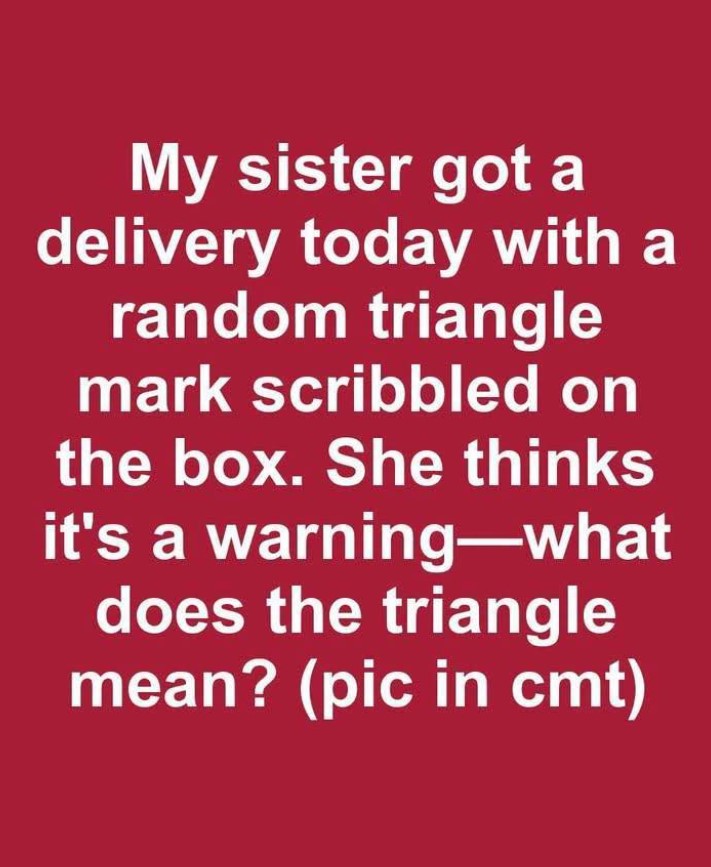
Receiving a package is usually an ordinary part of everyday life, but occasionally something unusual catches your eye. Maybe it’s an unfamiliar sticker, an odd handwritten symbol, or a simple shape drawn on the cardboard. One of the markings that sometimes raises concern is a hand-drawn triangle. After seeing it on a delivery box, it’s understandable that someone might wonder whether it carries a hidden meaning or serves as some kind of warning.
Stories circulating on social media often claim that mysterious symbols on packages or outside homes are secret messages used by criminals to identify potential targets. While these stories can be alarming, most have little or no evidence supporting them. In reality, there are many perfectly ordinary reasons why a package might have a triangle, circle, checkmark, or other handwritten symbol on it. Understanding how packages move through warehouses and delivery networks can help separate common logistics practices from internet myths.
Before assuming the worst, it’s worth exploring the many explanations behind these markings, how delivery companies handle packages, and what signs actually deserve your attention.
Why Packages Often Have Handwritten Marks
Every day, millions of packages travel through sorting facilities, trucks, airplanes, and local delivery centers before reaching customers.
Throughout that journey, employees may add temporary markings for practical reasons, including:
- Sorting packages.
- Confirming inspections.
- Identifying damaged boxes.
- Directing items to specific loading areas.
- Helping drivers organize deliveries.
Many of these notes are made quickly with markers and are intended only for internal use.
A Triangle Usually Isn’t a Secret Code
A simple triangle drawn on a box is rarely cause for concern.
Depending on the company and location, it may simply indicate:
- A completed inspection.
- A sorting category.
- A routing checkpoint.
- A warehouse handling note.
- An employee’s personal marking system.
Because different shipping companies use different procedures, there is no universal meaning for a hand-drawn triangle.
The Truth About Viral Delivery Myths
Over the years, social media has spread numerous claims suggesting that symbols on homes, fences, mailboxes, or packages are secret codes used by criminals.
Most of these stories have never been supported by law enforcement investigations.
While criminals certainly use many methods to commit theft, there is little credible evidence that random marker symbols on delivery boxes form part of a widespread organized coding system.
In many cases, the simplest explanation is also the correct one: the mark was made during shipping or handling.
Common Reasons Warehouse Workers Mark Boxes
Distribution centers handle enormous volumes of packages every hour.
Employees sometimes write directly on boxes to:
- Identify damaged packaging.
- Flag priority shipments.
- Mark completed quality checks.
- Indicate loading zones.
- Separate oversized items.
These handwritten notes help workers process packages more efficiently.
Could It Be From the Driver?
Delivery drivers also occasionally make marks during their routes.
For example, they may:
- Organize deliveries by neighborhood.
- Identify apartment complexes.
- Mark packages requiring signatures.
- Separate fragile items.
- Track packages that require special handling.
These markings are typically erased from memory as soon as the delivery is complete.
Printed Symbols vs. Handwritten Marks
It’s important to distinguish between professionally printed symbols and handwritten ones.
Printed markings often indicate:
- Recycling information.
- Shipping certifications.
- Orientation instructions.
- Hazard classifications.
- Manufacturer information.
Handwritten symbols, on the other hand, are usually temporary notes created during shipping.
When Should You Actually Be Concerned?
Although a triangle itself usually isn’t a problem, there are situations where a package deserves closer inspection.
Look for:
- Torn packaging.
- Broken seals.
- Evidence of tampering.
- Large punctures.
- Missing contents.
- Strange odors.
- Leaking liquids.
- Unexpected weight differences.
These physical signs are far more meaningful than a simple marker drawing.
What to Do Before Opening a Suspicious Package
If something seems genuinely unusual:
- Examine the shipping label.
- Check whether your name and address are correct.
- Photograph the package before opening.
- Compare the condition with the delivery confirmation photo if available.
- Contact the retailer if anything appears damaged.
Taking photos can be helpful if you need to file a claim.
Understanding Modern Shipping Networks
Packages often travel through:
- Automated conveyor systems.
- Regional sorting hubs.
- Air cargo facilities.
- Local distribution centers.
- Delivery trucks.
Along the way, multiple employees may inspect or handle each package, increasing the chances that temporary notes or symbols are added.
Why Marker Ink Is Common
Warehouse workers frequently use permanent markers because they’re:
- Easy to see.
- Quick to apply.
- Resistant to moisture.
- Inexpensive.
- Effective on cardboard.
Simple shapes are often faster to draw than writing full words.
Could Different Companies Use Different Symbols?
Absolutely.
Each shipping company—and sometimes each individual warehouse—may have its own internal practices.
One facility’s triangle could mean something entirely different from another facility’s triangle.
Because there is no industry-wide standard, it’s impossible to assign a universal meaning to a single handwritten shape.
How to Protect Yourself From Package Theft
Rather than worrying about harmless markings, focus on proven security measures.
Helpful strategies include:
- Tracking deliveries in real time.
- Retrieving packages promptly.
- Installing a doorbell camera.
- Using package lockers.
- Requesting signature confirmation.
- Asking neighbors to collect deliveries when you’re away.
These precautions reduce the risk of porch theft far more effectively than interpreting handwritten symbols.
Signs of a Legitimate Delivery Problem
Sometimes a package may require attention for reasons unrelated to marker symbols.
Watch for:
- Incorrect shipping labels.
- Water damage.
- Crushed corners.
- Rattling contents.
- Missing tape.
- Open flaps.
- Incorrect recipient information.
If you notice these issues, contact the seller before using the contents.
Why Internet Rumors Spread So Quickly
Stories involving mysterious symbols naturally attract attention because they create curiosity and uncertainty.
People often:
- Share unusual photos.
- Repeat unverified claims.
- Assume the worst without evidence.
- Connect unrelated events.
As these posts circulate, speculation can easily become mistaken for fact.
Practical Steps If You’re Unsure
If you receive a package with an unfamiliar mark:
- Inspect the box carefully.
- Verify the shipping information.
- Open it normally if there are no signs of tampering.
- Contact the retailer or shipping company if anything appears damaged.
- Report suspicious activity only if there is genuine evidence of theft or tampering.
Remaining calm and relying on observable facts is usually the best approach.
Common Delivery Markings You Might See
Besides triangles, you may notice:
- Circles.
- Checkmarks.
- Numbers.
- Letters.
- Arrows.
- Initials.
- Colored stickers.
- Barcodes.
Nearly all of these are routine parts of the shipping process rather than secret messages.
Conclusion :
Finding an unfamiliar triangle or other handwritten symbol on a package can certainly spark curiosity, especially after reading stories online that suggest such markings have hidden meanings. In reality, however, most simple marker drawings are far more likely to be routine notes made by warehouse employees or delivery drivers as packages move through busy sorting facilities. Without additional evidence, a single triangle on a cardboard box should not automatically be viewed as a warning sign or proof of suspicious activity. Modern shipping systems rely on countless temporary markings, labels, and handwritten notes to keep millions of deliveries organized every day.
What deserves your attention is the overall condition of the package rather than the symbol itself. Signs such as broken seals, torn cardboard, water damage, punctures, leaking contents, or evidence that the box has been opened are much stronger indicators that something may be wrong. If your package arrives intact, properly sealed, and contains everything you ordered, a handwritten mark is generally nothing more than a harmless part of the shipping process. Taking a few moments to inspect the package before opening it can provide peace of mind while helping you identify any legitimate issues that may need to be reported.
The next time you notice an unusual mark on a delivery box, it’s helpful to remember that curiosity doesn’t have to lead to unnecessary worry. Most packages pass through several facilities and many different hands before reaching your doorstep, making temporary markings a normal part of their journey. By focusing on verified information instead of internet rumors, you can confidently distinguish between ordinary shipping practices and situations that truly require attention, ensuring that your deliveries remain a source of convenience rather than concern.