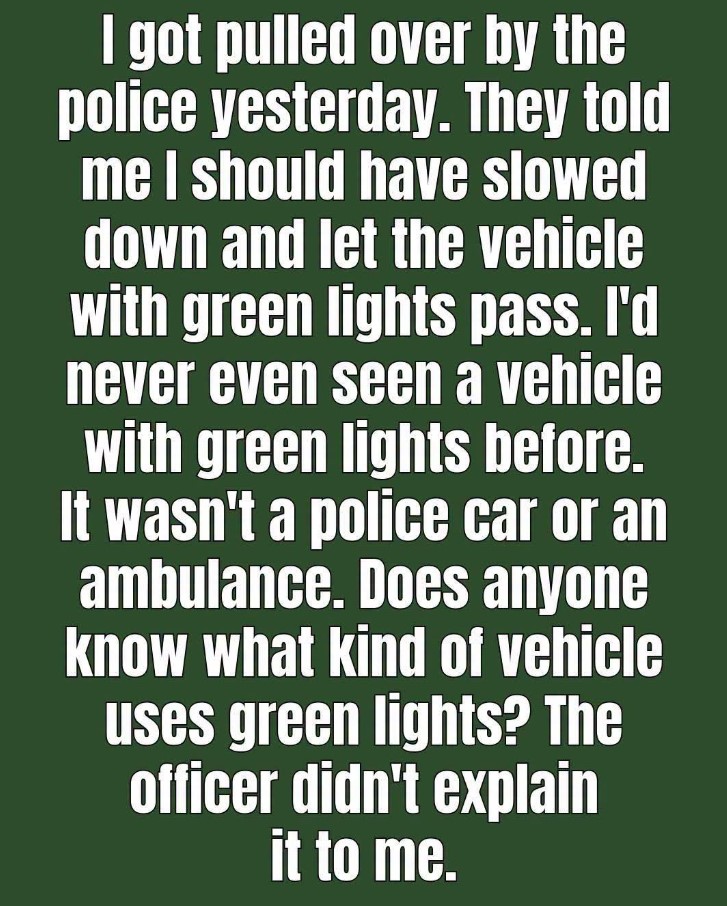
Most drivers are familiar with the flashing red and blue lights of police vehicles or the bright red lights used by fire engines and ambulances. But every now and then, someone encounters a vehicle displaying flashing or steady green lights and is left wondering what they mean. Because green emergency-style lights are far less common than other warning lights, they often cause confusion, especially for drivers who have never seen them before.
If you’ve ever found yourself asking, “Why does that car have green lights?” you’re certainly not alone. Social media posts and online forums are filled with stories from motorists who were surprised to encounter vehicles displaying green lights and weren’t sure whether they needed to slow down, pull over, or simply continue driving.
The answer isn’t always straightforward because the meaning of green lights varies depending on where you live. Different states, provinces, and countries have their own traffic laws governing which vehicles may use green lights and what privileges those vehicles have on the road.
Understanding what green vehicle lights typically represent can help you respond appropriately, improve road safety, and avoid unnecessary confusion if you encounter one during your travels.
Are Green Lights Considered Emergency Lights?
Not always.
Unlike red and blue lights, which are commonly reserved for emergency responders, green lights usually serve as identification rather than a command.
In many places, they indicate that a vehicle belongs to someone performing an emergency-related role but who may not have the same legal authority as police officers or ambulance crews.
Because laws differ by jurisdiction, it’s important to understand that green lights do not carry a universal meaning.
Who Commonly Uses Green Lights?
Several types of vehicles may legally display green lights, depending on local regulations.
These can include:
- Volunteer firefighters
- Volunteer emergency medical responders
- Incident commanders
- Search and rescue personnel
- Emergency management officials
- Community emergency response teams
Their purpose is often to help identify themselves while responding to an emergency call.
Volunteer Firefighters and Green Lights
One of the most common uses of green lights is by volunteer firefighters.
In many rural communities, volunteer firefighters respond from their homes or workplaces rather than remaining at a fire station.
When they receive an emergency call, they drive their personal vehicles toward the station or directly to the emergency scene.
Green lights help identify them as emergency volunteers responding to an active incident.
However, displaying a green light usually does not automatically give them the same legal driving privileges as police officers or ambulances.
Do You Have to Pull Over?
This is where many drivers become confused.
The answer depends entirely on local traffic laws.
In some areas:
- Drivers are encouraged to yield whenever it is safe.
- Slowing down is considered courteous and helps emergency volunteers reach their destination more quickly.
- Yielding may be required under specific circumstances.
In other regions:
- Green lights are informational only.
- Drivers are not legally required to pull over.
- The volunteer driver must obey normal traffic laws.
Because regulations vary, every driver should become familiar with the laws where they live.
Why Aren’t Green Lights Used Everywhere?
Traffic laws are created by individual states, provinces, and national governments.
As a result:
- Some jurisdictions authorize green lights.
- Others prohibit them entirely.
- Some allow only flashing lights.
- Others permit steady green lights.
This explains why many experienced drivers may never encounter one.
Why Green?
Green was chosen because it is easily distinguishable from other emergency colors.
Traditionally:
- Red indicates fire services and medical emergencies.
- Blue often identifies police.
- Amber commonly marks service and maintenance vehicles.
- Green provides another recognizable option without conflicting with existing emergency lighting systems.
The goal is to improve identification while minimizing confusion.
Green Lights Are Not Permission to Ignore Traffic Laws
One common misconception is that a green light gives the driver permission to speed, ignore stop signs, or disregard traffic signals.
In many jurisdictions, this isn’t true.
Volunteer responders operating personal vehicles usually remain subject to:
- Speed limits
- Traffic signals
- Stop signs
- Right-of-way rules
The green light simply lets other motorists know they may be responding to an emergency.
Other Vehicles That May Display Green Lights
Besides volunteer firefighters, green lights may occasionally appear on:
Incident Command Vehicles
Officials coordinating emergency scenes sometimes use green lighting for identification.
Search and Rescue Units
Organizations involved in locating missing people or assisting during natural disasters may use green lights under local regulations.
Emergency Management Personnel
Some agencies authorize green lights for personnel responding during severe weather, floods, or other emergencies.
Green Lights Around the World
Different countries assign different meanings to colored vehicle lights.
For example:
- One country may reserve green exclusively for volunteer firefighters.
- Another may use green for doctors responding to emergencies.
- Elsewhere, green lights may have no official meaning at all.
International travelers should avoid assuming that lighting rules are identical everywhere.
What Should You Do If You See Green Lights?
If you encounter a vehicle displaying green lights:
Stay Calm
Avoid sudden braking or unpredictable lane changes.
Observe the Situation
Determine whether the vehicle appears to be responding urgently.
Yield If Appropriate
If local laws require yielding—or if doing so safely helps the vehicle pass—it is generally a courteous decision.
Never Panic
Green lights are meant to improve awareness, not create confusion.
Always prioritize safe driving.
Can Anyone Install Green Lights?
No.
In many places, unauthorized installation or use of emergency-style lights is illegal.
Penalties may include:
- Traffic citations
- Fines
- Equipment confiscation
- Additional legal consequences
Only authorized individuals should display emergency identification lighting.
Why the Rules Can Be Confusing
Unlike stop signs or traffic signals, colored emergency lights don’t have identical meanings everywhere.
Drivers moving between different states or provinces may encounter completely different regulations.
This is why local driver handbooks remain one of the best resources for understanding roadway requirements.
Common Myths About Green Lights
Myth: Green lights always mean an emergency vehicle.
Not necessarily.
They often identify volunteer responders rather than traditional emergency vehicles.
Myth: Every driver must immediately pull over.
Requirements vary by jurisdiction.
Myth: Green lights give the driver unlimited traffic privileges.
In many places, volunteer responders must still obey normal traffic laws.
Myth: Anyone can buy and use green lights.
Most regions restrict their use to authorized personnel.
Why Public Awareness Matters
As volunteer emergency services continue to play a vital role in many communities, public understanding becomes increasingly important.
Knowing what green lights represent helps:
- Reduce confusion.
- Improve roadway safety.
- Support volunteer emergency responders.
- Encourage predictable driving behavior.
A few moments of awareness can make emergency responses safer for everyone sharing the road.
Frequently Asked Questions
Are green lights the same as police lights?
No. Green lights generally identify volunteer or specialized emergency personnel rather than law enforcement.
Should I stop immediately?
Only if local laws require it or if it is safe and appropriate to allow the vehicle to pass.
Can green lights flash?
Yes. Depending on local regulations, they may be flashing or steady.
Do all states allow green lights?
No. Rules differ significantly from one jurisdiction to another.
Can civilian drivers install green lights for decoration?
In many places, no. Emergency-style lighting is often regulated by law.
How to Stay Prepared
Even if you’ve never seen a vehicle with green lights before, it’s worth learning about the traffic laws in your area. State or provincial driver guides often explain the meaning of different emergency lighting colors and the proper way to respond. Staying informed helps you make safe decisions on the road and reduces uncertainty when unexpected situations arise.
It’s also a good idea to drive defensively whenever you notice any vehicle using warning lights, regardless of the color. Leave plenty of space, avoid sudden maneuvers, and remain alert to changing traffic conditions. A calm, predictable response is usually the safest choice for everyone involved.
Conclusion :
Green lights on vehicles are much less common than the familiar red, blue, or amber warning lights, which is why they often spark curiosity among drivers. In many areas, they are used by volunteer firefighters, emergency responders, or other authorized personnel to identify themselves while responding to an incident. However, the exact meaning—and whether other drivers are legally required to yield—depends entirely on local laws and regulations.
If you encounter a vehicle displaying green lights, the best approach is to remain calm, drive predictably, and follow the traffic rules where you live. When it’s safe and appropriate, allowing the vehicle to pass may help an emergency volunteer reach someone in need more quickly. At the same time, remember that many drivers using green lights are still required to obey standard traffic laws unless specific exemptions apply in their jurisdiction.
By understanding what green lights typically represent, motorists can reduce confusion, make safer decisions, and contribute to a more cooperative driving environment. A little knowledge about these less-common signals goes a long way toward keeping roads safer for emergency responders and the public alike.