
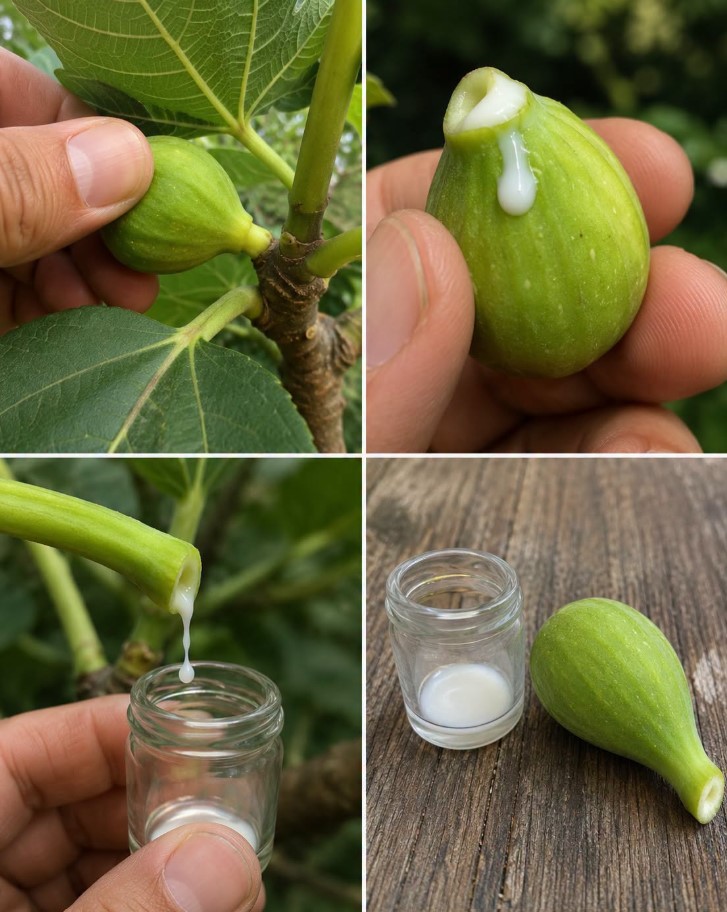
There is something almost fascinating about the way a fig tree responds when a leaf, stem, or unripe fruit is damaged. A milky white substance begins to appear, slowly thickening as it meets the air. This substance is commonly called fig sap, although botanically it is more accurately described as the tree’s milky latex. For generations, people in Mediterranean, Middle Eastern, and other regions have recognized this unusual material and found a variety of traditional and practical uses for it.
Today, fig sap is often discussed online as a kind of natural wonder, with claims ranging from household applications to traditional skin remedies. Some of those historical uses have a reasonable scientific basis, while others remain traditional practices that should not be confused with proven medical treatments. Most importantly, fresh fig latex is not as harmless as it looks. It can irritate the skin and can cause a particularly unpleasant reaction when exposed to sunlight.
Understanding what fig sap actually is, why the tree produces it, how it has traditionally been collected, and where caution is necessary can make this intriguing natural substance much easier to appreciate.
What Exactly Is Fig Sap?
The white liquid that comes from a fig tree is a form of latex. It can emerge from broken stems, damaged leaves, young branches, and unripe figs. Rather than being simply water or ordinary plant juice, it contains a complex mixture of compounds, including enzymes, proteins, and other plant chemicals.
One of the best-known components is ficin, a proteolytic enzyme capable of breaking down proteins. This enzyme is partly responsible for the historical interest in fig latex and has also been useful in food and other applications. Fig latex has traditionally been used to help coagulate milk in certain cheesemaking practices, while ficin has been studied and used for protein-processing applications such as meat tenderizing.
When exposed to air, the latex gradually becomes thicker and can dry into a sticky or rubbery material. This is one reason people collecting it traditionally have often worked with small amounts rather than treating it like an ordinary liquid.
Why Does a Fig Tree Produce This Milky Latex?
The sap is not produced specifically for people. It is part of the fig tree’s natural defense system.
When plant tissue is damaged, latex can flow from the affected area. Its unusual chemical composition may discourage insects and animals from feeding on the damaged tissue. The sticky material can also begin to coagulate as it dries, helping seal the injured area.
This makes the appearance of white sap an entirely normal feature of many fig trees. If you snap a young fig stem or damage an unripe fig and notice a white, milky substance, there is generally no mystery involved—the tree is responding to the injury.
How Was Fig Sap Traditionally Collected?
Traditional collection is relatively simple, but modern readers should approach it carefully because direct contact with fresh latex can irritate the skin.
Historically, people could obtain the latex by making a small cut or using an already damaged portion of a young stem, leaf stalk, or unripe fruit. The white material would appear at the wound and could be collected in a small container or allowed to dry on a surface.
Because the latex is sticky and can irritate the skin, wearing gloves is a sensible precaution. It is also important to avoid touching your face or eyes while handling it.
There is no need to make large cuts into a healthy tree simply to collect sap. Excessive damage can stress the plant and create unnecessary wounds through which pathogens may enter.
One of Its Most Interesting Traditional Uses: Cheesemaking
Perhaps one of the lesser-known uses of fig latex is its role in traditional cheesemaking.
The latex contains protein-digesting enzymes, particularly ficin. Historically, fig latex has been used as a plant-based milk-coagulating substance in some cheesemaking traditions. The enzyme helps alter milk proteins, allowing the milk to separate and form curds.
This is a fascinating example of how people learned to make use of naturally occurring plant chemistry long before modern laboratories could explain exactly why it worked.
The practice also demonstrates that the usefulness of the fig tree extends far beyond its sweet fruit. Its leaves, latex, wood, and other parts have all had practical roles in different cultures.
Traditional Skin Uses of Fig Latex
Fig latex has a long history in traditional medicine, particularly as a topical substance for conditions such as warts and corns. Historical sources document its use for these purposes, and there has even been limited clinical research investigating fig latex for common warts.
However, this is an area where traditional use should not be mistaken for a recommendation to experiment at home.
Fresh fig latex contains compounds that can irritate the skin. More importantly, some of its naturally occurring furanocoumarins can make skin unusually sensitive to ultraviolet light. Contact followed by sunlight exposure can result in phytophotodermatitis, producing redness, burning, blistering, and sometimes prolonged discoloration.
For that reason, applying raw fig sap to a skin problem without professional guidance is not a harmless natural remedy.
Why Sunlight Makes Fig Sap Particularly Concerning
This is perhaps the most important safety point to remember.
A person may touch fig latex and initially experience little or no discomfort. The problem can become much more serious after the affected skin is exposed to sunlight.
Certain compounds in fig latex and other parts of the plant can interact with ultraviolet radiation. The resulting reaction can resemble a severe sunburn and may include painful inflammation and blisters. The discoloration can sometimes persist for quite some time.
Anyone handling fig trees should therefore take extra care on bright, sunny days. Gloves and protective clothing are practical precautions, and accidental contact should be washed away rather than left on the skin.
Is Fig Sap Safe to Eat?
This is an important distinction: fig fruit is food, but that does not mean fresh fig latex should be consumed.
Fresh and dried figs are widely eaten and have a long history as a nutritious food. The latex is a different substance with a much more concentrated collection of biologically active compounds.
There is not enough reliable evidence to support treating raw fig sap as a food or homemade medicine. Some traditional practices have involved various parts of the fig tree internally, but that should not be interpreted as evidence that crude latex is safe to drink.
If you are interested in the nutritional benefits of figs, the safest approach is to enjoy the fruit itself rather than experimenting with concentrated plant latex.
Other Historical Uses of the Fig Tree
Fig sap is only one small part of the tree’s long history of usefulness.
The fruit has traditionally been eaten fresh, dried, preserved, and made into syrups and other foods. Fig leaves have been used in cooking and as animal fodder, while different parts of the plant have appeared in traditional medicinal practices across several cultures.
The latex itself has attracted interest because of ficin and other plant compounds. Beyond traditional practices, ficin has been studied for applications involving the breakdown of proteins, demonstrating how an ancient observation about a plant can eventually lead to scientific investigation.
What Should You Do If Fig Sap Gets on Your Skin?
If fresh fig latex gets on your skin, don’t ignore it simply because the liquid looks harmless.
Wash the affected area thoroughly with soap and water as soon as practical. Avoid rubbing the sap into your skin, and take particular care to keep the area out of direct sunlight afterward.
If the skin becomes painful, intensely red, swollen, blistered, or otherwise irritated, medical advice is appropriate. Anyone who develops a severe reaction should seek professional care rather than trying additional home remedies.
People with known sensitivities to natural rubber latex or related plants should also be particularly cautious, as allergic reactions to figs and their latex have been reported.
A Natural Substance With a Surprisingly Long History
What makes fig sap so interesting is not that it is a magical cure for every problem. Its real story is much more compelling.
A substance that appears as a simple white liquid from a damaged fig tree contains enzymes and other compounds that have played roles in traditional medicine, food preparation, and plant defense. People discovered useful properties of the fig tree through generations of observation, and modern science has since identified some of the chemistry behind those observations.
At the same time, nature does not automatically mean harmless. The same compounds that make fig latex chemically interesting can also make it irritating or dangerous under the wrong circumstances.
Final Thoughts
The milky sap of the fig tree is a wonderful reminder that ordinary plants can contain surprisingly complex chemistry. Traditionally collected from damaged stems, leaves, and unripe figs, fig latex has been associated with everything from cheesemaking to wart treatments and other folk practices. Its protein-digesting enzymes, particularly ficin, help explain why it attracted so much attention over the centuries.
But the safest way to appreciate fig sap today is with curiosity and caution. It should not be treated as a miracle medicine, and fresh latex should not casually be rubbed onto the skin or consumed. Its ability to cause irritation and potentially severe sunlight-related skin reactions is well worth remembering.
So, the next time you see a white drop forming on a fig tree, you are looking at more than ordinary plant juice. You are seeing part of the tree’s natural defense system—and a substance with a remarkable history of traditional and practical uses. Just remember that sometimes the most fascinating natural remedies are also the ones that deserve the most respect.