The slow cooker is one of the most convenient appliances in the kitchen.
You can add your ingredients, turn the appliance on, and walk away while several hours of gentle cooking transform tough cuts of meat into a tender, flavorful meal.
That’s exactly why slow cookers have become such a popular solution for busy families.
But there’s one common situation that can cause confusion.
You planned to make dinner, reached into the freezer, and realized the meat is still completely frozen.
Instead of waiting for it to thaw, you might wonder:
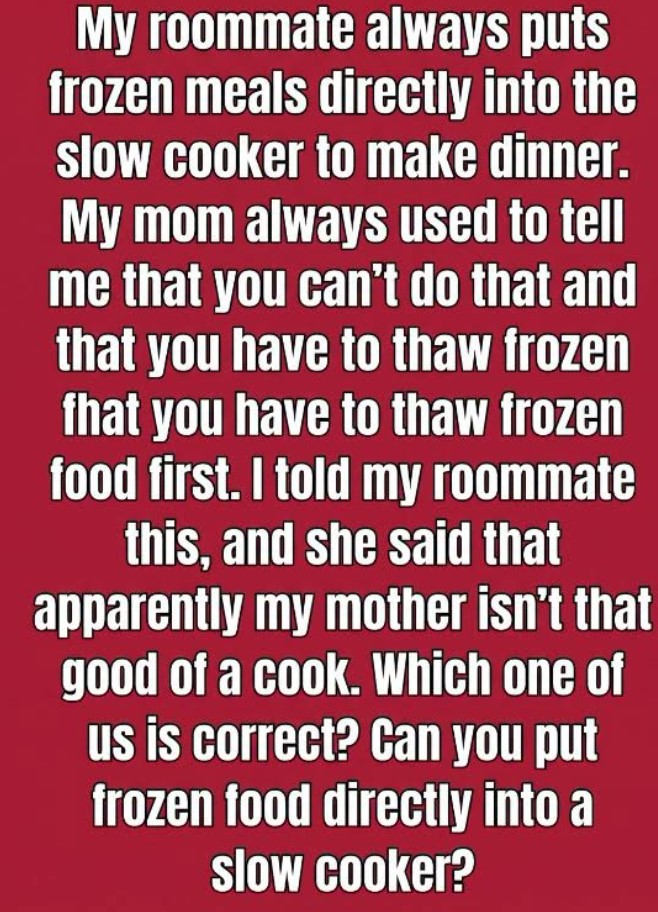
Can I simply put the frozen meat directly into the slow cooker and let it cook all day?
It seems logical. After all, the meat will eventually become hot enough to cook.
Unfortunately, food safety isn’t quite that simple.
The USDA advises against putting frozen meat or poultry directly into a slow cooker. The concern is that the slow, gradual heating process can leave the food in the temperature range where harmful bacteria can multiply for too long.
The good news is that avoiding the problem is easy.
You simply need to thaw the meat safely before adding it to the slow cooker.
Why Does Frozen Meat Cause a Problem?
To understand why frozen meat isn’t recommended for a slow cooker, it’s helpful to understand how the appliance works.
A slow cooker is designed to heat food gradually.
That’s part of its appeal.
Instead of rapidly cooking meat at a very high temperature, the appliance slowly raises the temperature over time. This allows connective tissue in tougher cuts to break down and helps create tender, flavorful dishes.
But that gradual heating process can become a problem when the food begins completely frozen.
The outside of the meat may begin warming while the center remains frozen.
This means the meat can spend an extended period gradually passing through temperatures that allow bacteria to multiply.
The USDA explains that slow cookers may take several hours to reach a temperature high enough to destroy harmful bacteria, which is why ingredients should be thawed before being placed inside.
The Temperature Danger Zone Matters
Food safety isn’t only about whether meat eventually becomes hot enough.
The amount of time food spends at unsafe temperatures matters too.
Between approximately 40°F and 140°F (4°C and 60°C), bacteria can multiply rapidly.
A frozen piece of meat takes longer to heat through than a thawed one.
When you place that frozen piece into a slow cooker, the outside can gradually warm while the center remains extremely cold.
That creates a situation where parts of the meat may remain in the danger zone longer than recommended.
Eventually, the slow cooker may bring the entire piece to a safe cooking temperature, but the concern is what happened during the earlier part of the process.
That’s why simply saying, “But it cooks for eight hours,” doesn’t completely solve the food-safety issue.
What Does the USDA Recommend?
The USDA’s guidance is straightforward:
Thaw meat and poultry before putting them into a slow cooker.
This recommendation applies to many of the foods people commonly prepare in slow cookers, including:
- Chicken breasts
- Chicken thighs
- Whole chickens
- Beef roasts
- Stew meat
- Pork shoulder
- Pork chops
- Ground meat
- Turkey
- Other poultry
Once the meat has been safely thawed, it can be transferred to the slow cooker along with the other ingredients.
The Refrigerator Is the Safest Easy Option
If you know you’ll be making a slow-cooker meal tomorrow, the refrigerator is usually the simplest way to thaw the meat.
Place the frozen meat in a container, bowl, or on a plate to prevent juices from leaking onto other foods.
Then put it in the refrigerator and allow it to thaw gradually.
The cold environment keeps the meat at a safer temperature while it defrosts.
Smaller pieces may thaw relatively quickly, while large roasts and whole poultry can take considerably longer.
For that reason, planning ahead is important.
If you’re preparing a large roast for dinner tomorrow evening, don’t wait until the last minute to move it from the freezer.
What If You Forgot to Thaw It?
This is probably the most common problem.
You wake up, remember that dinner is supposed to be in the slow cooker, and discover that the meat is still frozen solid.
Don’t panic.
You don’t necessarily have to abandon the meal.
Instead, use a safe thawing method.
The USDA identifies the refrigerator, cold water, and microwave as safe ways to thaw food. Food thawed in cold water or in the microwave should be cooked immediately.
Each method has advantages depending on how much time you have.
Thawing With Cold Water
Cold-water thawing can be much faster than refrigerator thawing.
Keep the meat in a leak-proof package or sealed plastic bag and place it in cold water.
The water should remain cold, and it should be changed regularly so that the meat stays at a safe temperature.
Once the meat has thawed using the cold-water method, cook it promptly.
Never use hot water to speed things up.
The USDA specifically advises against thawing meat and poultry in hot water because it can allow the outside of the food to reach unsafe temperatures while the inside remains frozen.
What About the Microwave?
If dinner needs to happen soon, the microwave’s defrost setting can be another option.
However, microwave thawing can partially warm or even begin cooking portions of the meat.
That’s why food thawed in the microwave should be cooked immediately rather than placed back into the refrigerator for later use.
The meat can then be cooked using an appropriate method.
Never Thaw Meat on the Kitchen Counter
One of the most common mistakes is leaving frozen meat on the counter for several hours.
It may seem harmless.
After all, the meat is still cold in the center.
But the outside can warm into the temperature range where bacteria multiply while the interior remains frozen.
The USDA advises against thawing meat on the counter, outdoors, in a car, in hot water, or in other uncontrolled environments.
A little extra planning is much safer than relying on room-temperature thawing.
Does Cooking for Longer Make Frozen Meat Safe?
This is another common misconception.
Someone might argue that if the meat stays in the slow cooker for eight or ten hours, there is plenty of time for it to become safe.
The problem is that cooking time isn’t the only factor.
The issue is how quickly the food passes through unsafe temperatures.
A slow cooker heats gradually by design.
Starting with thawed meat helps the food move through the dangerous temperature range more efficiently.
That’s why the USDA recommends thawing first rather than simply increasing the cooking time.
What About Frozen Vegetables?
Frozen vegetables are a different matter from frozen meat.
Many frozen vegetables are designed to be cooked directly from frozen, depending on the recipe and cooking method.
However, the USDA’s slow-cooker guidance specifically states that ingredients placed into a slow cooker should be thawed.
When preparing a slow-cooker recipe, it’s therefore best to follow the recipe’s instructions and the manufacturer’s guidance for the particular appliance.
Don’t Confuse a Slow Cooker With a Pressure Cooker
This distinction is important.
People sometimes assume that because frozen food can be cooked safely in an electric pressure cooker, the same thing must be true when using the slow-cooker function.
That’s not necessarily the case.
The USDA notes that frozen food can be safely cooked in a pressure cooker because the pressure-cooking process moves the food through the danger zone quickly.
However, the slow-cooker function of an electric pressure cooker has the same basic concern as a conventional slow cooker: frozen food can take too long to heat safely.
So don’t confuse the two cooking methods simply because the appliance has both functions.
Once Thawed, Can the Meat Go Straight Into the Slow Cooker?
Yes.
Once meat has been properly thawed, it can be prepared according to the recipe.
Add the meat and other ingredients, cover the cooker, and use the recommended cooking setting and time.
Slow cookers are generally safe appliances when used correctly. The combination of direct heat, long cooking time, and steam inside the covered container helps destroy harmful bacteria.
The key is starting with ingredients that have been handled safely.
What If the Meat Is Only Partially Frozen?
Partially frozen meat requires some judgment.
If it still contains ice crystals or has remained at 40°F (4°C) or below, it can generally be safely refrozen, although quality may suffer.
However, for slow cooking, the safest approach is still to make sure meat is properly thawed before placing it into the appliance.
If you’re uncertain about how long the meat has been at an unsafe temperature, don’t rely on appearance or smell to determine whether it’s safe.
The USDA specifically warns that you cannot reliably determine food safety by looking at or smelling the food.
Why Slow Cookers Are Still So Useful
The frozen-meat warning shouldn’t make anyone afraid of using a slow cooker.
Slow cookers remain an excellent tool for preparing meals safely and conveniently.
They’re especially useful for:
- Soups
- Stews
- Chili
- Pulled pork
- Pot roasts
- Braised meats
- Chicken dishes
- Beans and other slow-cooked foods
They can turn inexpensive cuts of meat into tender meals with relatively little hands-on work.
The key is simply understanding how to use the appliance properly.
A Simple Routine for Busy Families
If you regularly use a slow cooker, a little preparation can eliminate the frozen-meat problem entirely.
Try moving tomorrow’s meat from the freezer into the refrigerator the night before.
Place it in a sealed container or on a plate.
By morning, it may be ready to go.
If the piece is large, move it to the refrigerator even earlier.
This small habit takes only a few seconds but can make the entire cooking process easier and safer.
What You Should Never Do
When you’re in a hurry, it’s tempting to take shortcuts.
But some shortcuts aren’t worth the risk.
Avoid:
- Putting completely frozen meat directly into a slow cooker
- Thawing meat on the kitchen counter
- Thawing meat in hot water
- Leaving raw meat at room temperature for extended periods
- Using an appliance’s “keep warm” setting as a substitute for proper cooking
- Assuming a long cooking time automatically eliminates every food-safety concern
Instead, thaw meat safely and follow the cooking instructions.
The Bottom Line
So, is it safe to put frozen meat in a slow cooker?
The recommended answer is no.
The USDA advises thawing meat and poultry before placing them in a slow cooker because the appliance heats food gradually, and frozen meat can remain too long in temperatures that allow harmful bacteria to multiply.
Fortunately, the solution is simple.
Plan ahead and thaw meat in the refrigerator whenever possible. If you need a faster option, use cold water or the microwave according to safe food-handling guidance, and cook the meat immediately after using those faster thawing methods.
Once the meat is properly thawed, the slow cooker can do what it does best: transform ordinary ingredients into a comforting, flavorful meal with very little effort.
The next time you open the freezer and realize you’ve forgotten to thaw dinner, resist the temptation to drop the frozen meat straight into the crockpot.
A few extra minutes of planning—or choosing a safe thawing method—can help you enjoy the convenience of slow cooking without taking an unnecessary food-safety risk.
Conclusion :
The convenience of a slow cooker makes it tempting to take shortcuts, especially when you realize at the last minute that the meat you planned to cook is still frozen. However, when it comes to food safety, this is one shortcut that’s better avoided.
The USDA recommends thawing meat and poultry before placing them in a slow cooker because the appliance heats food gradually, which can leave frozen meat in the temperature range where harmful bacteria can multiply for too long.
The safest approach is to plan ahead and thaw the meat in the refrigerator. If you’re short on time, cold-water thawing or microwave thawing can also be used, provided the appropriate safety steps are followed and the meat is cooked immediately afterward.
It’s also worth remembering that cooking meat from frozen isn’t always unsafe—it depends on the cooking method. Some frozen meats can be safely cooked using methods such as an oven or stovetop, but the slow cooker is different because of its gradual heating process.
So the next time you reach for your slow cooker and discover that your meat is still frozen, don’t simply toss it into the pot and hope for the best. Give it time to thaw safely first.
A little extra preparation can make all the difference between a convenient homemade dinner and an unnecessary food-safety risk. When it comes to feeding yourself and your family, it’s always better to wait a little longer than to take a chance.