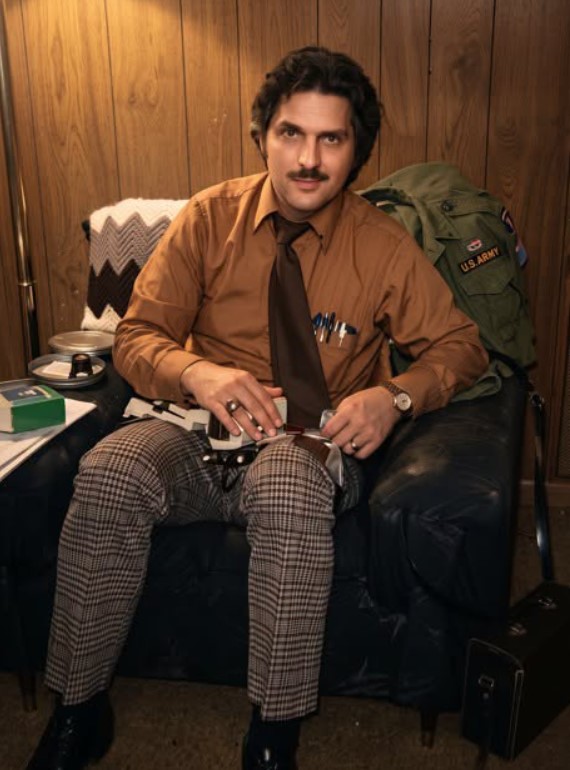
There are some photographs that seem to do much more than simply show us a moment from the past.
You can look at one old photograph for only a few seconds, and suddenly you remember a house you haven’t visited in decades, a family member whose voice you can still hear in your mind, a summer afternoon, a road trip, or a childhood bedroom that no longer exists.
Maybe the photograph is faded around the edges. Maybe the people in it are standing awkwardly instead of posing perfectly. Perhaps the lighting isn’t quite right.
And yet, somehow, that makes the picture even more meaningful.
Old photographs have a special way of bringing the past back to life. They don’t just show us what people looked like. They remind us how life felt.
One particular camera became closely associated with that feeling during the 1960s: the Polaroid Swinger Model 20.
It was inexpensive, simple to operate, and designed to make photography accessible to ordinary families. Introduced in 1965, the Swinger became a memorable part of everyday life for many people, capturing family gatherings, vacations, road trips, celebrations, and ordinary afternoons that might otherwise have disappeared from memory.
Today, looking at an old photograph taken during that era can feel almost like opening a little window into another world.
The Camera That Captured a Generation
The Polaroid Swinger wasn’t designed only for professional photographers.
That was part of its appeal.
It was created so that ordinary people could pick up a camera, point it at a moment they wanted to remember, and take a picture without needing extensive photography knowledge.
That made it particularly attractive to families.
A parent could photograph a child playing outside.
Friends could take pictures during a weekend trip.
Families could capture birthdays, holidays, picnics, vacations, and simple gatherings around the house.
The camera became associated with spontaneity and everyday memories rather than formal studio photography.
Instead of waiting for a professional photographer, people could document their own lives.
That was a significant change.
Photography was becoming something that belonged to everyone.
The Magic of an Instant Photograph
Part of the excitement of cameras like the Polaroid Swinger came from the experience itself.
Today, taking a photograph is almost effortless.
We pull out a smartphone, tap the screen, and the image appears instantly. We can take another photograph if we don’t like the first one. Then another. And another.
We can take hundreds of pictures without thinking twice.
The experience was very different with older cameras.
Taking a photograph required more attention.
You had to decide when the moment was worth capturing.
You had to think about where people were standing.
You had to frame the scene.
And when the photograph was finally taken, you had something physical to hold.
That physical quality made photography feel different.
A photograph wasn’t just another file sitting somewhere on a device.
It was an object.
You could put it in an album.
You could place it inside a drawer.
You could write a date on the back.
You could hand it to someone.
Years later, you could find it unexpectedly and suddenly remember a moment you hadn’t thought about in years.
The Distinctive Design of the Polaroid Swinger
The Polaroid Swinger had a distinctive appearance that made it easy to recognize.
Its compact design and unusual shape gave it a character that many modern cameras simply don’t have.
It also had a memorable black-and-white appearance with colorful branding, adding to its unmistakable 1960s personality.
One particularly interesting feature was its viewfinder.
Rather than looking through the camera in the way many modern cameras are used, the Swinger’s design gave the experience a different feel.
You looked down into the viewfinder, almost as if you were looking through a small window.
It was practical, but it also contributed to the camera’s charm.
The camera was intended to be straightforward.
You didn’t need to understand complicated photographic settings.
You didn’t need to become an expert.
The goal was simple: make it possible for ordinary people to capture moments from their lives.
Photography Became Personal
Before cameras became affordable and easy for everyday households to use, photography could feel like something reserved for special occasions.
Professional photographers often played an important role in documenting major family events.
But cameras like the Swinger helped change that.
Suddenly, people could become the photographers of their own lives.
A family could create its own visual history.
Parents could photograph their children as they grew.
Siblings could document vacations together.
Friends could preserve memories of ordinary weekends.
Someone could take a picture of a backyard barbecue simply because everyone happened to be together.
Those photographs might not have seemed important at the time.
Decades later, they could become priceless.
That is one of the strange things about memory.
We often don’t know which ordinary moments will eventually become the moments we miss the most.
Why Old Photos Feel So Different
Have you ever found an old photograph tucked away in a drawer and suddenly felt emotional?
You may not even remember the exact day the photograph was taken.
But the image can trigger memories almost immediately.
Perhaps you notice someone’s hairstyle.
Then you remember their voice.
You notice the old furniture in the background.
Suddenly you remember the house.
You see an old car parked behind the family.
You remember riding in it.
You see a familiar face belonging to someone who is no longer alive.
And for a moment, the distance between then and now seems to disappear.
That’s one reason old photographs are so powerful.
They give our memories something concrete to attach themselves to.
The Beauty of Imperfect Pictures
Modern photography encourages perfection.
We can brighten an image.
Remove imperfections.
Change the lighting.
Crop the photograph.
Apply filters.
Take dozens of photographs and select the one that looks best.
Older photographs often had none of that.
A person might have blinked.
Someone might have been standing slightly off-center.
The lighting might have been uneven.
A child’s expression might have been completely unexpected.
The picture might have been slightly blurry.
And that’s exactly what makes it feel authentic.
An imperfect photograph can preserve the reality of a moment.
It doesn’t show us a carefully constructed version of the past.
It shows us people as they actually were.
Sometimes the person in the picture isn’t even looking at the camera.
They might be laughing at someone outside the frame.
They might be talking.
They might be distracted.
They might not even realize the photograph is being taken.
Those unexpected moments can become the most valuable photographs of all.
The Good Old Days Weren’t Perfect
It’s easy to look at an old photograph and think about the “good old days.”
We see old houses, familiar faces, classic cars, simple clothing, and family gatherings.
Compared with modern life, the past can seem slower and more peaceful.
But photographs can sometimes make history look more perfect than it really was.
People in the 1960s had problems too.
Families struggled with money.
People experienced loss.
There were disagreements, illnesses, disappointments, and difficult periods.
Life was never as simple as a photograph makes it appear.
So perhaps what we miss isn’t necessarily the entire era.
Maybe we miss a feeling.
A feeling of being connected.
A feeling of having time.
A feeling of knowing the people around us.
A feeling that ordinary moments mattered.
That’s what many old photographs seem to preserve.
When Taking a Photo Was a Deliberate Choice
Today, taking a picture can be almost automatic.
We can photograph our breakfast.
Our coffee.
Our pets.
Our children.
Our shoes.
A sunset.
A funny sign.
A meal at a restaurant.
There is nothing wrong with that.
Technology has made photography incredibly accessible.
But the sheer number of photographs we take can sometimes make individual pictures feel less significant.
Decades ago, taking a photograph was often more deliberate.
You didn’t have unlimited opportunities.
You couldn’t simply delete the image and immediately try again.
You had to make a decision.
This is the moment I want to remember.
That decision gave photographs a certain weight.
When you eventually looked at the finished picture, you knew that someone had intentionally chosen to preserve that moment.
A Photograph Can Become a Family Time Capsule
Imagine finding an old photograph of your grandparents when they were young.
Maybe they are standing outside a house.
Maybe they’re sitting beside an old car.
Maybe they’re smiling with friends.
You may know almost nothing about the exact day the picture was taken.
Yet the photograph can still become valuable.
It gives you a glimpse into a period of their lives that you never experienced.
Old family photographs can preserve details that written records don’t always capture.
Clothing.
Furniture.
Cars.
Buildings.
Haircuts.
Street scenes.
Children’s toys.
Family traditions.
Even the way people stood together can tell us something about the time.
A photograph can therefore become a tiny family time capsule.
The Joy of Holding a Physical Photograph
There is something different about holding a physical photograph.
A digital image can be beautiful, but it exists on a screen.
A physical photograph has a presence.
You can feel its edges.
You can see the texture of the paper.
You can notice the faded colors.
You might even see handwritten notes on the back.
Perhaps someone wrote:
“Summer vacation, 1968.”
Or:
“Mom and Dad.”
Or simply:
“Best day ever.”
Those little details become part of the memory.
Sometimes the handwriting itself is as meaningful as the photograph.
A person who wrote those words may no longer be here.
But their handwriting remains.
Why We Keep Old Photographs
People often keep old photographs even when they no longer remember every detail.
They may sit inside boxes in attics.
They may be stored in albums.
They may be tucked into drawers.
Some might even be forgotten for years.
Then one day, someone discovers them.
And suddenly the forgotten photograph becomes important again.
That’s because photographs don’t lose their emotional value simply because time passes.
In many cases, the opposite happens.
The older a photograph becomes, the more precious it may feel.
A picture that seemed ordinary thirty years ago can become a treasured family artifact today.
What the Polaroid Era Can Teach Us
The appeal of older photography isn’t simply about nostalgia.
It can also remind us of a few things that are easy to forget in a world filled with screens.
Slow Down
Not every moment needs to happen quickly.
Sometimes the most meaningful memories come from simply being present.
Sit with your family.
Talk to someone.
Take a walk.
Watch the sunset.
Enjoy an ordinary afternoon.
Those moments don’t need to be extraordinary to become meaningful.
Be More Intentional
We don’t need to photograph everything.
When you choose to take a photograph, think about why you want to remember that particular moment.
Years from now, you may appreciate the photographs that captured genuine connections much more than the ones that were taken simply because you felt obligated to document everything.
Preserve Physical Memories
Digital storage is incredibly useful, but physical photographs still have a special place.
Print some of your favorite family photographs.
Put them into albums.
Write names and dates on the back.
Tell children who the people are.
Someday, those details may be incredibly valuable to them.
Embrace Imperfection
A photograph doesn’t need to be flawless to be meaningful.
Sometimes the blurry picture, the awkward smile, or the person looking away from the camera is the photograph you’ll treasure most.
Life itself isn’t perfectly arranged.
Your photographs don’t have to be either.
The Memories Behind the Photograph Matter Most
When we look at an old photograph, we’re rarely thinking only about the camera that took it.
We’re thinking about the people.
The place.
The smell of the house.
The sound of someone’s voice.
The feeling of being young.
The people who were still alive.
The places that have changed.
The things we didn’t know would become memories.
That’s why an old photograph can be so powerful.
The image itself is only part of the story.
The rest lives inside us.
What Happens When a Generation Disappears?
There is another reason old photographs become more valuable over time.
People disappear.
Houses are demolished.
Businesses close.
Neighborhoods change.
Cars become museum pieces.
Clothing styles disappear.
Technology moves forward.
Eventually, there may be no one left who remembers exactly what a particular place or person looked like.
That’s when photographs become especially important.
They preserve something that memory alone cannot always preserve.
They give future generations a visual connection to people they never met.
A grandchild may never have known their great-grandfather.
But they can still look at his face.
They can see how he dressed.
They can see the car he drove.
They can see the home where he lived.
For a moment, the past becomes visible.
The Old Photograph in Your Drawer
Maybe you have one.
Perhaps it’s sitting inside an old box somewhere in your home.
Maybe you’ve seen it a hundred times.
Maybe you haven’t looked at it in years.
Take it out.
Look closely.
Don’t just look at the faces.
Look at the background.
What objects are sitting on the table?
What kind of clothes are people wearing?
What does the room look like?
Is there a car outside?
What has changed since that photograph was taken?
And most importantly, who do you remember when you see it?
You may be surprised by how quickly the memories return.
One detail can unlock another.
A face can bring back a voice.
A room can bring back a smell.
A street can bring back an entire childhood.
That’s the remarkable power of photographs.
Final Thoughts
The Polaroid Swinger Model 20 belonged to a period when photography was becoming increasingly accessible to everyday families. Its appeal wasn’t only the camera itself. It was the opportunity to capture ordinary life and turn fleeting moments into physical memories.
Today, we have cameras that are far more advanced.
We can take photographs instantly.
We can store thousands of them.
We can edit them in seconds.
We can share them with people anywhere in the world.
Yet there is still something special about an old photograph.
Its faded edges.
Its imperfections.
Its handwritten notes.
Its physical presence.
Most of all, the memories attached to it.
Maybe that’s why one glance at an old photo can make the good old days come rushing back.
We aren’t necessarily longing for every part of the past.
We’re remembering the people we loved, the moments we shared, and the feeling of being part of something that mattered.
So if you come across an old photograph today, don’t rush past it.
Hold it for a moment.
Look closely.
Remember the people in it.
Think about where they were and what their lives were like.
And if you have family members who can still tell you the story behind the picture, ask them.
Because someday, that photograph may be one of the few things left that can tell the story.
And perhaps that’s the real magic of an old photograph.
It doesn’t simply show us where we’ve been.
It reminds us of who we were, who we loved, and how quickly ordinary moments can become the memories we treasure most.