
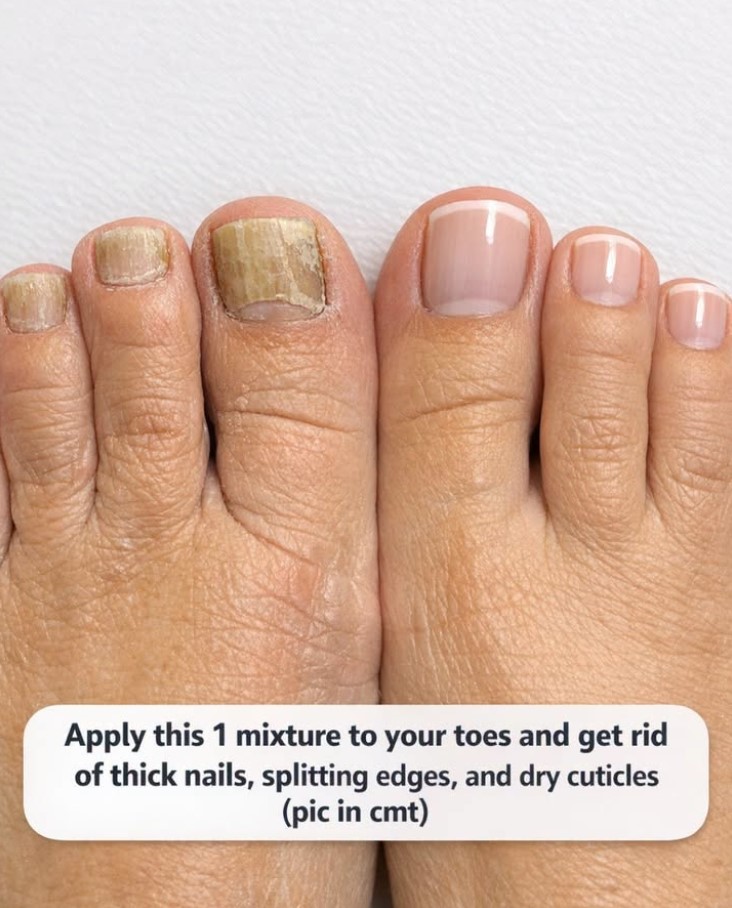
Thick, rough toenails and dry cuticles can be frustrating, especially when your nails become difficult to trim or start splitting around the edges. Sometimes, even after washing your feet regularly and applying ordinary lotion, the skin around your nails still feels rough, dry, and uncomfortable.
The good news is that a simple foot-care routine using a few everyday ingredients may help improve the appearance and feel of dry, brittle nails. One homemade mixture combines coconut oil, olive oil, and a few drops of tea tree oil to create a nourishing blend that can be massaged into the toenails and surrounding skin.
What makes this mixture appealing is its simplicity. You do not need expensive foot creams or complicated treatments. The three ingredients are easy to find, and preparing the mixture takes only a few minutes.
Coconut oil helps coat the nail surface and soften dry skin, while olive oil provides additional moisture. Tea tree oil is included in a small amount, although it can irritate sensitive skin and should always be diluted properly.
It is important to understand that this mixture is intended as a supportive moisturizing treatment. It may help dry cuticles feel smoother and brittle nail edges become more manageable, but it cannot reliably treat fungal infections or correct every cause of thickened toenails.
In this guide, you will learn how to prepare the mixture, how to apply it safely, how often to use it, and what else you can do to maintain healthier-looking toenails.
Why Toenails Become Thick, Brittle, and Rough
Toenail changes usually develop gradually rather than appearing overnight. Several factors can contribute to nails becoming thicker, harder to trim, discolored, or more likely to split.
Understanding the possible causes is important because not every thick toenail needs the same treatment.
1. Aging
As people get older, toenails may grow more slowly and become thicker or harder. Changes in circulation, nail structure, and everyday wear can contribute to this process.
Older nails may also become more difficult to trim and maintain.
2. Tight or Uncomfortable Shoes
Shoes that squeeze the toes or repeatedly rub against the nail can cause ongoing pressure.
Over time, this friction may contribute to thickening, splitting, and changes in the appearance of the nail.
Choosing comfortable shoes with enough room around the toes can help reduce unnecessary pressure.
3. Repeated Nail Trauma
Sports activities, long walks, running, and repeated pressure from footwear can damage toenails.
Even small injuries that seem unimportant at first may eventually affect how a nail grows.
4. Dryness
Dry nails and surrounding skin can become brittle and less flexible.
This may make the nail edges more likely to peel or split, while the cuticles can become rough, flaky, and uncomfortable.
5. Fungal Nail Infections
A fungal infection is another possible cause of thickened toenails.
The affected nail may become yellowish, brown, cloudy, crumbly, or separated from the nail bed. Debris may also collect underneath it.
Unlike ordinary dryness, fungal nail infections usually require appropriate antifungal treatment. Moisturizing oils alone will not eliminate the infection.
The 3-Ingredient Mixture for Dry Toenails and Cuticles
This homemade blend combines three oils that can help moisturize dry nail surfaces and surrounding skin.
Ingredients You Will Need
1. Coconut Oil – 2 tablespoons
Coconut oil provides a rich, moisturizing base for the mixture. It helps coat the nail surface and soften dry skin around the toes.
Its thicker consistency also makes it easy to massage into the nails and cuticles without the mixture running everywhere.
2. Olive Oil – 1 tablespoon
Olive oil adds extra softness and helps the mixture spread more easily.
It is particularly useful for dry cuticles and rough skin around the nail edges. Combined with coconut oil, it creates a smooth blend that is easy to apply.
3. Tea Tree Oil – 3 to 4 drops
Tea tree oil is an essential oil often used in personal-care products.
It is included in a very small quantity because concentrated essential oils can irritate the skin. Although tea tree oil has been studied for certain antimicrobial properties, this homemade mixture has not been established as a treatment for fungal toenail infections.
If you have sensitive skin, it is perfectly reasonable to leave tea tree oil out and use only the coconut and olive oils.
How to Prepare the Mixture
Preparing this foot-care blend is simple and requires very little time.
Step 1: Melt the Coconut Oil
Measure 2 tablespoons of coconut oil and place it in a small, clean glass bowl.
If the coconut oil is solid, warm it gently until it becomes liquid. Avoid overheating it because you only need enough warmth to soften the oil.
Allow it to cool slightly before adding the other ingredients.
Step 2: Add the Olive Oil
Measure 1 tablespoon of olive oil and pour it into the bowl with the melted coconut oil.
Stir gently until both oils are combined.
The mixture should have a smooth, even consistency.
Step 3: Add the Tea Tree Oil
Add 3 to 4 drops of tea tree oil to the mixture.
Stir for approximately 20 to 30 seconds so the essential oil is distributed throughout the blend.
Tea tree oil can cause irritation or allergic reactions in some people. Do not apply it undiluted, and stop using the mixture if you notice redness, itching, burning, or swelling.
Step 4: Transfer to a Clean Container
Pour the finished mixture into a small, clean glass jar with a lid.
Allow it to cool completely before closing the container.
The recipe makes enough for approximately 10 to 14 applications, depending on how much you use each time.
How to Prepare Your Feet Before Applying the Mixture
Preparing your feet properly helps remove surface dirt and makes the moisturizing routine more comfortable.
Step 1: Wash Your Feet
Wash your feet with warm water and mild soap.
Pay attention to the areas around your toes and underneath the nail edges, cleaning gently without forcing anything underneath the nails.
There is no need to scrub aggressively.
Step 2: Dry Your Feet Thoroughly
Use a clean towel to dry your feet.
Make sure you dry between your toes, because moisture trapped in these areas can encourage fungal growth.
If necessary, allow your feet to air-dry for another minute or two.
Step 3: Soak Thick Toenails if Needed
If your toenails are particularly thick and difficult to trim, you can soak your feet in comfortably warm water for 10 to 15 minutes.
Make sure the water is not hot.
You may add a small amount of gentle liquid soap, but avoid harsh cleaning products.
After soaking, dry your feet carefully, especially between the toes.
Do not soak your feet if you have open wounds or reduced sensation without first getting medical advice.
How to Apply the Mixture to Your Toenails
Once your feet are clean and completely dry, you can apply the moisturizing blend.
Step 1: Use a Small Amount
Take approximately 1/4 teaspoon of the mixture for each foot.
You only need enough to lightly coat the toenails and surrounding cuticles. Applying excessive amounts will simply make your feet greasy.
Step 2: Massage Each Toenail
Gently massage the mixture into each toenail for approximately 15 to 20 seconds.
Pay attention to the surface and edges of the nail without forcing oil underneath it.
If one nail is particularly dry, you can spend a little more time massaging it.
Step 3: Apply Around the Cuticles
Use your fingertips to massage a small amount around the skin surrounding each nail.
This helps moisturize dry cuticles and rough areas that may otherwise catch on socks.
Avoid applying the mixture to broken, irritated, or infected skin.
Step 4: Put on Clean Cotton Socks
Once the mixture has been applied, put on a pair of clean cotton socks.
The socks help keep the oil in place and prevent it from transferring to your floors or bedding.
You can leave the mixture on for at least 30 minutes. If your skin tolerates the ingredients well, you may leave it on longer.
However, there is no need to keep your feet covered overnight if the mixture causes irritation or excessive moisture.
How Often Should You Use This Mixture?
Consistency is more important than applying a large quantity.
For ordinary dryness, you can begin by applying the mixture every other day and observing how your skin responds.
If your skin tolerates it, a small amount can be used once daily for a short moisturizing routine.
For sensitive skin, use the simpler coconut and olive oil mixture without tea tree oil.
Remember that moisturizing the nail surface does not immediately change the structure of an already thickened nail. Toenails grow slowly, so visible changes in the nail itself can take several months.
If a nail continues to thicken, changes color, becomes painful, or starts separating from the nail bed, seek professional advice instead of relying on home treatment.
What Can This Mixture Realistically Help With?
It is important to have realistic expectations before trying any homemade foot-care treatment.
This mixture is mainly useful as a moisturizing blend.
Helping Dry Cuticles Feel Softer
The combination of coconut and olive oils can help reduce dryness around the nail edges.
With regular use, the skin may feel smoother and less rough.
Improving the Appearance of Brittle Nail Edges
Dry nails can become more prone to peeling and splitting.
Applying a small amount of oil may help condition the surrounding nail surface and improve the appearance of dryness.
However, it will not repair a severely damaged nail or prevent every type of splitting.
Making Thick Nails Easier to Maintain
Warm-water soaking can temporarily soften thick toenails, making careful trimming easier.
The oil mixture may also help condition the nail surface, but it does not actually remove excess nail thickness.
If a nail is extremely thick or difficult to cut, a podiatrist can help manage it safely.
Supporting a Simple Foot-Care Routine
Perhaps the biggest advantage is that this mixture can become part of a regular moisturizing routine.
Taking a few minutes to wash, dry, and care for your feet can help you notice changes early and keep the surrounding skin comfortable.
The Safest Way to Trim Thick Toenails
Thick toenails can be difficult to cut, especially when they have become hard or brittle.
Taking your time is important because cutting too deeply can lead to pain, bleeding, and ingrown nails.
Here are some useful precautions.
Soften the nails first: A 10- to 15-minute soak in warm water can make thick nails easier to trim.
Use proper toenail clippers: Straight-edge toenail clippers are generally easier to control than small fingernail clippers.
Cut straight across: Avoid cutting deeply into the corners or creating a rounded shape.
Trim in small sections: If the nail is thick, make several small cuts rather than trying to cut through the entire nail at once.
Leave a small amount of nail: Avoid cutting too close to the skin. Leaving approximately 1 to 2 millimeters at the tip can help reduce irritation.
Smooth rough edges gently: Use a fine emery board to smooth sharp edges without filing aggressively.
If the nail is so thick that you have to apply considerable force to cut it, consider seeing a podiatrist rather than risking an injury.
A Simple Bedtime Routine for Healthier-Looking Feet
You do not need an elaborate foot-care routine to look after your toenails.
A few simple habits can make regular care easier.
On evenings when you have a little extra time:
- Wash your feet with mild soap and warm water.
- Soak your toes for 10 to 15 minutes if needed.
- Dry your feet thoroughly, especially between the toes.
- Apply a small amount of the moisturizing mixture to your toenails and cuticles.
- Massage gently for 2 to 3 minutes.
- Put on clean cotton socks if you want to keep the oil in place.
On busy evenings, you can skip the soaking step and apply a small amount of the moisturizer after showering, once your feet are completely dry.
The goal is to create a simple routine that is comfortable enough to maintain.
Variations for Sensitive Skin
Not everyone reacts to essential oils in the same way.
If tea tree oil causes itching, redness, or stinging, remove it from the recipe completely.
Simple Two-Oil Version
For a gentler alternative, combine:
- 2 tablespoons coconut oil.
- 1 tablespoon olive oil.
Mix the two ingredients and use a small amount on dry cuticles and intact surrounding skin.
This version avoids the additional essential oil and still provides a moisturizing blend.
A Lighter Version for Warm Weather
If coconut oil feels too heavy, you can adjust the proportions:
- 1 tablespoon coconut oil.
- 2 tablespoons olive oil.
This creates a thinner mixture that spreads more easily.
Vitamin E Variation
Some people prefer adding a small amount of vitamin E oil to their moisturizing routine.
If you choose to use it, add no more than 1/2 teaspoon to the basic mixture and make sure your skin tolerates the product.
Avoid adding several essential oils simply because they are popular in homemade beauty recipes. More ingredients do not automatically mean better results.
Footwear Habits That Help Protect Your Toenails
Applying moisturizer is only one part of maintaining comfortable feet.
Your daily footwear habits can also affect the condition of your toenails.
Choose Shoes With Enough Toe Room
Shoes that are too tight can repeatedly press against your toenails.
Choose footwear that gives your toes enough room to move naturally.
As a general guide, aim for approximately half an inch of space between your longest toe and the end of the shoe, while making sure the shoe fits securely around your heel.
Change Your Socks Daily
Clean socks help keep your feet comfortable.
If your feet sweat heavily, consider changing your socks more frequently throughout the day.
Breathable fabrics can also help manage moisture.
Allow Shoes to Dry
Avoid wearing damp shoes repeatedly.
Rotating between pairs gives footwear more time to dry, particularly if your feet sweat during the day.
Avoid Repeated Pressure on Your Toenails
If you participate in sports, running, or activities that involve repeated pressure on your toes, make sure your footwear fits properly.
This can help reduce repeated nail trauma.
Signs That Your Thick Toenails May Be Caused by Fungus
Not every thick or discolored toenail is caused by a fungal infection, but certain changes may make an infection more likely.
Look for signs such as:
- Yellow, brown, or white discoloration.
- Nails that become increasingly thick.
- Crumbly or brittle nail edges.
- Debris collecting underneath the nail.
- A nail that begins lifting away from the nail bed.
- Changes that gradually spread to other toenails.
- Peeling or itching skin between the toes.
If you notice these changes, consider making an appointment with a healthcare professional.
A fungal nail infection may require a medicated treatment, and some cases need prescription medication.
The coconut oil, olive oil, and tea tree oil mixture should not be considered a cure for fungal nail infections. Using it instead of appropriate treatment may delay recovery.
When Should You Avoid Home Treatment?
Although moisturizing your feet is generally straightforward, some people need extra precautions.
Speak with a doctor or podiatrist before trying to manage thick toenails yourself if you have:
- Diabetes.
- Poor circulation in your feet.
- Reduced sensation or nerve damage.
- A weakened immune system.
- Open cracks or wounds.
- Significant swelling or pain.
- Redness, warmth, or drainage around the nail.
People with diabetes or reduced sensation can develop foot injuries without noticing them immediately. Even a small cut may become a serious problem.
You should also seek professional advice if a nail is bleeding, lifting away from the nail bed, severely misshapen after an injury, or developing a new dark streak.
A sudden or unexplained dark mark under a toenail should not automatically be assumed to be bruising or fungus.
How to Store the Homemade Mixture
Proper storage helps keep your homemade blend clean and convenient to use.
Transfer the mixture into a small, clean glass jar with a secure lid.
The original recipe suggests keeping it at room temperature for up to two weeks. However, homemade mixtures without preservatives can become contaminated, so prepare small batches, use clean and dry utensils, and discard the mixture if its smell, appearance, or texture changes.
Coconut oil may become firm in a cool room. If this happens, place the closed jar in a bowl of comfortably warm water for a few minutes.
Do not introduce wet fingers into the container. Instead, use a clean, dry spoon to remove a small amount for each application.
How Long Does It Take to Notice a Difference?
The time needed to notice an improvement depends on the condition of your nails and skin.
Dry cuticles may feel softer after several applications because moisturizing oils can improve the condition of the skin relatively quickly.
Brittle nail edges may also look better when dryness is reduced, although existing splits will not instantly disappear.
Thick toenails are a different matter. They grow slowly, and visible improvement depends on new nail growth. A toenail may take many months to grow out completely.
If a nail continues to become thicker, more discolored, painful, or crumbly, do not keep relying on the mixture. Arrange an examination to identify the underlying cause.
Frequently Asked Questions
Can coconut oil and olive oil soften thick toenails?
They can help moisturize the nail surface and surrounding skin. However, they do not reliably remove thickened nail tissue or treat the underlying causes of thick toenails.
Does tea tree oil cure toenail fungus?
Tea tree oil has been studied for antimicrobial properties, but evidence is insufficient to recommend this homemade mixture as a reliable treatment for fungal toenail infections. A healthcare professional can recommend an appropriate antifungal treatment.
How often should I apply the mixture?
For ordinary dryness, you can start every other day and observe how your skin responds. If there is no irritation, you may use a small amount daily. Stop immediately if you experience redness, itching, or burning.
Can I leave the mixture on overnight?
You may leave a small amount on overnight if your skin tolerates it. Wear clean cotton socks if needed, but avoid keeping your feet excessively moist or covered if irritation develops.
Should I soak my feet before applying the oil?
Soaking in comfortably warm water for 10 to 15 minutes can help soften thick nails before trimming. It is not necessary every time you apply the moisturizer.
Can I use this mixture on my fingernails?
The coconut and olive oil blend can also be used as a moisturizer for dry cuticles around fingernails. Use caution with tea tree oil and avoid applying the mixture to broken or irritated skin.
How long can I keep the mixture?
The original recipe recommends up to two weeks in a clean, closed glass jar. Use clean, dry utensils and discard it if you notice any changes in smell or appearance.
When should I see a podiatrist?
Seek professional advice if your toenails become increasingly thick, discolored, painful, crumbly, or difficult to trim. If you have diabetes, poor circulation, or reduced sensation, consult a professional before attempting to trim thick nails yourself.
Conclusion
Taking care of your toenails does not always require expensive products or complicated beauty routines. Sometimes, a few simple ingredients and a little consistency can make everyday foot care easier and more enjoyable. The homemade mixture of coconut oil, olive oil, and a few drops of tea tree oil is a convenient option for people who want to give their dry cuticles and brittle-looking nails some extra moisture.
Coconut oil creates a rich base that coats the nail surface, while olive oil helps soften the surrounding skin and makes the mixture easier to spread. When used carefully and tolerated by the skin, this simple combination may help dry cuticles feel smoother and make rough nail edges look more manageable. The most important part is to use a small amount, apply it gently, and avoid treating it as a miracle solution.
It is also worth remembering that healthy-looking toenails depend on more than what you apply to them. Wearing comfortable shoes, changing socks regularly, keeping your feet clean and dry, and trimming your nails carefully can all contribute to better foot care. These small habits may help reduce unnecessary pressure, protect the skin around your toes, and make it easier to notice changes before they become more troublesome.
If you decide to try this mixture, start gently. Prepare a small batch, test it on a small area of intact skin, and watch for any signs of irritation. People with sensitive skin may prefer to leave out the tea tree oil altogether and use only coconut and olive oils. There is no need to use a large quantity or apply the mixture more often than your skin comfortably tolerates.
Most importantly, do not ignore toenails that become increasingly thick, yellow, crumbly, painful, or separated from the nail bed. These changes may be related to fungal infections, repeated injuries, circulation problems, or other medical conditions that need proper attention. Moisturizing oils may improve dryness, but they cannot replace an accurate diagnosis or appropriate treatment. Anyone living with diabetes, poor circulation, or reduced sensation should be particularly careful and seek professional advice before attempting home nail care.
Ultimately, the best foot-care routine is one that is gentle, practical, and consistent. Giving your feet a few minutes of attention can help keep the surrounding skin comfortable and encourage healthier daily habits. And while this three-ingredient mixture is not a cure for every toenail problem, it can be a simple addition to a moisturizing routine when used with realistic expectations and proper care.