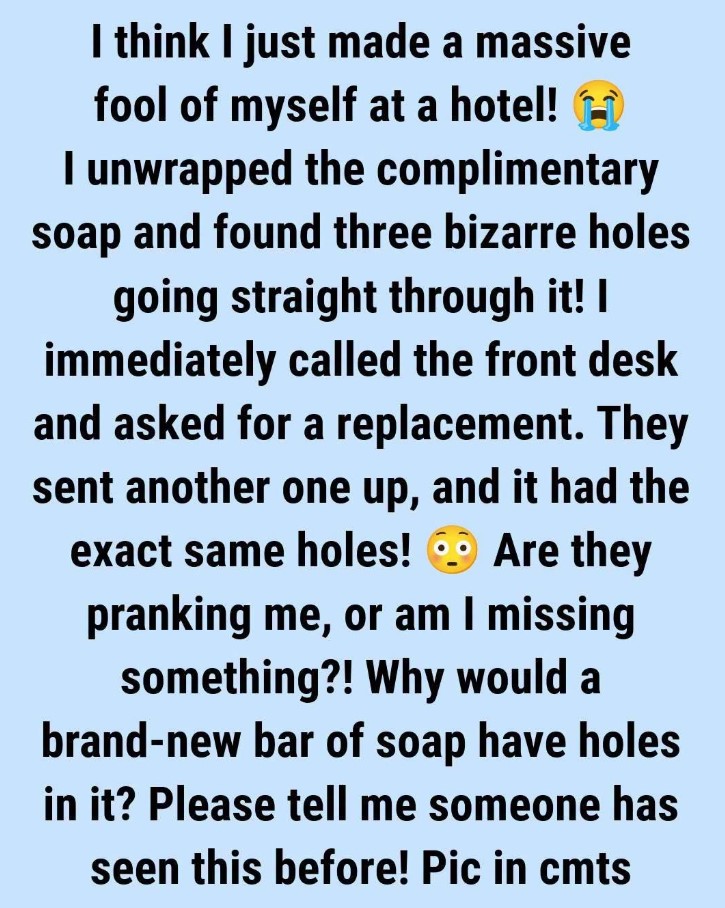
Have you ever checked into a hotel, unwrapped a little bar of soap, and noticed something strange? Instead of being a solid block, the soap has several holes running straight through it. At first, it might look like a manufacturing mistake, a strange design choice, or even a joke. But there may be a surprisingly practical reason behind it.
Hotel soap has always been one of those small bathroom essentials that guests rarely think about. It is provided for convenience, used a few times, and often left behind when someone checks out. However, these unusual soap bars have recently caught people’s attention, making travelers wonder whether hotels are trying to save money, reduce waste, or change the way they provide basic toiletries.
The answer may be simpler than it looks, and it reveals something interesting about the way hotels manage everyday supplies.
Why Do Hotel Soap Bars Have Holes?
The most likely explanation is that the holes help reduce the amount of soap used to make each bar while preserving its overall size and shape.
Imagine a traditional soap bar. It is solid all the way through, even though most people only use the outer surfaces. In a hotel, guests may use a small bar for a shower or handwashing a couple of times before leaving. The soap is rarely used until it becomes a tiny leftover piece.
By removing some of the material from the middle, manufacturers can create a bar that still feels comfortable to hold without requiring as much soap to produce.
This is especially practical for hotels that supply toiletries to hundreds or thousands of rooms. Even a small reduction in material per bar could add up when multiplied across many rooms and repeated stays.
Although this explanation makes sense, there is not necessarily one official reason behind every hole-filled soap bar. Designs can vary between manufacturers, and not every hotel uses the same product.
A Clever Way to Use Less Soap Without Making It Feel Tiny
One of the challenges with hotel toiletries is finding the right balance between size, comfort, and cost.
A very small bar of soap can be difficult to grip, particularly when your hands are wet. It may slip around easily, feel awkward to use, and disappear quickly. Guests might also perceive it as an inconvenience rather than a useful bathroom amenity.
A wider bar with holes can offer a different solution. The soap remains large enough to fit comfortably in the palm, but less material is needed to create it.
The openings change the shape without necessarily making the bar feel dramatically smaller. This could be a practical design choice for manufacturers and hotels looking to reduce the amount of material used while maintaining a familiar experience for guests.
It is a small adjustment, but small changes in the design of everyday products can make a difference when they are produced in large quantities.
The Hotel Soap Waste Problem
There is another reason these unusual bars are attracting attention: the amount of soap hotels throw away.
When a guest opens a bar of soap and uses it, housekeeping generally cannot simply place that same bar in the next guest’s bathroom. Even if a large portion remains unused, it is considered a personal hygiene item, and hotels must think about cleanliness, guest comfort, and their own sanitation procedures.
As a result, many partially used bars are discarded when rooms are cleaned.
Consider how many hotel rooms are occupied throughout a year. A single room may receive dozens or even hundreds of different guests. If every guest opens a fresh bar and leaves most of it behind, the amount of wasted soap can become substantial across an entire property.
This is one reason hotels have explored alternatives, including wall-mounted liquid soap dispensers, larger refillable containers, and different types of solid soap bars.
The holes may be one way to reduce the amount of material in each individual bar, although they do not solve the bigger problem of what happens to the soap left behind after checkout.
Why Hotels Are Paying More Attention to Cost Savings
Hotels have to manage many expenses that guests never see. Every room needs to be prepared, cleaned, restocked, and maintained before the next visitor arrives.
Soap, shampoo, conditioner, towels, paper products, cleaning supplies, and other amenities may seem inexpensive individually. However, when a hotel purchases them in large quantities and replaces them constantly, the total cost becomes much more significant.
A small change in the amount of soap used to manufacture each bar could help reduce purchasing expenses over time.
For example, imagine a hotel ordering thousands of soap bars every month. If each bar requires slightly less raw material, the savings could become noticeable over repeated orders. The exact amount would depend on the soap’s weight, design, manufacturing cost, and how many bars the hotel purchases.
That does not automatically mean hotels are being unreasonable or trying to cheat guests. Businesses routinely redesign products to use materials more efficiently. The important question is whether the product still performs well and provides a reasonable experience for the people using it.
Why Not Just Give Guests Smaller Bars?
At first glance, reducing the size of the soap seems like the easiest way to save material. But there is a difference between a smaller bar and a bar that keeps a comfortable shape while removing some of its interior material.
A tiny soap bar can be difficult to handle. It may become slippery very quickly, particularly when it is used in a shower. Guests may also feel that the hotel is providing less than expected when the soap is noticeably smaller.
A bar with holes can retain a broader shape and a familiar grip. It may look almost like an ordinary bar from a distance, even though it contains less material.
This is one possible reason the design could appeal to hotels: it allows them to change the amount of soap used without dramatically changing the way the product feels in a guest’s hand.
Whether guests prefer it is another question. Some people may see the design as smart and practical, while others may simply think it looks unusual or cheap.
Does the Hole-Filled Soap Actually Reduce Waste?
It may reduce the amount of soap used during production, but that is different from reducing the waste created after guests leave.
The holes remove some material before the soap reaches the hotel room. However, if a guest uses the bar once and leaves it behind, the remaining soap may still be discarded.
That means the design addresses only part of the problem.
Hotels have also explored soap recycling programs that collect leftover bars, process them, and turn them into new soap products. Some organizations work with hotels to recover soap that would otherwise be thrown away and distribute recycled soap to communities in need.
These programs tackle the problem after the soap has been used, rather than simply reducing its original size or weight.
In other words, using less material to manufacture a soap bar and recycling partially used soap are two different approaches. Both can contribute to reducing waste, but one does not replace the other.
Is This a New Hotel Trend?
Hotel soap bars with holes may seem like a recent discovery to many travelers, especially as photos and videos of unusual hotel toiletries circulate online.
People have started noticing these bars and comparing them with the traditional solid soaps they remember from previous hotel stays. Some think the design is a clever way to prevent unnecessary waste, while others believe it is simply another example of businesses trying to cut expenses.
However, hotel toiletries have never been completely standardized. Different properties use different suppliers, brands, sizes, shapes, and packaging. Some hotels still provide individually wrapped solid bars, while others have switched to refillable liquid dispensers.
The appearance of a soap bar with holes does not necessarily mean every hotel is moving toward the same design. It may simply be one product offered by a particular supplier or selected by certain properties.
Why Some Guests Like the Idea
Not everyone sees the unusual design as a negative change.
Some travelers believe it makes sense because they rarely finish an entire hotel soap bar during a short stay. They would rather see a product that uses less material than a full-size bar that is mostly thrown away afterward.
Others appreciate the idea of reducing unnecessary consumption. If a bar remains comfortable to use and does the job properly, the holes may not bother them at all.
For guests who care about sustainability, reducing the amount of material used in disposable or short-term amenities can be a positive step, provided the hotel is actually reducing waste rather than simply changing the appearance of its products.
The design may not be perfect, but it raises a reasonable question about how much soap is needed for a few days of travel.
Why Other Guests Are Not Impressed
On the other hand, some people immediately associate the holes with cost-cutting.
When guests see something different from the products they are accustomed to, they may feel that the hotel is reducing quality. A soap bar with openings can look less substantial than a traditional solid bar, even if it works just as well.
Others question whether the holes make the soap more likely to break, become uncomfortable to use, or dissolve more quickly. These concerns depend on the particular bar, its ingredients, its thickness, and how it is used.
There is also a psychological element. Guests may not mind using a small bar of soap, but they can feel disappointed when a product appears to have been redesigned mainly to reduce expenses.
Ultimately, how people react depends on whether they see the design as a sensible improvement or an unnecessary compromise.
Are the Holes Designed to Make the Soap Last Longer?
Not necessarily.
A bar of soap lasts longer when it is allowed to dry between uses and is not left sitting in a pool of water. The shape of the bar, the soap formula, how frequently it is used, and the way it is stored all influence how quickly it wears away.
Holes could potentially change the soap’s exposed surface area and how water moves around it. Depending on the design and storage conditions, that might affect how quickly it dries or dissolves.
But it would be misleading to claim that holes automatically make soap last longer. They may actually expose more surface area to water, and the result could vary.
The more important factor is how the soap is used and whether it is kept in a place where water can drain away.
What the Design Says About Everyday Hotel Products
Hotel soap is a simple example of how businesses rethink ordinary products.
A small bar of soap may not seem important, but hotels purchase enormous quantities of supplies and replace them regularly. That makes even tiny changes in product design worth considering.
The same principle applies to packaging, refillable bottles, dispensers, cleaning products, and other bathroom amenities. Companies often look for ways to reduce material use, simplify storage, make products easier to handle, and control expenses.
Guests may not notice most of these changes. But when a product looks different enough to catch their attention, it can start a conversation about what is happening behind the scenes.
The holes in a soap bar are a good reminder that even the most ordinary items can have a story involving manufacturing, economics, convenience, and waste.
Final Thoughts
So, why do some hotel soap bars have holes in them? The most plausible explanation is that the design allows manufacturers to use less soap while keeping the bar large enough to hold and use comfortably. Rather than making the entire bar smaller, removing material from the center may preserve its overall shape while reducing the amount of raw soap needed to produce it. However, the exact reason can vary from one product to another, and without confirmation from the manufacturer, it should not be treated as the official explanation for every hole-filled soap bar.
The design also highlights a much bigger issue that hotels have been dealing with for years: the waste created by toiletries that guests use only briefly. A soap bar may be opened, used once or twice, and then left behind when the room is cleaned. Even if the holes help reduce the amount of soap used before the product reaches the guest, they cannot eliminate the waste created by partially used bars.
Some travelers may see the holes as a smart way to save resources, while others may view them as another sign of cost-cutting. Both reactions are understandable. What matters most is whether the soap remains practical, comfortable, and useful, rather than simply looking different.
The next time you check into a hotel and notice a bar of soap with holes running through it, you may look at it differently. What seems like an odd design at first could be an attempt to rethink a small everyday product, reduce material use, and make hotel supplies more efficient. It may not be a revolutionary change, but it is an interesting example of how even something as simple as a bar of soap can reveal the balance between convenience, cost, and waste.