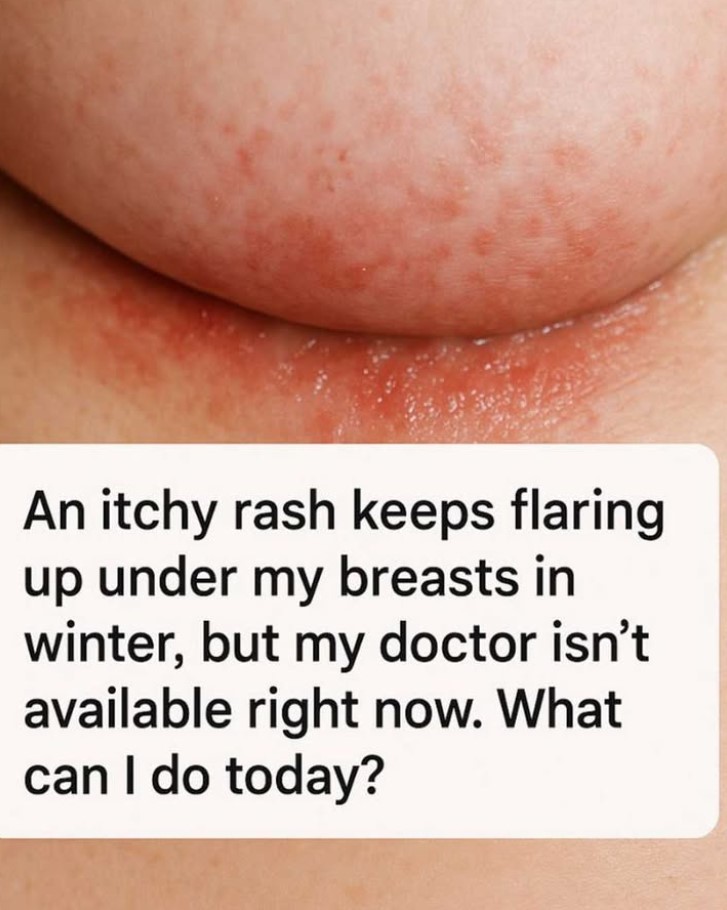
Skin irritation is a common issue that many people experience at different times of the year, and it often becomes more noticeable during colder months. One particularly uncomfortable problem is an itchy rash that appears under the breasts, which can flare up due to moisture, friction, or changes in temperature.
This area of the body is naturally warm and can easily trap sweat or humidity, especially when wearing layered clothing in winter. When combined with reduced airflow, this can lead to irritation, redness, and persistent itching.
Although it can be worrying when a doctor is not immediately available, there are several simple steps that can help manage the discomfort and reduce irritation until proper medical advice can be obtained.
WHY RASHES UNDER THE BREASTS HAPPEN
Moisture and trapped sweat
One of the most common causes of rashes in this area is moisture buildup. Even in cold weather, the body still produces sweat, and when it becomes trapped under clothing or skin folds, it creates a warm environment that can irritate the skin.
This moisture can lead to discomfort and make the skin more sensitive, especially if it remains damp for long periods of time.
Friction from clothing and movement
Another major cause is friction. Clothing that is tight or not breathable can rub against the skin during movement, especially in areas where skin naturally folds.
Over time, this repeated friction can cause redness, irritation, and small patches of rash that become itchy or sore.
Sensitivity to fabrics or detergents
Sometimes, the problem is not only moisture or friction but also sensitivity to materials. Certain fabrics or laundry detergents can irritate the skin, especially in sensitive areas.
Synthetic fabrics that do not allow proper airflow may worsen the issue, while harsh detergents can leave residues that trigger irritation.
COMMON WAYS PEOPLE RELIEVE DISCOMFORT AT HOME
Keeping the area clean and dry
One of the most important steps is maintaining good hygiene. Gently cleaning the area with mild soap and water can help remove sweat, bacteria, and irritation triggers.
After washing, thoroughly drying the skin is essential, as moisture can quickly worsen the rash if left behind.
Wearing breathable clothing
Loose, cotton-based clothing can help reduce irritation by allowing better airflow and minimizing friction. Natural fabrics are usually more gentle on sensitive skin compared to synthetic materials.
Changing tight clothing can make a noticeable difference in comfort levels.
Reducing heat and sweat buildup
Keeping the body cool can also help prevent further irritation. Overheating can increase sweating, which may worsen the rash.
Light clothing layers and avoiding excessive heat exposure indoors can help reduce flare-ups.
Avoiding scratching the irritated area
Although itching can be very uncomfortable, scratching can make the problem worse by damaging the skin further and increasing inflammation.
Keeping the area protected and avoiding direct irritation helps the skin recover more quickly.
WHEN THE RASH MAY NEED EXTRA ATTENTION
Signs it may be more than mild irritation
If the rash becomes persistent, spreads, or develops more severe symptoms such as strong pain, swelling, or unusual discharge, it may require medical evaluation.
In some cases, skin infections or fungal conditions can develop in warm, moist areas of the body and may need targeted treatment.
Why early care matters
Addressing skin irritation early can prevent it from becoming more severe. Small changes in hygiene and clothing can often stop mild irritation from progressing into a more uncomfortable condition.
Conclusion :
An itchy rash under the breasts during winter can be uncomfortable, but it is often linked to simple causes such as moisture, friction, and fabric sensitivity. Understanding these triggers makes it easier to manage the condition and reduce irritation quickly at home.
Basic care steps like keeping the area clean and dry, wearing breathable clothing, and avoiding excess heat can make a significant difference in comfort. These small adjustments help create a healthier environment for the skin to recover naturally.
It is also important to pay attention to how the skin reacts over time. While many cases are mild and improve with simple care, persistent or worsening symptoms should not be ignored. In such situations, professional medical advice is always the safest option.
In the end, skin health often depends on everyday habits. By making small but consistent changes, it is possible to reduce irritation, prevent flare-ups, and keep sensitive areas of the body more comfortable throughout the colder months.