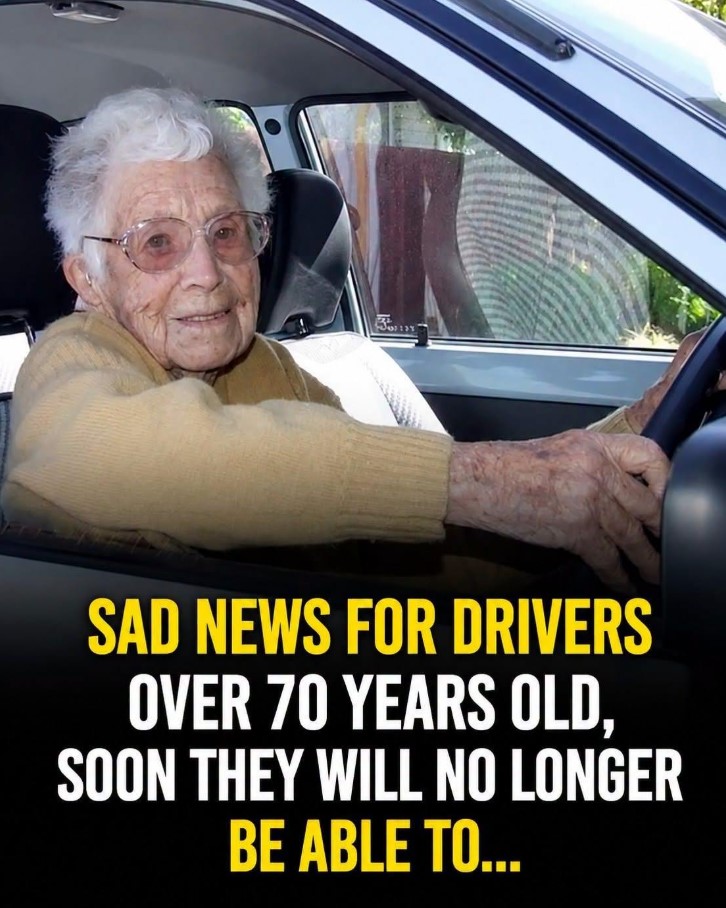
Turning 70 does not automatically mean a person has to give up driving. For many older adults, getting behind the wheel remains an important part of everyday independence. A car can mean being able to visit family, shop for groceries, attend appointments, meet friends, or simply go somewhere without depending on someone else for transportation.
At the same time, getting older can bring changes that deserve honest attention. Vision may become less sharp, reaction times can change, hearing may decline, and certain medical conditions or medications can affect concentration and coordination. These changes do not happen to everyone at the same age or to the same degree.
That is why the question isn’t simply, “Am I over 70?” A better question is: Am I still physically, mentally, and practically capable of driving safely?
There is no single worldwide rule stating that someone must stop driving simply because they reach 70. Licensing requirements vary significantly between countries and, in the United States, between individual states. Some jurisdictions require more frequent renewals, eyesight checks, medical information, or other assessments as drivers get older, while others place greater emphasis on individual fitness to drive.
The goal should be to protect both independence and safety—not to assume that every older driver is incapable of driving.
Does Turning 70 Automatically End Your Driving Privileges?
No—not as a universal rule.
Age alone does not tell you whether someone is a safe driver. Two people who are both 75 can have dramatically different levels of vision, mobility, concentration, reaction speed, and overall driving ability.
The European Commission specifically notes that aging does not begin or progress at exactly the same rate for everyone and that driving skills and physical and mental abilities can vary considerably among people of the same age.
This is an important distinction.
A healthy 72-year-old who has excellent vision, good mobility, strong concentration, and a safe driving record may be perfectly capable of driving. Meanwhile, another person of the same age could have medical or functional problems that make driving dangerous.
Therefore, chronological age should be viewed as one factor—not the entire answer.
Why Licensing Rules Can Change as Drivers Get Older
Although there is no universal “driving expiration date” at 70, some governments introduce additional checks for older motorists.
These requirements can include:
- More frequent license renewal
- In-person renewal
- Vision screening
- Medical declarations
- Medical examinations
- Cognitive assessments in certain circumstances
- Additional driving evaluations in some jurisdictions
The exact requirements depend on where the driver lives.
For example, in Great Britain, drivers must renew their entitlement to drive when they reach 70 and then renew it every three years. They must declare that they meet the required eyesight standard and disclose relevant medical conditions. In 2026, the UK government also consulted on whether mandatory eyesight testing should become part of the renewal process for older drivers.
Other countries use different approaches. The European Commission’s information on older drivers shows substantial differences between European licensing systems, including different renewal ages, intervals, and medical requirements.
So before assuming that a particular age limit applies, drivers should check the rules of their own licensing authority.
Why Age Isn’t the Only Thing That Matters
Driving is a complicated activity that requires several abilities to work together.
A driver needs to see signs, pedestrians, traffic lights, vehicles, and road markings. They need to hear warning sounds, process information quickly, judge distances, coordinate their hands and feet, and make decisions while the environment around them is constantly changing.
Some of these abilities can change gradually with age.
That doesn’t mean every older driver becomes unsafe. It simply means that paying attention to changes becomes increasingly important.
Vision Is One of the Biggest Considerations
Good vision is essential behind the wheel.
Drivers need to recognize road signs, judge distances, notice pedestrians, identify vehicles approaching from different directions, and see clearly in changing light.
Problems can become more noticeable at night, in rain, in bright sunlight, or when headlights are approaching from the opposite direction.
Warning signs can include:
- Difficulty reading road signs until you’re very close
- Increasing trouble seeing at night
- Frequent glare from headlights
- Difficulty adjusting between bright and dark environments
- Blurred or double vision
- Frequently missing objects in peripheral vision
- Needing to move closer to see clearly
Regular eye examinations can help identify vision problems that may otherwise go unnoticed.
If glasses or other corrective measures are prescribed, using them consistently while driving is essential.
Hearing Matters Too
Hearing is another sense that contributes to safe driving.
Drivers may need to notice sirens, horns, emergency vehicles, railroad warnings, or other sounds around the vehicle.
Hearing loss does not automatically make someone unable to drive, but it can make awareness of the surrounding environment more difficult.
A driver who has noticed significant changes in hearing should discuss them with a qualified professional and consider how those changes affect driving.
Reaction Time Can Change
Driving often requires fast responses.
A vehicle ahead can brake unexpectedly. A pedestrian can step into the road. Traffic can suddenly merge. A driver may need to move away from a hazard within seconds.
Reaction speed can decline with age, although the degree varies greatly between individuals.
Older drivers can sometimes compensate by driving more cautiously, leaving greater following distances, avoiding aggressive traffic, and reducing exposure to situations they find difficult.
The European Commission notes that older drivers can experience reduced physical abilities and slower reaction times, contributing to increased vulnerability in crashes.
Cognitive Changes Deserve Attention
Safe driving requires concentration, memory, judgment, and the ability to process multiple pieces of information at once.
A person experiencing significant cognitive decline may have difficulty navigating familiar routes, remembering traffic rules, reacting appropriately to unexpected situations, or making safe decisions.
Possible warning signs include:
- Getting lost on familiar routes
- Forgetting where you’re going
- Becoming unusually confused in traffic
- Missing traffic signs repeatedly
- Making unexpected turns
- Difficulty following familiar routines
- Becoming overwhelmed by busy intersections
- Repeatedly forgetting recent driving incidents
One isolated mistake doesn’t necessarily mean someone should stop driving. Everyone makes occasional errors.
But a pattern of increasingly serious mistakes deserves attention.
Medication Can Affect Driving
Age itself isn’t the only factor that can influence driving ability.
Some medications can cause drowsiness, dizziness, blurred vision, confusion, or slower reactions.
This can be especially important when a person starts a new medication or changes the dosage of an existing one.
Anyone concerned about medication-related driving effects should speak with a doctor or pharmacist rather than simply assuming that a prescription is harmless behind the wheel.
The important question is not just “What medication am I taking?” but also “How does it affect me when I drive?”
Mobility and Physical Strength Matter
Getting into the car is only one part of driving.
A driver needs enough physical ability to operate pedals, turn the steering wheel, check mirrors, look over the shoulder, and respond quickly when necessary.
Limited neck movement can make checking blind spots more difficult. Reduced leg strength can affect braking or acceleration. Pain or stiffness can interfere with steering or getting in and out of the vehicle.
Fortunately, some physical limitations can be addressed through vehicle adjustments or adaptive equipment.
The right solution depends on the individual situation.
Night Driving Can Become More Difficult
Many older drivers find nighttime driving more challenging.
Reduced night vision, glare from headlights, difficulty judging distances, and slower adaptation between light and darkness can all make evening driving more stressful.
There is nothing wrong with recognizing this limitation.
A person who remains completely comfortable driving during the day may choose to avoid driving after dark.
That isn’t necessarily a loss of independence. It can be a sensible adjustment that allows someone to continue driving in conditions where they feel confident and capable.
Bad Weather Requires Extra Caution
Rain, fog, snow, ice, and strong sunlight can make driving more difficult for anyone.
For an older driver experiencing changes in vision, reaction time, or mobility, these conditions can become even more demanding.
A practical approach may be to avoid driving during severe weather whenever possible.
Planning ahead can help. Check the forecast, allow extra time, choose familiar routes, and avoid unnecessary trips when road conditions are poor.
Driving Doesn’t Have to Be All or Nothing
One of the biggest misconceptions about aging and driving is that there are only two choices: drive everywhere or stop driving completely.
In reality, there can be a middle ground.
Some older drivers choose to:
- Drive only during daylight
- Avoid rush hour
- Avoid highways
- Stay within familiar areas
- Avoid driving during bad weather
- Limit long-distance trips
- Ask someone else to drive at night
- Use public transportation for certain journeys
- Arrange rides for unfamiliar destinations
These adjustments can allow someone to maintain a meaningful degree of independence while reducing exposure to situations that have become challenging.
What About a Good Driving Record?
A long history of safe driving is certainly valuable, but it doesn’t guarantee that someone will remain safe forever.
Driving ability can change gradually.
Someone who has driven safely for 50 years can still develop vision problems, mobility limitations, cognitive difficulties, or medication side effects later in life.
That’s why regular self-assessment is important.
Past performance matters, but current ability matters too.
Warning Signs You Should Never Ignore
There are certain changes that should prompt a serious conversation about driving.
These include:
Frequent Near-Misses
Almost causing an accident repeatedly is a major warning sign.
One unusual mistake can happen to anyone. A growing pattern is different.
New Scratches or Dents
Repeated unexplained damage to the car can indicate difficulty judging distances or controlling the vehicle.
Getting Lost
Becoming confused on routes that were previously familiar can be particularly concerning.
Confusing the Pedals
Difficulty consistently distinguishing between the accelerator and brake is a serious safety concern.
Running Red Lights or Stop Signs
Repeatedly missing traffic signals or stop signs may indicate problems with attention, vision, or decision-making.
Family and Friends Are Increasingly Concerned
Sometimes the people around a driver notice changes before the driver does.
That doesn’t mean every concern is automatically correct, but repeated observations from several trusted people deserve consideration.
Feeling Nervous Behind the Wheel
A driver who suddenly feels overwhelmed, frightened, or confused during ordinary trips should not simply ignore that feeling.
It may be an important signal that driving conditions need to change or that an assessment would be useful.
How Families Can Talk About Driving
Conversations about driving can become emotionally difficult.
For many older adults, driving represents much more than transportation. It can symbolize freedom, independence, privacy, and control.
Telling someone, “You’re too old to drive,” is unlikely to lead to a productive conversation.
A better approach is to focus on specific observations.
Instead of saying:
“You shouldn’t be driving anymore.”
Try discussing:
“I’ve noticed you’ve been having trouble seeing at night. Would you be willing to talk to your eye doctor about it?”
Specific concerns are easier to discuss than general judgments about age.
Consider a Professional Driving Assessment
When there is uncertainty, a professional driving assessment can provide useful information.
An appropriate assessment may evaluate areas such as vision, reaction time, physical abilities, attention, and actual driving performance.
This can be particularly helpful when a person and their family disagree about whether driving remains safe.
The goal doesn’t have to be to take away someone’s license. It can also identify ways to make driving safer.
Vehicle Technology Can Help
Modern vehicles offer numerous safety technologies that may assist drivers.
Depending on the vehicle, these can include:
- Blind-spot monitoring
- Rear-view cameras
- Parking sensors
- Automatic emergency braking
- Lane-departure warnings
- Adaptive cruise control
- Forward-collision warnings
These technologies can provide additional information and assistance, but they are not substitutes for an attentive driver.
A driver should understand how the vehicle’s systems work and remain responsible for controlling the vehicle.
Older Drivers Can Adapt Successfully
Aging doesn’t automatically mean becoming a poor driver.
Many older adults adapt their habits as their abilities change.
They may drive more slowly, leave more space between vehicles, avoid stressful traffic, plan routes ahead of time, or limit themselves to conditions where they feel comfortable.
These adaptations can be a strength rather than a weakness.
The goal isn’t to prove that someone can drive exactly as they did at 30. The goal is to determine whether they can continue driving safely today.
What Should You Do If You’re Unsure?
If you’re questioning your own ability to drive, start with an honest assessment.
Ask yourself:
- Can I see clearly enough to recognize signs and hazards?
- Do I feel comfortable driving at night?
- Can I react quickly when traffic changes suddenly?
- Do I ever become confused on familiar roads?
- Have I had multiple near-misses recently?
- Have medications changed how alert I feel?
- Can I comfortably control the vehicle?
- Have people I trust noticed changes in my driving?
If several answers raise concerns, don’t ignore them.
Talk with a doctor, eye-care professional, driving specialist, or appropriate licensing authority depending on the issue.
The Rules Depend on Where You Live
This point is especially important for anyone reading online articles about older-driver laws.
There is no single set of rules that applies to every person over 70.
In the United States, licensing requirements can vary from state to state. Some states introduce vision testing, shorter renewal periods, or other age-related requirements at different ages.
In Europe, licensing practices also vary considerably between countries. Some jurisdictions require medical checks or more frequent renewals at specific ages, while others do not impose the same age-based requirements.
Therefore, don’t rely on a social-media post or a general article to determine whether you can legally drive.
Check your own licensing authority for the rules that apply to you.
Independence and Safety Can Coexist
Giving up some driving situations does not necessarily mean giving up independence.
A person might continue driving to the grocery store, doctor’s office, or nearby family members while asking someone else to handle nighttime highway trips.
Another person may decide to stop driving entirely but use community transportation, taxis, rides from relatives, or public transportation instead.
The best solution depends on the person’s abilities, environment, finances, support network, and transportation options.
What matters most is finding a transportation plan that preserves as much independence as possible without compromising safety.
Conclusion :
So, can people over 70 still drive?
Yes, many can. But turning 70 is not the right question by itself.
There is no universal rule that says every person must stop driving at a particular age. Licensing requirements vary depending on the country, state, or jurisdiction, and some places require additional renewals, eyesight checks, medical information, or assessments as drivers get older.
More importantly, age alone cannot tell you whether someone is capable of driving safely. People age differently, and two drivers of the same age can have completely different levels of vision, mobility, reaction time, judgment, and cognitive ability.
The most important thing is to recognize meaningful changes rather than ignoring them. Frequent near-misses, getting lost on familiar roads, worsening vision, difficulty controlling the vehicle, confusion, or repeated concerns from family members should never simply be brushed aside.
At the same time, older drivers should not feel pressured to give up their independence simply because they have reached a certain birthday. Adjusting driving habits—such as avoiding nighttime travel, bad weather, heavy traffic, or unfamiliar roads—can sometimes make continued driving safer.
Ultimately, responsible driving is not about proving that you’re young enough to be behind the wheel. It’s about being honest about your current abilities and making smart decisions based on them.
The goal isn’t to keep driving at all costs. The goal is to keep moving safely, confidently, and independently for as long as it remains possible.