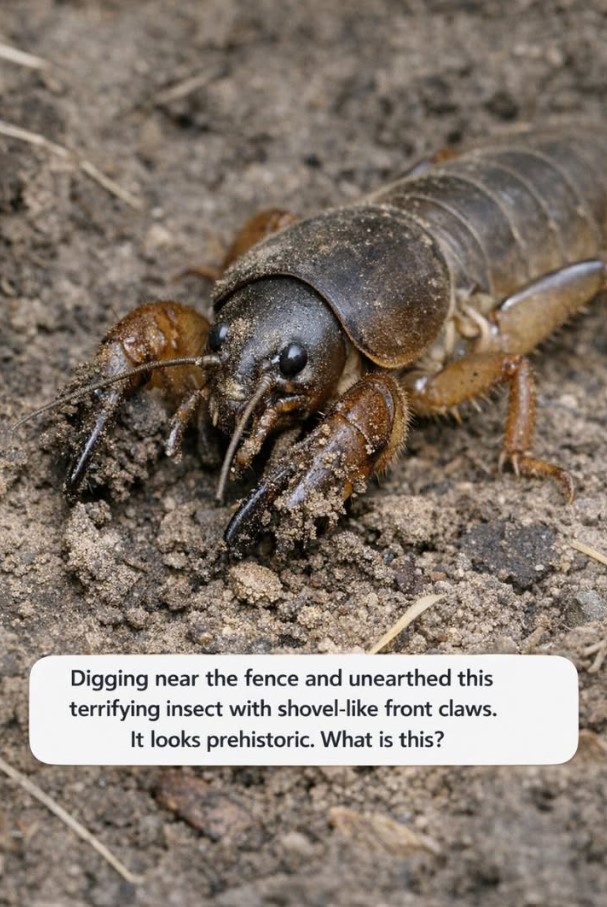
It’s the kind of discovery that instantly makes you step back. You’re digging in your yard when suddenly you uncover a strange, bulky insect with powerful, shovel-like front claws. It looks prehistoric, almost like something that doesn’t belong in a normal garden.
Your first thought is probably: What is this thing—and should I be worried?
While it may look intimidating, this creature is actually a known type of insect, and in most cases, it’s not dangerous to people.
What you likely found: a mole cricket
The insect you described is most likely a mole cricket.
Mole crickets are unusual insects that live underground and are easy to recognize because of their distinctive front legs. These legs are:
- Wide and flattened
- Shaped like small shovels
- Designed specifically for digging
This is what gives them that “alien” or prehistoric appearance.
Why it looks so strange
Mole crickets are built for life underground.
Their features include:
- Strong, claw-like front legs for tunneling
- A thick, cylindrical body
- A somewhat soft, pale or brownish color
Because they spend most of their lives below the surface, people rarely see them—so when they do appear, they can look unfamiliar and alarming.
What it was doing in the soil
Mole crickets live in tunnels just below the surface of the ground.
They dig through soil to:
- Search for food
- Create burrows
- Move around safely
That’s why you uncovered it while digging—it was simply going about its normal underground activity.
Is it dangerous?
To humans: no
Mole crickets are not dangerous to people.
- They do not bite in a harmful way
- They are not venomous
- They do not attack
At most, they might try to move away quickly or use their legs defensively.
To your garden: possibly
While harmless to humans, they can be a problem for plants.
Some species feed on:
- Roots
- Grass
- Seedlings
Others may also eat small insects.
Because of their tunneling and feeding habits, they can:
- Damage lawns
- Weaken plants
- Disrupt soil structure
Why they are often called “prehistoric-looking”
Many insects that live underground have remained relatively unchanged for millions of years.
Mole crickets in particular:
- Have a body shape highly adapted for digging
- Resemble ancient insect forms
- Move in a way that feels unfamiliar
This combination makes them seem more “primitive” or unusual compared to common surface insects.
Could it be something else?
In most cases, the combination of:
- Large body
- Shovel-like front claws
- Found underground
strongly points to a mole cricket.
Other insect larvae (like beetle grubs or caterpillars) may also be found in soil, but they usually:
- Lack large digging claws
- Have softer, simpler bodies
Caterpillars, for example, are the larval stage of butterflies and moths and typically have small legs rather than large digging appendages. caterpillars
What should you do if you find one?
You have a few options depending on your situation:
If it’s just one
- Leave it alone or move it elsewhere
- It’s part of the natural ecosystem
If you see many
- Monitor your plants for damage
- Consider garden-safe pest control methods
The bottom line
If you uncovered a strange insect with shovel-like front claws:
- It is most likely a mole cricket
- It looks intimidating but is not dangerous to humans
- It may affect plants if present in large numbers
Conclusion :
Discovering an unfamiliar insect in your yard can be unsettling, especially when it looks unusual or “prehistoric.” However, creatures like mole crickets are simply part of the natural world beneath your feet.
Their unique appearance is a result of specialized adaptations for underground life, not a sign of danger. While they can occasionally cause issues in gardens, they are generally harmless to people and play a role in the ecosystem.
Understanding what you’ve found helps turn fear into curiosity—and gives you the knowledge to decide how to handle it calmly and confidently.