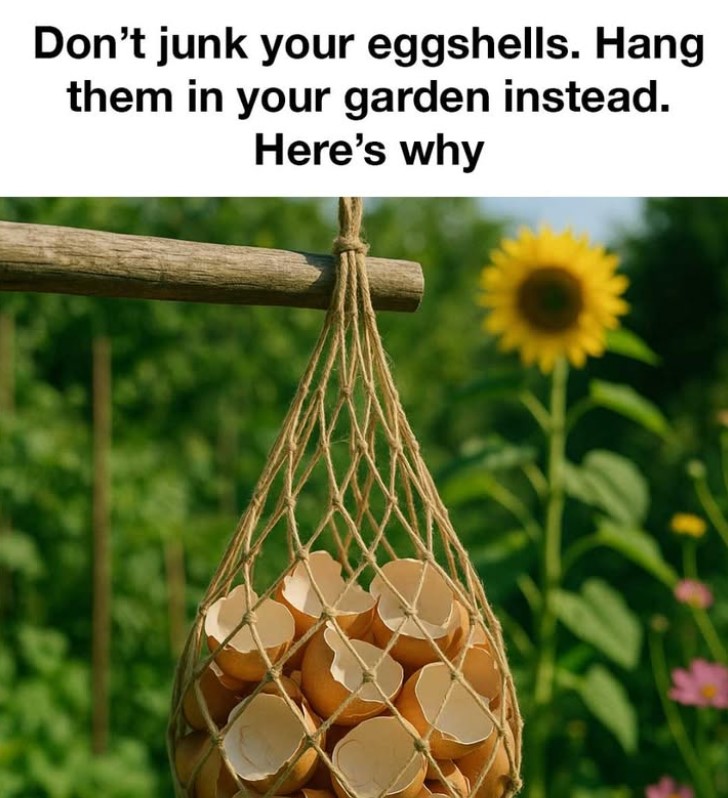
Most people toss eggshells straight into the trash without a second thought. After all, once the egg is used, what’s left seems useless. But what if those fragile shells could actually benefit your garden in surprising ways?
In recent years, a simple gardening trick has gone viral: hanging eggshells around your garden instead of throwing them away. It might sound unusual at first, but this method is rooted in real gardening practices—though not always in the way social media suggests.
Eggshells are packed with nutrients and can play a small but meaningful role in improving soil, supporting plant health, and even helping with certain pests. However, understanding how they actually work—and what they don’t do—is the key to using them effectively.
Let’s take a closer look at why people are hanging eggshells in their gardens—and whether it’s really worth trying.
Why eggshells are useful in the garden
Eggshells are made mostly of calcium carbonate, a compound that plants need for healthy growth.
Calcium helps:
- Strengthen plant cell walls
- Support root development
- Improve overall plant structure
As eggshells break down, they slowly release calcium into the soil, acting as a natural, long-term nutrient source.
They also contain small amounts of:
- Magnesium
- Phosphorus
These nutrients contribute to stronger, healthier plants over time.
Why some gardeners hang eggshells
The idea of hanging eggshells instead of just burying them comes from a mix of practical and creative uses.
1. Light pest deterrent
Some gardeners believe that hanging or placing eggshells around plants can help deter pests.
- Crushed shells can create a rough surface that soft-bodied pests like slugs dislike
- Hanging shells may slightly discourage certain insects or animals
However, it’s important to be honest:
This method is not a guaranteed pest solution—it works best as a small helper, not a main defense.
2. Slow nutrient release
When eggshells are exposed to weather outdoors:
- Rain and moisture gradually break them down
- Calcium slowly leaches into the soil
This creates a gentle, long-term feeding effect rather than a quick fertilizer boost.
3. Eco-friendly gardening habit
One of the biggest benefits is sustainability.
Instead of throwing eggshells away, you:
- Reduce kitchen waste
- Reuse natural materials
- Support organic gardening practices
It’s a simple way to make your garden more environmentally friendly.
Do eggshells really improve your soil?
Yes—but slowly.
Eggshells can:
- Improve soil structure over time
- Help with aeration when crushed
- Add organic matter as they decompose
However:
They do not work instantly
Large pieces can take months—or even longer—to break down
That’s why many experts recommend crushing or grinding them first for better results.
Important truth: not a miracle hack
Let’s clear up the biggest misconception.
Eggshells are helpful—but they are not a magic solution.
For example:
- They won’t instantly fix plant problems
- They don’t always stop pests completely
- They don’t replace proper soil care
Even calcium-related plant issues (like blossom-end rot) are often caused by watering problems, not just lack of calcium
How to use eggshells the right way
If you want the best results, follow these simple steps:
1. Clean them
Rinse eggshells to remove any leftover egg (this prevents smells and pests)
2. Dry them
Let them air dry completely
3. Crush or grind
- Crush into small pieces
- Or grind into powder for faster nutrient release
4. Use them in your garden
You can:
- Sprinkle around plants
- Mix into soil
- Add to compost
- Or hang them in mesh or strings for decoration + mild benefits
Creative ways to hang eggshells
If you like the idea of hanging them, try:
- Threading shells onto string and hanging near plants
- Placing crushed shells in small mesh bags
- Decorating garden areas while reusing waste
This combines function with a bit of rustic garden style.
When you should NOT use eggshells
Eggshells aren’t perfect for every situation.
Avoid using too many if:
- Your soil is already alkaline
- You’re growing acid-loving plants (like blueberries)
Because eggshells can slightly raise soil pH over time.
Conclusion :
Eggshells may seem like kitchen waste, but they can actually play a small, useful role in your garden when used correctly. From adding calcium to improving soil structure, they offer a natural and sustainable way to support plant health over time.
The idea of hanging eggshells in your garden is part practical, part creative. While it won’t magically transform your plants overnight or completely eliminate pests, it can still contribute to a healthier garden environment—especially when combined with good gardening habits.
The real value of this trick isn’t in quick results, but in consistency. Small actions like reusing eggshells, enriching your soil, and reducing waste all add up over time to create a more balanced and thriving garden.
So instead of throwing those shells away, consider giving them a second life. Even if the benefits are gradual, you’ll be turning something ordinary into something useful—and that’s what smart gardening is all about.