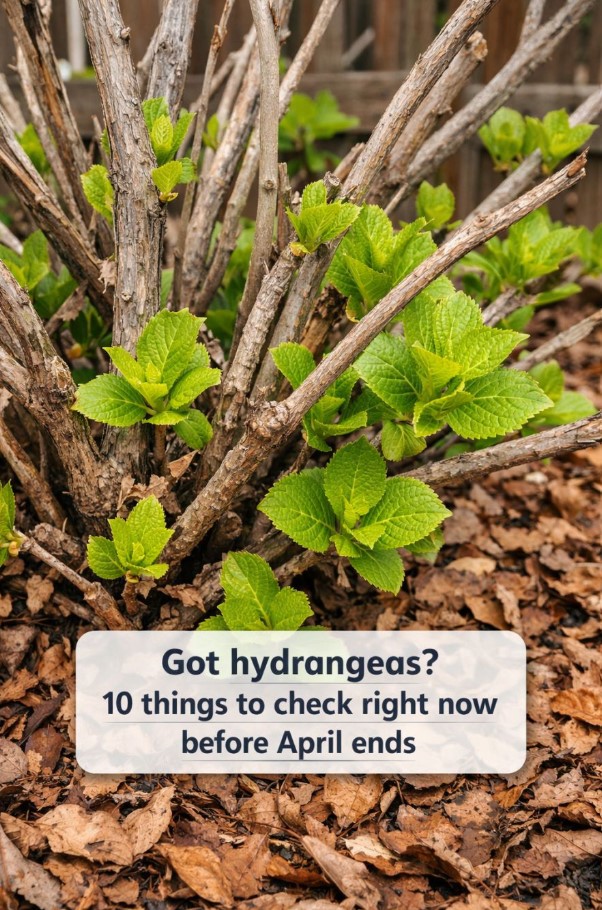
Hydrangeas are one of the most rewarding plants in any garden—but they can also be one of the most frustrating if they don’t bloom. If you’ve ever had a season where your hydrangea grew leaves but no flowers, there’s a good chance the problem started in early spring.
April is a critical month for hydrangea care. What you do—or don’t do—right now can determine whether you get a full, vibrant display in summer or a disappointing, bloom-less plant.
The good news? You don’t need complicated techniques. You just need to check a few key things before the end of April.
Let’s go step by step.
1. Identify your hydrangea type (this is the most important step)
Before touching anything, you need to know what type of hydrangea you have.
- Some bloom on old wood (last year’s stems)
- Others bloom on new wood (this year’s growth)
If you prune the wrong type at the wrong time, you can remove all your flowers.
Experts stress this is the #1 mistake gardeners make in April.
Tip: If you’re unsure, prune very lightly or not at all.
2. Check for winter damage
After winter, inspect your plant for:
- Dead stems (dry, brittle, brown inside)
- Broken branches
- Frost damage
Remove only the damaged parts. This helps the plant focus energy on healthy growth.
3. Be careful with pruning
April is not the time for aggressive pruning (for most types).
- Old-wood hydrangeas → avoid cutting
- New-wood types → light shaping is okay
👉 Over-pruning now = no flowers later.
Even experts warn that pruning too late can reduce blooming significantly.
4. Feed your hydrangeas (early spring boost)
Hydrangeas start growing before you even see leaves, so feeding them now is key.
- Use a balanced fertilizer (like 10-10-10)
- Apply around the base—not directly on stems
April feeding helps:
- Stronger growth
- Bigger blooms
Early fertilizing is considered essential for healthy flowering.
5. Check your soil moisture
Hydrangeas LOVE water.
- Soil should be moist, not dry
- Avoid letting roots dry out
From real gardeners:
Consistent moisture = better blooms.
6. Refresh (but don’t remove) mulch
Mulch helps:
- Retain moisture
- Protect roots
- Regulate temperature
But don’t remove it all at once.
Sudden removal can expose roots to cold and stress the plant.
Instead:
- Lightly refresh or top it up
7. Check soil pH (affects flower color!)
Hydrangeas are unique because their color depends on soil pH:
- Acidic soil → blue flowers
- Alkaline soil → pink flowers
April is the perfect time to adjust this before blooms form.
8. Look for early signs of growth problems
Watch for:
- Yellow leaves → possible nutrient issue
- Weak growth → poor soil or feeding
- No buds → possible pruning mistake
Catching problems early gives you time to fix them before bloom season.
9. Make sure they’re in the right light
Hydrangeas prefer:
- Morning sun
- Afternoon shade
Too much sun:
- Dries them out
- Causes stress
Too little sun:
- Fewer flowers
10. Don’t rush—sometimes doing less is better
This might sound surprising, but in April:
👉 Doing too much is often worse than doing nothing.
Hydrangeas are slow to wake up—give them time.
Why April matters so much
Hydrangeas begin preparing for blooming very early in the season, even before visible growth.
If you:
- Prune too much
- Skip feeding
- Stress the plant
You can lose an entire summer of flowers.
That’s why gardeners consider April a “make or break” month for hydrangeas.
Conclusion :
Taking care of hydrangeas doesn’t have to be complicated—but timing is everything. April is your window to set the stage for a healthy, vibrant plant that will reward you with beautiful blooms in the months ahead.
By focusing on a few key checks—like identifying your plant type, avoiding unnecessary pruning, feeding properly, and maintaining moisture—you give your hydrangeas exactly what they need at the right time.
The biggest takeaway? Don’t rush and don’t overdo it. Hydrangeas thrive when you work with their natural growth cycle, not against it.
If you take a little time now before April ends, you’ll be setting yourself up for a garden full of color, life, and stunning blooms all summer long 🌸