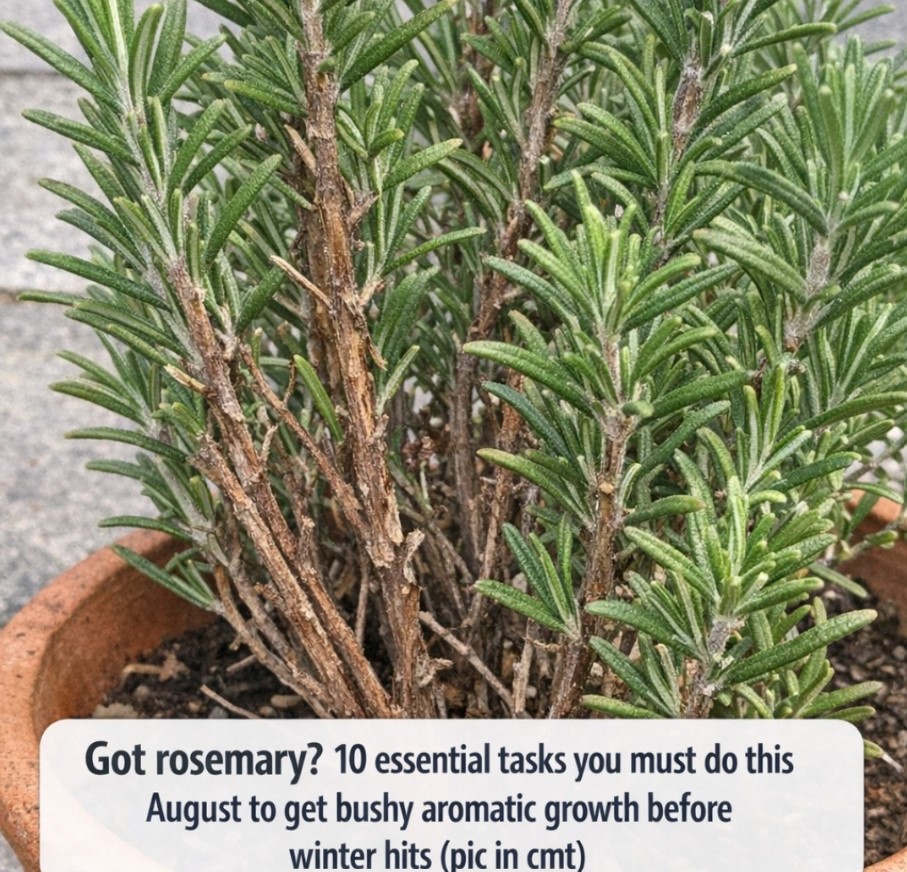
Rosemary is one of those garden plants that seems almost indestructible. Its woody stems, needle-like leaves, and unmistakable fragrance give it a reputation for being able to survive almost anything. But even a tough herb benefits from the right care at the right time.
August is an especially useful month to give rosemary some attention. Late summer provides an opportunity to encourage healthy branching, correct watering problems, improve drainage, harvest fresh growth, watch for pests, and prepare plants for the colder months ahead. The goal isn’t to force a huge flush of tender growth. Instead, you want to help the plant become fuller, stronger, and better prepared for changing weather.
If your rosemary has become tall and sparse, developed a crowded center, or simply hasn’t looked as vigorous as you hoped, don’t assume the plant is finished. A few well-timed August tasks can make a significant difference.
1. Inspect Your Rosemary Before Doing Anything
Before reaching for the pruning shears or watering can, take a few minutes to examine the entire plant.
Look closely at the stems, leaves, center of the plant, and soil around the base. Healthy rosemary generally has firm green growth and strongly aromatic foliage. Pale, yellowing, browning, or unusually weak foliage can indicate stress.
Also check whether the center has become overly crowded or whether the plant has developed long, bare, woody stems. Look at the soil as well. If it stays wet for long periods after watering or rainfall, drainage may be the real problem.
A careful inspection helps you determine what your plant actually needs rather than treating every rosemary plant the same way.
2. Prune Lightly to Encourage Bushier Growth
August can be a good time for a light trim, especially if your rosemary has become leggy.
Focus on the green, flexible portions of the stems rather than cutting deeply into old, bare wood. Rosemary does not always respond well when large amounts of mature woody growth are removed.
Trim back the softer green tips by roughly an inch or a few inches, depending on the size and shape of the plant. Making cuts just above a leaf node or side branch can encourage additional branching.
The important word here is lightly. Avoid removing a huge percentage of the plant at once. The purpose of late-summer pruning is to improve shape and encourage healthy branching—not to give the rosemary a drastic haircut.
3. Remove Dead and Damaged Stems
Once you’ve completed the light shaping, look again for branches that clearly need to go.
Dead stems tend to be brittle and gray or brown. Damaged branches may have cracks, broken sections, or areas where branches have repeatedly rubbed against one another.
Crossing stems can also be worth removing because they crowd the interior of the plant and restrict airflow.
Use clean, sharp pruning shears and remove problem branches neatly. Opening up an overcrowded center allows more light and air to reach the plant, which can be particularly helpful during humid late-summer weather.
4. Water Deeply—but Don’t Keep Rosemary Wet
One of the easiest mistakes to make with rosemary is assuming that hot weather means it needs constant watering.
Rosemary generally prefers deep watering followed by a period in which the soil can dry out. It does not appreciate sitting in constantly saturated soil.
For plants growing in the ground, water thoroughly when necessary and then allow the upper portion of the soil to dry before watering again. Container-grown rosemary should be watered until excess water flows from the drainage holes, but don’t allow the pot to sit in a saucer full of water.
During particularly hot weather, potted plants may need watering more frequently than plants growing in the ground. However, always check the actual soil moisture rather than watering automatically according to the calendar.
The biggest lesson is simple: rosemary would rather be slightly thirsty than consistently waterlogged.
5. Fix Drainage Problems Before Autumn
If your rosemary repeatedly struggles despite receiving plenty of sunlight, poor drainage could be responsible.
Heavy soil can hold water around the roots for too long, creating conditions that rosemary dislikes. Check what happens after watering or a heavy rain. If water remains around the plant or the soil stays sticky and saturated, consider improving the growing conditions.
For container rosemary, a fast-draining potting mixture can make a major difference. A combination containing potting mix and materials such as coarse sand and perlite can help excess water move away from the roots.
For plants in the ground, improving the planting location or moving the rosemary to a raised, better-drained area may be necessary if the soil remains persistently wet.
Fixing drainage now can be especially valuable because overly wet roots become an even bigger concern as temperatures cool.
6. Don’t Overfeed Your Rosemary
More fertilizer isn’t necessarily better.
Rosemary naturally grows in relatively lean conditions, and excessive nitrogen can encourage soft, overly lush growth. That kind of tender growth isn’t necessarily what you want heading toward colder weather.
If your plant is healthy and growing well, it may not need fertilizer at all. If it looks pale or has clearly become depleted—particularly if it’s been growing in the same container for a long time—a modest feeding may be appropriate.
A diluted, balanced fertilizer or a relatively low-nitrogen formulation can be used according to its label directions.
The goal is steady, sturdy growth, not a sudden burst of soft foliage that may be less prepared for cold weather.
7. Refresh the Mulch Carefully
A small amount of mulch can help moderate soil temperatures and reduce competition from weeds, but rosemary doesn’t need to be buried beneath a thick layer.
Use a relatively thin layer around the plant while leaving plenty of space around the crown and stems.
Avoid piling mulch directly against the base. Trapped moisture around the crown can create exactly the kind of damp environment rosemary dislikes.
Materials such as small gravel or a light layer of suitable organic mulch can work, depending on the growing conditions. The important thing is to preserve good airflow and drainage around the base.
8. Harvest Rosemary Regularly
Here’s one August task that benefits both your garden and your kitchen: harvest the herb.
Taking moderate amounts of fresh green growth encourages the plant to branch, which can help it develop a fuller appearance.
Cut several-inch-long sprigs from healthy green growth rather than stripping one side of the plant completely bare. Avoid taking too much at once.
Fresh rosemary can immediately be used with roasted potatoes, chicken, vegetables, breads, marinades, soups, and many other dishes.
You can also dry the sprigs for later use or freeze fresh rosemary for the colder months.
This makes harvesting one of the most satisfying forms of pruning—you improve the shape of the plant while bringing something useful into the kitchen.
9. Watch for Pests, Mildew, and Signs of Root Stress
Although rosemary is generally hardy, stressed plants can still experience problems.
Inspect the foliage regularly for unusual discoloration, stippling, fine webbing, or a powdery coating. Spider mites can become more noticeable under hot, dry conditions, while poor airflow and humid nights can contribute to fungal problems such as powdery mildew.
Don’t immediately assume that a pest or disease is the primary problem. Sometimes the underlying issue is environmental stress caused by excessive watering, insufficient sunlight, poor drainage, or crowded growth.
Improving those conditions can help the plant become naturally more resilient.
If you notice pests, inspect the plant carefully—including less visible areas—and use an appropriate treatment for the specific problem rather than applying random products.
10. Give Rosemary Plenty of Sun
Sunlight is one of the most important ingredients for compact, aromatic rosemary.
Aim for at least six hours of direct sunlight, with more being beneficial when conditions allow. Late summer can sometimes create unexpected shade because neighboring plants have grown dramatically since spring.
Look around your rosemary and see whether taller flowers, vegetables, shrubs, or other plants are blocking the light.
If your rosemary is growing in a container, rotating the pot occasionally can help different sides receive more even exposure.
Better light can encourage stronger stems, denser growth, and more aromatic foliage. If a rosemary plant is becoming thin and stretched, insufficient sunlight may be part of the explanation.
Don’t Stop at Ten: Take Cuttings for Backup Plants
One of the smartest things you can do with healthy August growth is make new rosemary plants.
Choose healthy, nonflowering green stems several inches long. Remove the lower leaves and place the cuttings in an appropriate rooting medium, keeping them lightly moist and protected from harsh conditions.
Rooting can take several weeks, so starting in late summer gives young plants time to establish before colder weather arrives.
This is particularly useful if you live somewhere where outdoor rosemary may struggle through winter. Instead of depending on a single mature plant, you can have several young plants growing as insurance.
Start Thinking About Winter Now
August may still feel like the height of summer, but it is not too early to consider what will happen when temperatures fall.
Your winter strategy depends heavily on your climate and the particular rosemary variety you’re growing. Some rosemary plants can remain outdoors in relatively mild climates, especially when planted in a sunny, sheltered location with excellent drainage. In colder climates, container growing or bringing the plant indoors may be necessary.
If your rosemary is in a pot, decide where it will go before the first serious cold spell. Make sure you have a suitable bright location available if you intend to move it indoors.
Planning ahead is much easier than trying to rescue a large container plant after an unexpected freeze.
Keep Weeds Away From the Base
August gardens can become crowded quickly.
Grass, weeds, volunteer plants, and neighboring herbs may gradually move into the space around your rosemary. Clearing that area gives you a better view of the soil and makes watering easier to manage.
It also reduces competition for water and nutrients and keeps the base of the plant more open.
Rather than allowing a dense collection of plants to surround the rosemary, maintain a reasonable clear area around its root zone.
Avoid These Common August Mistakes
Late summer rosemary care is largely about balance.
Avoid the temptation to:
- Cut deeply into old, bare wood.
- Fertilize heavily.
- Water every day simply because temperatures are high.
- Leave rosemary sitting in standing water.
- Cover the crown with thick, moisture-trapping mulch.
- Ignore poor drainage.
- Allow surrounding plants to shade it.
- Remove huge quantities of foliage during one pruning session.
The goal is to support the rosemary rather than force it to grow unnaturally quickly.
Put Your Pruned Rosemary to Good Use
Don’t throw away every healthy stem you remove.
Fresh rosemary can be used immediately in cooking, while suitable sprigs can be dried for long-term storage. You can also freeze fresh rosemary or preserve chopped leaves in convenient portions for future recipes.
To dry rosemary, gather several healthy sprigs into a small bundle and hang them in a dry, well-ventilated area. Once completely dry and crisp, strip the leaves from the stems and store them in an airtight container.
The result is a supply of homegrown seasoning that can last well beyond the gardening season.
Why August Care Makes Such a Difference
The purpose of August maintenance isn’t simply to make rosemary look prettier.
A well-maintained plant has better airflow, receives adequate light, has healthier roots, and is less likely to be stressed by poor watering or overcrowding. Light pruning encourages branching, while sensible harvesting can help keep the plant compact.
At the same time, correcting drainage and avoiding excessive fertilizer helps prevent the kind of soft, stressed growth that can become a liability when temperatures begin falling.
In other words, August is an opportunity to prepare rosemary for what comes next rather than waiting until the weather has already changed.
Final Thoughts
Rosemary may be tough, but it isn’t completely maintenance-free. A little thoughtful attention in August can help transform a sparse, woody plant into a fuller and more productive herb while also preparing it for the months ahead.
Start by inspecting the plant, then prune lightly, remove damaged branches, manage watering carefully, and make sure the roots have excellent drainage. Give the plant plenty of sunlight, harvest healthy green tips, watch for pests and disease, and avoid excessive fertilizer. If winter is a concern in your area, take a few cuttings and decide early whether your rosemary will remain outside or need protection.
The most important thing is not to overdo it. Rosemary responds best to steady, moderate care rather than constant attention. Trim lightly, water wisely, keep the roots from staying wet, and give the plant plenty of sunshine.
Do that now, and when cooler weather finally arrives, you’ll have a stronger, bushier, wonderfully fragrant rosemary plant—and perhaps a collection of dried or preserved sprigs ready to bring that summer garden flavor into your kitchen all winter long.