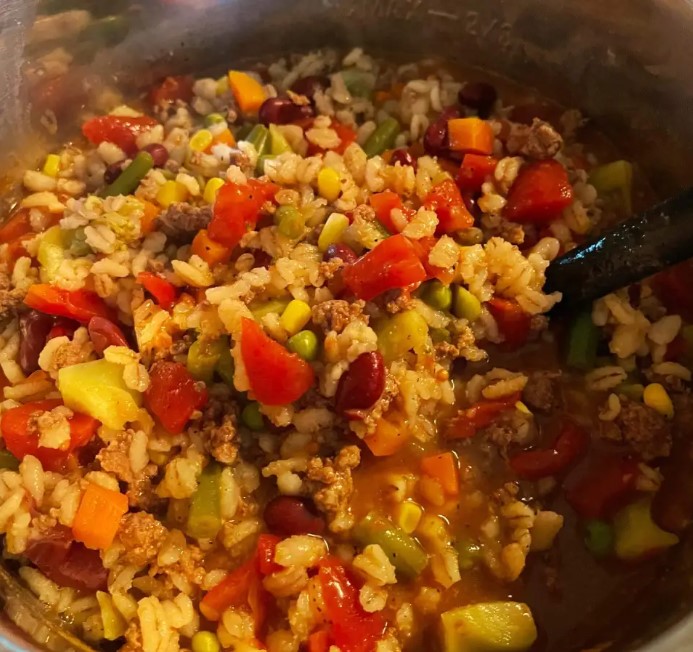
There is nothing quite like a warm bowl of homemade Ground Beef Vegetable Soup on a chilly day. This comforting recipe combines tender ground beef, colorful vegetables, flavorful tomatoes, and a savory broth to create a hearty meal that the whole family can enjoy. It is simple to prepare, full of familiar flavors, and perfect for those days when you want something satisfying without spending hours in the kitchen.
One of the best things about this soup is its versatility. Ground beef adds a rich, savory flavor, while potatoes, carrots, celery, and mixed vegetables bring different textures and colors to every spoonful. Tomatoes give the broth a pleasant richness, and a few everyday seasonings help bring all the ingredients together.
Unlike complicated recipes that require special ingredients or several cooking pots, this homemade vegetable soup can be prepared in one large pot. You simply brown the beef, add the vegetables and broth, and let everything simmer until the vegetables become tender and the flavors blend together.
This recipe is also a wonderful way to make use of vegetables you already have in your refrigerator or freezer. You can use fresh vegetables, frozen mixed vegetables, or a combination of both. If you prefer a thicker soup, you can add extra potatoes. If you enjoy a lighter broth, simply add a little more beef broth or water.
Ground Beef Vegetable Soup is ideal for busy weeknights, relaxed weekend lunches, and family dinners. It pairs beautifully with crusty bread, dinner rolls, or a simple green salad. It also tastes delicious the next day, making it a convenient option for meal preparation and leftovers.
Whether you are cooking for your family or preparing a large pot to enjoy throughout the week, this easy homemade soup is a dependable recipe worth keeping in your collection.
Why You’ll Love This Ground Beef Vegetable Soup
Simple Ingredients
You do not need expensive or unusual ingredients to make a flavorful pot of soup. Ground beef, potatoes, carrots, onions, celery, tomatoes, broth, and a few seasonings are enough to create a delicious meal.
Many of these ingredients are kitchen staples, which makes the recipe convenient when you need to prepare dinner without making an extra trip to the grocery store.
A Complete and Satisfying Meal
Ground beef provides protein and a rich savory flavor, while the vegetables add variety, texture, and color. Potatoes make the soup more substantial, and the broth brings everything together.
Because the recipe contains both meat and vegetables, it can be served as a main course rather than simply as a starter.
Perfect for Busy Weeknights
Most of the preparation involves chopping vegetables and browning the meat. Once the ingredients are in the pot, the soup simmers while you prepare the table or take care of other tasks.
Using frozen mixed vegetables can make the process even easier because they are already washed and cut.
Easy to Customize
You can adjust the vegetables, seasonings, and broth to suit your family’s preferences. Add green beans, corn, peas, or cabbage, or include a little pasta when you want an even heartier meal.
You can also control the amount of salt by choosing low-sodium broth and seasoning the soup gradually.
Excellent for Leftovers
The flavors continue to develop as the soup rests, making leftovers especially enjoyable. Prepare a large batch and refrigerate portions for quick lunches or dinners during the week.
The soup can also be frozen for convenient meals on days when you do not have time to cook.
Ingredients You’ll Need :
This recipe makes approximately 6–8 servings, depending on portion size.
1. Ground Beef — 1 pound (450 g)
Ground beef gives the soup its hearty texture and savory flavor. Lean ground beef is a practical choice because it provides plenty of flavor without leaving too much grease in the broth.
You can use regular ground beef if that is what you have available, but drain the excess fat after browning.
2. Onion — 1 medium
A chopped onion creates a flavorful base for the soup. As it cooks with the beef, it becomes tender and releases a natural sweetness that complements the tomatoes and broth.
Yellow or white onions work well in this recipe.
3. Garlic — 2 cloves, minced
Garlic adds depth and a pleasant aroma. Fresh garlic is ideal, but approximately 1 teaspoon of garlic powder can be used if necessary.
4. Carrots — 2 medium
Peel the carrots and cut them into small, evenly sized pieces. They add a mild sweetness and a lovely color to the soup.
Cutting them into similar sizes helps them cook evenly.
5. Celery — 2 stalks
Chopped celery contributes a fresh, slightly earthy flavor that works especially well with beef and tomatoes.
If you do not have celery, you can leave it out or replace it with another vegetable.
6. Potatoes — 2 medium
Peel the potatoes and cut them into bite-sized cubes. They make the soup more filling and absorb some of the savory broth as they cook.
Russet or Yukon Gold potatoes are both suitable. Try to cut the pieces evenly so they become tender at approximately the same time.
7. Frozen Mixed Vegetables — 2 cups
Use a mixture containing vegetables such as peas, carrots, corn, and green beans.
Frozen vegetables are convenient, affordable, and easy to keep on hand. There is no need to thaw them before adding them to the soup.
If you prefer fresh vegetables, use an equivalent amount of chopped vegetables instead.
8. Diced Tomatoes — 1 can (14.5 ounces or approximately 411 g)
Canned diced tomatoes give the broth a pleasant tomato flavor and help create a rich, comforting soup.
Add the tomatoes along with their juices unless you prefer a less tomato-forward broth.
9. Beef Broth — 6 cups (1.4 liters)
Beef broth provides the main liquid and enhances the flavor of the ground beef.
Low-sodium broth is a good option because it allows you to adjust the salt yourself. If you prefer a thinner soup, you can add a little extra broth or water during cooking.
10. Tomato Paste — 2 tablespoons
Tomato paste adds concentrated tomato flavor and gives the broth a deeper color. It is optional, but it makes the soup taste richer.
11. Olive Oil — 1 tablespoon, if needed
A small amount of olive oil can help soften the onion and vegetables if the pot becomes too dry. If your ground beef releases enough fat, you may not need the extra oil.
12. Italian Seasoning — 1 teaspoon
Italian seasoning adds a balanced blend of dried herbs that complements the beef and vegetables.
You can substitute dried oregano or a mixture of oregano and basil.
13. Salt and Black Pepper — to taste
Salt enhances the flavor of the ingredients, while black pepper adds mild warmth.
Start with a small amount, especially if your broth already contains salt, and adjust near the end of cooking.
Optional Ingredients
If you want to personalize the soup, consider adding:
- 1 bay leaf for extra aroma
- 1 teaspoon paprika for a deeper, warmer flavor
- 1 tablespoon chopped fresh parsley for garnish
- ½ cup small pasta for a heartier soup
- 1 can of drained and rinsed beans for extra texture
These additions are optional, so you can keep the basic recipe simple.
How to Make Ground Beef Vegetable Soup
Step 1: Prepare the Vegetables
Begin by washing the carrots and celery. Peel the carrots and potatoes, then chop them into bite-sized pieces.
Dice the onion and mince the garlic. If you are using fresh green beans or other additional vegetables, cut them into manageable pieces as well.
Preparing everything before you begin cooking makes the process easier and helps you add the ingredients at the right time.
Try to keep the vegetable pieces reasonably uniform. Very large potato or carrot pieces will take longer to cook, while very small pieces may become soft before the rest of the soup is ready.
Step 2: Brown the Ground Beef
Place a large soup pot or Dutch oven over medium-high heat.
Add the ground beef and break it into small pieces with a wooden spoon or spatula. Cook for approximately 6–8 minutes, stirring occasionally, until the meat is browned and no longer pink.
For food safety, ground beef should reach an internal temperature of 160°F (71°C), measured with a food thermometer.
If there is a large amount of excess fat in the pot, carefully drain it before continuing. Leaving a small amount of flavorful fat can help the vegetables develop a richer taste, but too much may make the soup greasy.
Step 3: Cook the Onion and Garlic
Add the chopped onion to the browned beef and cook for approximately 3–4 minutes, stirring occasionally, until it begins to soften.
Add the minced garlic and cook for another 30–60 seconds. Stir continuously enough to prevent the garlic from burning.
The onion should become tender and fragrant, while the garlic releases its aroma into the pot.
This step builds the flavor of the soup before the broth and vegetables are added.
Step 4: Add the Carrots and Celery
Stir the chopped carrots and celery into the beef mixture.
Cook for another 3–4 minutes, stirring occasionally. The vegetables do not need to become completely tender at this stage because they will continue cooking in the broth.
Allowing them to soften slightly before adding the liquid helps bring out their flavor.
Step 5: Stir in the Tomato Paste
Add the tomato paste and Italian seasoning to the pot.
Stir for about one minute so the tomato paste coats the meat and vegetables. This helps distribute the concentrated tomato flavor throughout the soup.
If you are using paprika or other dried herbs, you can add them at this stage as well.
Step 6: Add the Tomatoes, Potatoes, and Broth
Pour in the canned diced tomatoes with their juices, followed by the beef broth.
Add the cubed potatoes and stir everything together. Scrape the bottom of the pot gently with your spoon to release any browned bits left from cooking the beef.
These browned bits add extra flavor to the broth.
Bring the mixture to a gentle boil. Once it begins bubbling, reduce the heat to low or medium-low so the soup can simmer without boiling too vigorously.
Step 7: Simmer Until the Vegetables Begin to Soften
Cover the pot partially with a lid and allow the soup to simmer for approximately 15–20 minutes.
Stir occasionally to make sure nothing sticks to the bottom.
During this time, the potatoes and carrots begin to soften, while the beef and broth develop a richer flavor.
Check the potatoes with a fork. They should be starting to become tender, but they do not need to be completely cooked before you add the remaining vegetables.
If the soup seems too thick, add a little extra broth or water.
Step 8: Add the Mixed Vegetables
Stir the frozen mixed vegetables into the pot.
Continue simmering for approximately 10–15 minutes, or until the potatoes, carrots, and other vegetables are tender.
If you are using delicate vegetables such as peas, adding them toward the end helps preserve their texture.
Stir gently from time to time and avoid cooking the soup at a vigorous boil. A gentle simmer helps the vegetables retain their shape.
Step 9: Season the Soup
Taste the broth and add salt and black pepper as needed.
If you are using a bay leaf, remove it before serving. You can also add chopped fresh parsley for a little freshness and color.
If you prefer a stronger tomato flavor, add a small amount of extra tomato paste. If the broth tastes too concentrated, dilute it with a little more water or unsalted broth.
Let the soup simmer for another 2–3 minutes after adjusting the seasoning so the flavors have time to blend.
Step 10: Check the Texture and Serve
Make sure the potatoes and carrots are tender and the broth has reached the consistency you prefer.
For a thicker soup, let it simmer uncovered for a few additional minutes. For a thinner soup, add more broth or water and heat gently until everything is warmed through.
Ladle the finished soup into bowls and garnish with fresh parsley if desired.
Serve immediately with warm bread, crackers, dinner rolls, or a simple salad.
Tips for the Best Ground Beef Vegetable Soup
Choose the Right Ground Beef
Lean ground beef is convenient because it produces less excess grease. However, a little fat contributes flavor, so the best choice depends on your preference.
If you use higher-fat beef, drain the excess fat after browning to keep the broth from becoming oily.
Cut the Vegetables Evenly
Try to cut the carrots and potatoes into similar-sized pieces. This simple step helps them cook at the same rate.
If some vegetables are much larger than others, you may end up with a mixture of overcooked and undercooked pieces.
Do Not Rush the Simmering Process
Although the soup is easy to prepare, allowing the ingredients to simmer gently gives the broth time to develop flavor.
Avoid keeping the heat too high throughout cooking. A steady, gentle simmer is generally enough to soften the vegetables without breaking them apart.
Season Gradually
Broths and canned tomatoes can contain different amounts of sodium. Add a little salt at first, then taste the soup again near the end.
It is easier to add more seasoning than to correct a soup that has become too salty.
Adjust the Thickness
If you enjoy a brothier soup, use additional beef broth. If you prefer a thicker consistency, simmer the soup uncovered for a few extra minutes.
You can also mash a few cooked potato pieces against the side of the pot and stir them into the broth. This naturally thickens the soup without adding flour or cream.
Use Frozen Vegetables for Convenience
Frozen vegetables are an excellent shortcut when you want a homemade meal without spending too much time chopping.
Add them directly from the freezer and allow the soup to return to a gentle simmer. There is no need to thaw them separately.
Easy Variations to Try
Ground Beef and Vegetable Soup with Pasta
For an even heartier version, add approximately ½–1 cup of small pasta, such as elbow macaroni or small shells.
Pasta absorbs liquid as it cooks, so add extra broth if necessary. Cook it according to the package instructions and check that it is tender before serving.
If you expect leftovers, consider cooking the pasta separately and adding it to individual bowls. This helps prevent it from becoming too soft during storage.
Ground Beef Vegetable Soup with Beans
Beans are a useful addition when you want more texture. Add one can of drained and rinsed kidney beans, cannellini beans, or another variety you enjoy.
Stir them in during the final 10–15 minutes of cooking so they heat through without breaking apart.
Spicy Vegetable Beef Soup
If you like a little heat, add a pinch of red pepper flakes or a small amount of chili powder when seasoning the beef.
Start with a small quantity and taste before adding more. The goal is to add warmth without overpowering the vegetables and tomato broth.
Add More Vegetables
This soup is flexible enough to accommodate many vegetables. Chopped cabbage, zucchini, bell peppers, green beans, and additional corn all work well.
Add firm vegetables earlier in the cooking process and softer vegetables closer to the end. This helps each ingredient retain a pleasant texture.
Make It More Tomato-Rich
If you prefer a stronger tomato flavor, add another tablespoon of tomato paste or a little extra diced tomato.
You may need to adjust the broth slightly to maintain your preferred consistency.
What to Serve with Ground Beef Vegetable Soup
Ground Beef Vegetable Soup is filling enough to serve on its own, but a few simple sides can make the meal even more enjoyable.
Crusty bread: A slice of crusty bread is ideal for soaking up the savory broth. Warm French bread, a baguette, or homemade bread all work well.
Dinner rolls: Soft rolls are a comforting choice, especially for family dinners. Serve them warm with a little butter.
Crackers: Saltine crackers or whole-grain crackers add a pleasant crunch and are easy to keep on hand.
Green salad: A fresh salad with lettuce, cucumber, tomatoes, and a light dressing balances the warmth and richness of the soup.
Grilled cheese sandwiches: If you want a particularly comforting meal, serve a small grilled cheese sandwich alongside a bowl of soup.
Cornbread: Slightly sweet cornbread complements the savory beef and tomato broth and makes the meal feel extra cozy.
Choose one or two sides rather than preparing too many dishes. The soup already contains meat and vegetables, so simple accompaniments are usually enough.
How to Store Leftover Soup
Allow the soup to cool slightly, then transfer it to shallow, airtight containers.
Refrigerate leftovers within two hours of cooking. For the best quality and safety, use refrigerated soup within 3–4 days.
When reheating, warm only the portion you plan to eat. Heat the soup thoroughly until it reaches 165°F (74°C), stirring as needed so it warms evenly.
If the soup becomes thicker in the refrigerator, add a splash of water or beef broth while reheating.
Avoid leaving a large pot of soup at room temperature for an extended period. Dividing it into smaller containers helps it cool more quickly and makes individual portions easier to store.
Can You Freeze Ground Beef Vegetable Soup?
Yes. This soup freezes well and is useful for preparing meals in advance.
Let the soup cool promptly, divide it into freezer-safe containers, and leave a little room at the top for expansion. Label each container with the date before placing it in the freezer.
For best quality, use frozen soup within approximately 2–3 months.
Thaw it in the refrigerator overnight when possible. You can also reheat it directly from frozen in a saucepan over low heat, stirring regularly and adding a little broth or water if necessary.
If you add pasta to the recipe, remember that pasta can become softer after freezing and reheating. For the best texture, cook the pasta separately and add it when serving.
Frequently Asked Questions
Can I use fresh vegetables instead of frozen vegetables?
Absolutely. Fresh carrots, peas, green beans, corn, and other vegetables work well. Wash and chop them before adding them to the pot.
Cooking times will depend on the size and type of vegetables, so check them regularly for tenderness.
Can I make this soup without potatoes?
Yes. You can leave out the potatoes and add extra mixed vegetables, beans, or another vegetable of your choice.
Without potatoes, the soup will be a little less thick and filling. You can compensate by adding another vegetable or a small amount of pasta.
Why is my vegetable beef soup too watery?
If the soup seems too thin, let it simmer uncovered for several additional minutes. This allows some liquid to evaporate.
You can also mash a few cooked potato pieces into the broth to give it more body. Avoid adding too much thickener at once because the soup may continue to thicken as it cools.
Why are my potatoes still hard?
The potatoes may need more cooking time, especially if the pieces are large. Continue simmering gently until a fork slides into them easily.
Also check that the soup has been simmering consistently rather than sitting at a very low temperature.
Can I prepare this soup in advance?
Yes. You can make it a day ahead and refrigerate it after cooking. Reheat it thoroughly before serving.
The flavors often taste even more developed after resting overnight. If the soup thickens during storage, simply add a little broth or water while reheating.
Can I use chicken broth instead of beef broth?
Yes. Chicken broth will work, although the flavor will be slightly different. Beef broth generally provides a deeper, more savory taste that complements the ground beef.
Vegetable broth is another possible alternative if that is what you have available.
Conclusion :
Ground Beef Vegetable Soup is a wonderful example of how simple, everyday ingredients can come together to create a comforting and satisfying homemade meal. With tender ground beef, colorful vegetables, potatoes, tomatoes, and a flavorful broth, this recipe offers everything you want in a hearty soup without requiring complicated techniques or expensive ingredients.
One of the biggest advantages of this recipe is its flexibility. You can prepare it with fresh vegetables when you have time to chop them, or use frozen mixed vegetables when you need a quicker dinner. You can add beans for extra texture, stir in pasta for a heartier bowl, or adjust the seasonings to suit your family’s preferences. The basic recipe provides a dependable starting point, while small changes allow you to make it your own.
This soup is especially useful for busy households because most of the cooking happens in one pot. After browning the beef and preparing the vegetables, you simply allow the ingredients to simmer until everything becomes tender. The broth develops a rich, savory flavor, the potatoes absorb some of the delicious liquid, and the vegetables bring freshness and variety to every serving.
It is also a practical recipe for meal planning. A large batch can provide several family meals, and leftovers are easy to refrigerate or freeze for later. Keeping individual portions ready makes it easier to enjoy a homemade lunch or dinner on days when you do not have time to start cooking from scratch.
For an especially comforting meal, serve a generous bowl of Ground Beef Vegetable Soup with warm crusty bread, soft dinner rolls, or a grilled cheese sandwich. The combination is simple, filling, and perfect for chilly evenings, relaxed weekends, or any time you want something warm and satisfying.
Remember that the best results come from browning the beef properly, cutting the vegetables into even pieces, simmering the soup gently, and tasting the broth before serving. These small steps help the ingredients cook evenly and allow their flavors to blend naturally.
If you are looking for an easy, family-friendly recipe that is adaptable, filling, and convenient to prepare ahead, Ground Beef Vegetable Soup deserves a place in your regular meal rotation. Make a pot for dinner, save a few portions for later, and enjoy the comforting taste of homemade soup whenever you need a simple and delicious meal.