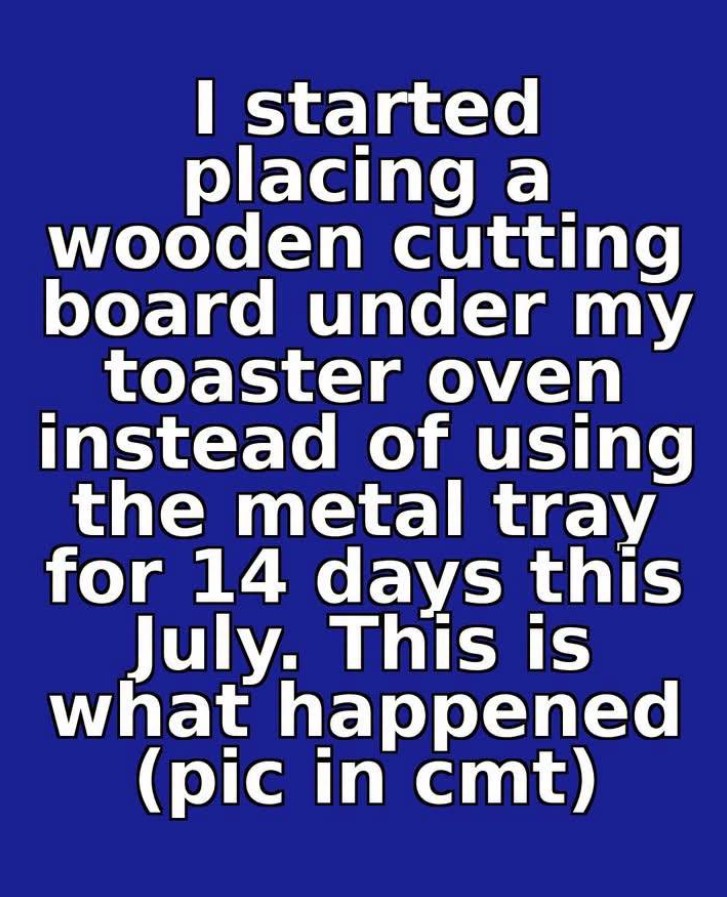
Social media is full of clever kitchen hacks that promise to make life easier, cleaner, or more organized. Some of these ideas genuinely save time, while others sound practical at first but may not hold up when you consider how kitchen appliances are designed to work. One recent claim suggests replacing the metal tray beneath a toaster oven with a wooden cutting board, implying that it offers better protection for countertops or improves everyday convenience.
At first glance, the idea may seem harmless. After all, wooden cutting boards are durable, attractive, and commonly found in nearly every kitchen. However, using them as a substitute for parts designed specifically for a toaster oven raises important questions about safety, heat resistance, and appliance performance.
Before trying any unconventional kitchen hack, it’s worth understanding why toaster ovens include metal crumb trays, what purpose they serve, and whether placing a wooden cutting board underneath the appliance is actually a good idea. Here’s what you should know.
Why Toaster Ovens Include Metal Trays
The removable metal tray found at the bottom of most toaster ovens is commonly called a crumb tray.
Although it appears simple, it serves several important functions:
- Collects bread crumbs and food debris
- Prevents grease from accumulating inside the appliance
- Makes cleaning much easier
- Helps reduce smoke from burned food particles
- Allows proper airflow within the oven
- Protects internal heating components
Manufacturers include this tray as part of the appliance’s overall design, and removing or replacing it can affect how the toaster oven operates.
Why Someone Might Consider Using a Wooden Cutting Board
People often look for ways to simplify cleanup or protect their countertops.
A wooden cutting board seems appealing because it:
- Looks attractive
- Is easy to wipe clean
- Can catch crumbs
- Provides a stable surface
- Is already available in most kitchens
However, these advantages don’t necessarily make it a safe replacement for a toaster oven’s metal crumb tray.
Understanding How Much Heat a Toaster Oven Produces
Toaster ovens generate significant heat during normal operation.
The heating elements can reach temperatures well above 400°F (200°C), and even though much of that heat remains inside the appliance, the bottom and exterior surfaces can become quite warm.
While many countertops are designed to tolerate this heat, materials placed directly beneath or against the appliance may respond differently.
Wood, unlike metal, is combustible and can gradually dry out or become damaged after repeated exposure to high temperatures.
Can a Wooden Cutting Board Be Used Under a Toaster Oven?
In many kitchens, people place toaster ovens on sturdy wooden or butcher-block countertops without issue. The difference is that these countertops are fixed surfaces designed to support appliances, while placing an additional loose cutting board directly under or around a toaster oven can create different conditions.
A cutting board should never block ventilation openings or replace any manufacturer-supplied component.
If the appliance manual specifies minimum clearance or recommends certain countertop materials, those instructions should always take priority.
Potential Concerns
Using a wooden cutting board improperly may create several issues.
Heat Buildup
Wood acts as an insulator rather than a heat conductor.
If airflow beneath the appliance is restricted, heat may build up more than intended.
Fire Risk
Although wood doesn’t ignite easily under normal kitchen temperatures, prolonged exposure to excessive heat can dry the material over time.
Following manufacturer safety recommendations greatly reduces unnecessary fire risks.
Blocked Ventilation
Many toaster ovens rely on airflow around the bottom and sides.
Anything that blocks vents may interfere with cooling.
Appliance Performance
Replacing or removing original components can sometimes affect cooking performance or lead to uneven heating.
What Actually Happened?
If someone used a wooden cutting board beneath a properly functioning toaster oven for a couple of weeks, they might notice very little change.
The cutting board may collect crumbs and remain largely unaffected, especially if the toaster oven is used only occasionally and has adequate clearance around it.
However, this doesn’t necessarily prove the practice is recommended or safer than using the appliance as designed. Many unsafe practices don’t result in immediate problems but still increase risk over time.
Better Ways to Protect Your Countertops
If your goal is protecting the surface beneath your toaster oven, there are safer alternatives.
Heat-Resistant Mats
Silicone appliance mats are specifically designed to withstand high temperatures.
Ceramic or Stone Tiles
Some homeowners place decorative ceramic tiles beneath countertop appliances.
Stainless Steel Mats
Metal heat shields provide excellent protection without introducing combustible materials.
Manufacturer-Approved Surfaces
Following the appliance manual remains the safest choice.
Cleaning Your Toaster Oven the Right Way
Rather than replacing the crumb tray, regular cleaning provides the best results.
- Unplug the toaster oven.
- Allow it to cool completely.
- Remove the crumb tray.
- Wash it with warm soapy water.
- Dry thoroughly before reinstalling.
- Wipe the interior gently.
- Clean exterior surfaces with a damp cloth.
Regular maintenance prevents smoke, odors, and grease buildup.
Signs Your Toaster Oven Needs Cleaning
You may notice:
- Burning smells
- Excessive smoke
- Crumbs accumulating inside
- Uneven cooking
- Grease splatters
- Food residue on heating surfaces
Cleaning every few weeks helps keep the appliance working efficiently.
Kitchen Safety Tips
Whenever using countertop appliances:
- Keep several inches of clearance around the appliance.
- Never cover ventilation openings.
- Avoid placing flammable materials nearby.
- Clean crumb trays regularly.
- Don’t operate appliances unattended.
- Inspect power cords for damage.
- Follow manufacturer instructions.
These simple habits greatly improve kitchen safety.
Common Kitchen Hacks That Actually Work
While some viral tips are questionable, others are genuinely useful.
- Freeze herbs in olive oil for easy cooking.
- Use baking soda to deodorize refrigerators.
- Clean stainless steel with vinegar followed by a microfiber cloth.
- Store leafy greens with a paper towel to absorb excess moisture.
- Use lemon slices to freshen garbage disposals.
The best kitchen hacks are those supported by safe practices rather than replacing essential appliance components.
Should You Try This Trick?
Using a wooden cutting board beneath a toaster oven isn’t automatically dangerous if the appliance remains properly ventilated and the board simply serves as a countertop surface. However, it should never replace the removable metal crumb tray or interfere with the appliance’s intended design.
If your objective is easier cleanup or better countertop protection, products specifically designed for high temperatures are a much safer and more reliable choice.
Conclusion :
Kitchen shortcuts can be tempting, especially when they promise cleaner counters or easier maintenance. However, it’s important to distinguish between harmless organizational ideas and modifications that alter how an appliance was engineered to function.
The metal crumb tray in a toaster oven isn’t there by accident—it plays an important role in cleanliness, airflow, and overall performance. While placing a wooden cutting board beneath the appliance as a countertop protector may seem convenient, it shouldn’t replace built-in components or obstruct ventilation. When in doubt, following the manufacturer’s recommendations is always the safest approach.
In the end, the smartest kitchen hack is one that saves time without compromising safety, ensuring your appliances continue to perform efficiently for years to come.