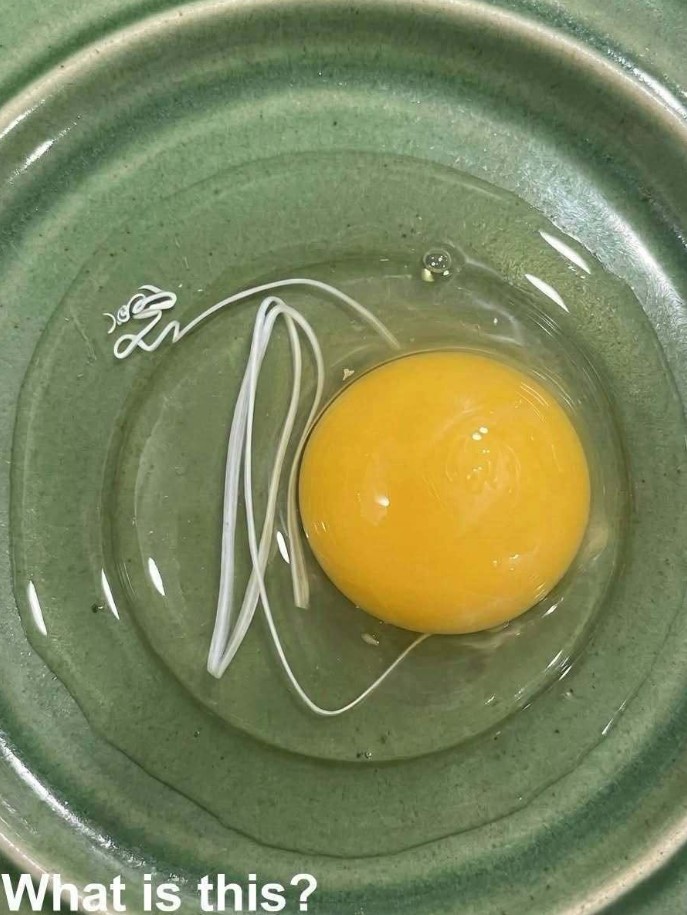
Many people notice a small white string-like structure inside an egg and immediately assume something is wrong. It can look unusual or even a little concerning at first glance, especially if you’ve never seen it before. However, this natural part of an egg is completely normal and actually plays an important role in protecting the yolk.
Understanding what it is can help remove confusion and make you more confident when preparing eggs in the kitchen. Instead of being a sign of spoilage or contamination, this white string is simply a natural structure formed during the egg’s development.
In this article, we’ll explain what this white string is, why it appears, and what it means for the quality and safety of your eggs.
What Is the White String Inside an Egg?
The white string you may see in an egg is called the chalaza (plural: chalazae). It is a natural part of the egg’s internal structure and is found in all fresh eggs.
Its main job is to:
- Hold the yolk in place
- Keep the yolk centered inside the egg
- Protect the yolk from damage
- Maintain the structure of the egg’s interior
Rather than being something harmful, the chalaza is actually a sign of a fresh and well-formed egg.
Why the Chalaza Is Important
The chalaza plays a key role in protecting the developing yolk inside the egg.
It works like a natural support system:
- It suspends the yolk in the center of the egg white
- It prevents the yolk from touching the shell
- It helps maintain the egg’s structure during movement or handling
Without the chalaza, the yolk would shift too much inside the egg, increasing the risk of breakage.
Is the White String Safe to Eat?
Yes, the chalaza is completely safe to eat.
It is:
- Natural
- Edible
- Nutritious (like the rest of the egg)
However, many people choose to remove it when preparing certain recipes because of its texture. It can sometimes appear slightly thick or rubbery when cooked.
Does Seeing a Chalaza Mean the Egg Is Fresh?
In many cases, yes.
A more visible chalaza often indicates that the egg is relatively fresh. As eggs age, the chalaza can become less noticeable because the internal structure begins to weaken slightly over time.
However, even if it is not visible, the egg can still be perfectly safe to eat if stored properly.
Common Misconceptions About the White String
Because it looks unusual, the chalaza is often misunderstood.
Here are some common myths:
1. It means the egg is fertilized
False. The chalaza has nothing to do with fertilization.
2. It is a worm or parasite
False. It is simply a protein structure inside the egg.
3. It means the egg is bad
False. It is a normal and healthy part of the egg.
Should You Remove It Before Cooking?
This is mostly a matter of personal preference.
You might remove it if:
- You want a smoother texture in baking
- You are making custards or delicate desserts
- You prefer a cleaner egg appearance
But in most everyday cooking, it is not necessary to remove it at all.
Why People Notice It More in Some Eggs
The visibility of the chalaza can depend on several factors:
- Freshness of the egg
- Type of egg (store-bought vs farm-fresh)
- Lighting and angle when cracking the egg
- Size and strength of the yolk structure
Farm-fresh eggs often show a more noticeable chalaza because they are less processed and fresher.
Conclusion :
The white string inside an egg may look unusual at first, but it is actually a completely natural and important part of the egg’s structure. Known as the chalaza, it helps keep the yolk centered and protected, ensuring the egg stays stable and well-formed.
Far from being a sign of something wrong, its presence often indicates that the egg is fresh and in good condition. It is safe to eat, fully edible, and plays no harmful role in cooking or nutrition.
While some people choose to remove it for texture reasons in certain recipes, it is not necessary in most everyday cooking. Understanding this small detail can help eliminate confusion and reduce unnecessary food waste.
In the end, what might seem strange at first glance is actually just another example of how perfectly designed natural foods can be.