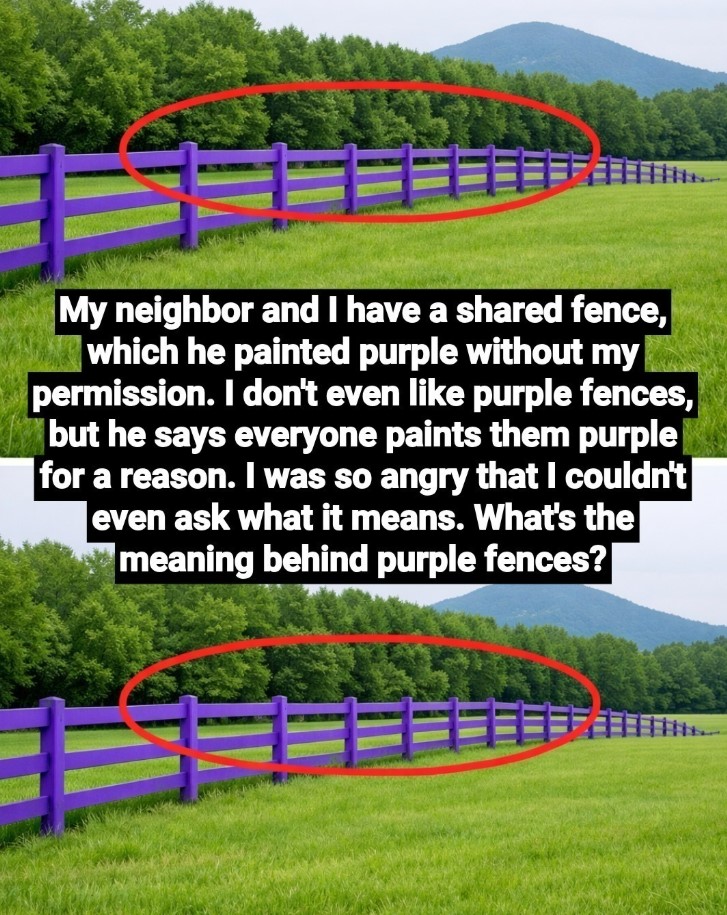
While driving through rural roads, hiking near wooded trails, or passing large private properties, you may occasionally notice something unusual — a fence post, tree, or gate marked with bright purple paint. At first glance, it may seem decorative or random, but in many parts of the United States, those purple markings actually carry an important legal meaning.
In several states, purple paint on fences or trees serves as an official warning against trespassing. These markings are often used instead of traditional “No Trespassing” signs and may carry legal weight depending on local laws. Property owners use them to clearly indicate that the land is private and that unauthorized entry is prohibited.
Many people are surprised to learn this because purple fences are not universally recognized everywhere. Some states have specific “purple paint laws,” while others use different systems or still rely mainly on posted signs. This can create confusion, especially for travelers, hikers, hunters, or people unfamiliar with rural property laws.
In this article, we’ll explain what purple fence markings mean, why property owners use them, how these laws work, and why paying attention to them can help you avoid accidental trespassing.
What Does a Purple Fence Mean?
In states with “purple paint laws,” a purple-painted fence post, tree, or boundary marker generally means:
- Private property
- No trespassing
- Entry without permission is prohibited
The purple paint acts as a visual legal notice similar to a “No Trespassing” sign. Many states legally recognize these markings when they meet specific requirements for size, placement, and spacing.
The idea behind the system is simple: paint is more durable than signs. Traditional signs can fade, fall off, get damaged by weather, or even be removed. Purple paint lasts longer and is easier for landowners to maintain over large areas.
Why Purple Was Chosen
Purple was selected because it stands out clearly in natural environments and is less commonly confused with other forestry or utility markings.
Some discussions online also mention that purple is easier for many colorblind individuals to distinguish compared to certain other colors used outdoors.
Because the color is unusual in nature, it quickly catches attention on trees and fence posts.
How Purple Paint Laws Work
Purple paint laws vary from state to state. In many places, the markings must follow strict legal guidelines to count as official notice.
Common requirements often include:
- Vertical paint lines
- Specific minimum length and width
- Placement several feet above the ground
- Repeated markings at certain distances apart
For example, some states require paint marks at least eight inches long and placed between three and five feet from the ground.
If property owners follow these rules correctly, the paint can legally serve the same purpose as a posted warning sign.
Which States Use Purple Paint Laws?
Purple paint laws are not nationwide. Several states recognize them officially, including places such as:
- Texas
- Arkansas
- North Carolina
- South Carolina
- Illinois
- Missouri
- Pennsylvania (primarily for hunting restrictions in some areas)
Other states may use different colors or different legal systems entirely. Florida, for example, uses orange paint in certain cases instead of purple.
Because laws vary widely, travelers may not always recognize what the markings mean outside their home state.
Why Property Owners Prefer Paint Instead of Signs
Many landowners — especially those with large rural properties — prefer paint because it is:
- Cheaper over long distances
- More weather-resistant
- Harder to remove or steal
- Easier to maintain
- Highly visible outdoors
In rural communities, purple paint is commonly used on:
- Fence posts
- Trees along property lines
- Gates
- Wooden boundary markers
Some property owners also use it to discourage illegal hunting, fishing, or unauthorized ATV access.
What Happens if Someone Ignores the Markings?
Entering marked private property without permission may lead to trespassing consequences depending on state law and circumstances.
Potential consequences can include:
- Warnings
- Fines
- Criminal trespassing charges
- Civil liability if damage occurs
Legal experts note that trespassing laws often depend on whether clear notice was given to the public. Purple paint laws were created specifically to strengthen that notice.
Why Many People Still Don’t Know About It
Despite being legally recognized in many areas, purple fence markings remain unfamiliar to a large number of people.
Online discussions show that many Americans only recently discovered the meaning behind purple-painted posts and trees. Some Reddit users admitted they assumed the color was simply decorative until learning about the laws.
This confusion is one reason why some property owners still use both paint and traditional signs together.
Rural Traditions and Modern Awareness
Purple paint laws originally became popular in rural regions where maintaining signs across large wooded properties was difficult and expensive.
Hunters, hikers, and outdoor workers in many rural communities grew up recognizing purple markings immediately. Some Reddit users described learning the meaning of purple fence posts as children because it was considered common local knowledge.
Today, however, many suburban and urban residents may never encounter these markings until traveling through countryside areas.
Conclusion :
A purple-painted fence or tree is much more than an unusual design choice. In many U.S. states, it serves as an official warning that the property is private and that trespassing is prohibited. These markings were created as a durable alternative to traditional signs and are legally recognized in several areas when properly placed.
Because laws vary by state, not every purple fence carries the same legal meaning everywhere. Still, when you encounter purple-painted property boundaries, it’s safest to assume they are marking private land and to avoid entering without permission.
Sometimes a simple stripe of paint can communicate a very important message — and understanding it can help prevent misunderstandings, legal trouble, and accidental trespassing.