If you’ve ever stepped into your garden only to find your plants covered in holes, leaves chewed down to skeletons, and flowers destroyed overnight, you know how frustrating garden pests can be. Insects like Japanese beetles and June bugs are among the most destructive invaders, capable of damaging plants quickly and spreading across your yard before you even realize what’s happening.
Because of this, many homeowners look for simple, natural solutions that don’t involve harsh chemicals. Recently, a “one-mixture” trick has been circulating online, promising to attract and eliminate these pests with minimal effort.
But does this method actually work? And how should it be used safely and effectively? Let’s break it down so you know exactly what to expect.
What pests are we dealing with?
The main culprits targeted by this method include:
- Japanese beetles – known for eating leaves and leaving behind a lace-like pattern
- June bugs – which damage plants and lay larvae that harm lawns
- Other garden pests that are attracted to sweet or fermented scents
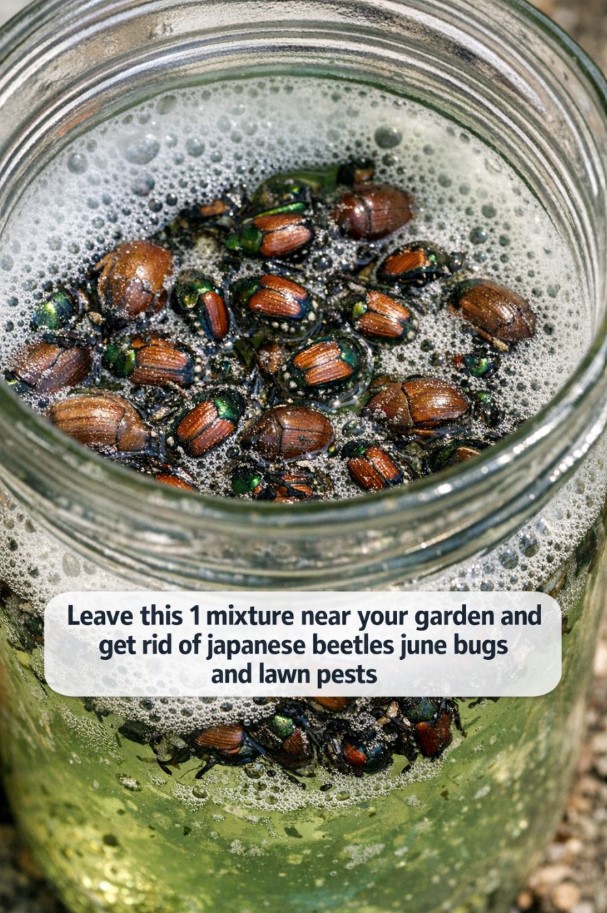
Japanese beetles alone can attack hundreds of plant species and are especially active during the warmer months.
The “1 mixture” explained
The popular mixture is usually a fermented trap solution, often made from simple ingredients like:
- Sugar
- Fruit (like banana)
- Water
- Sometimes yeast or vinegar
When combined and left to sit, this mixture begins to ferment and produce a strong scent.
That smell is the key.
It mimics the odor of overripe or rotting fruit, which attracts beetles and similar pests looking for food.
How this mixture actually works
This method doesn’t repel insects—it attracts them into a trap.
Here’s what happens:
- The fermented smell draws beetles toward the container
- They crawl or fall inside
- They become trapped and eventually drown
Many DIY versions use a container with a small opening or funnel so insects can enter but not escape.
Important: where you place it matters
This is where many people make a mistake.
If you place the mixture too close to your plants, you may actually bring more pests into your garden instead of removing them.
Experts recommend:
- Placing traps away from plants you want to protect
- Keeping them at a distance so pests are drawn away
Some traps can even attract insects from far distances if used incorrectly.
Does vinegar work in the mixture?
Some versions of this trick include vinegar, but here’s the truth:
- Vinegar can kill insects only on direct contact
- It is not a reliable long-term solution
- It can even damage plants if sprayed directly
In most cases, vinegar is not the main reason the trap works—the fermented scent is.
What this method can (and can’t) do
What it can do:
- Reduce the number of visible beetles
- Trap insects naturally without chemicals
- Help manage small to moderate infestations
What it can’t do:
- Eliminate pests completely
- Kill larvae in the soil
- Protect plants instantly
Japanese beetles, for example, have a life cycle that includes underground larvae, so long-term control requires additional steps.
Other effective natural methods
For better results, combine this trap with other approaches:
- Hand-picking beetles and dropping them into soapy water
- Using insecticidal soap sprays
- Applying beneficial nematodes to target larvae
- Keeping plants healthy to reduce damage
Even simple soapy water can help stop beetles by suffocating them on contact.
Common mistakes to avoid
To get the best results, avoid these errors:
- Placing traps too close to plants
- Expecting instant results
- Relying on one method only
- Using strong vinegar solutions directly on plants
Small adjustments can make a big difference in effectiveness.
Conclusion :
The idea of using a single, simple mixture to get rid of garden pests is appealing—and in some ways, it does work. Fermented traps can help attract and reduce beetle populations without the use of harsh chemicals, making them a useful tool for many gardeners.
However, it’s important to understand that this is not a magic solution. The mixture works by attracting pests, not repelling them, which means placement and proper use are crucial. Used incorrectly, it can even make the problem worse by drawing more insects into your garden.
The most effective approach is to treat this method as part of a bigger strategy. Combining traps with other natural techniques—like manual removal and soil treatments—will give you much better results over time.
In the end, protecting your garden isn’t about finding a single quick fix, but about understanding how these pests behave and using smart, consistent methods to keep them under control. With the right approach, you can reduce damage, protect your plants, and enjoy a healthier, more productive garden.