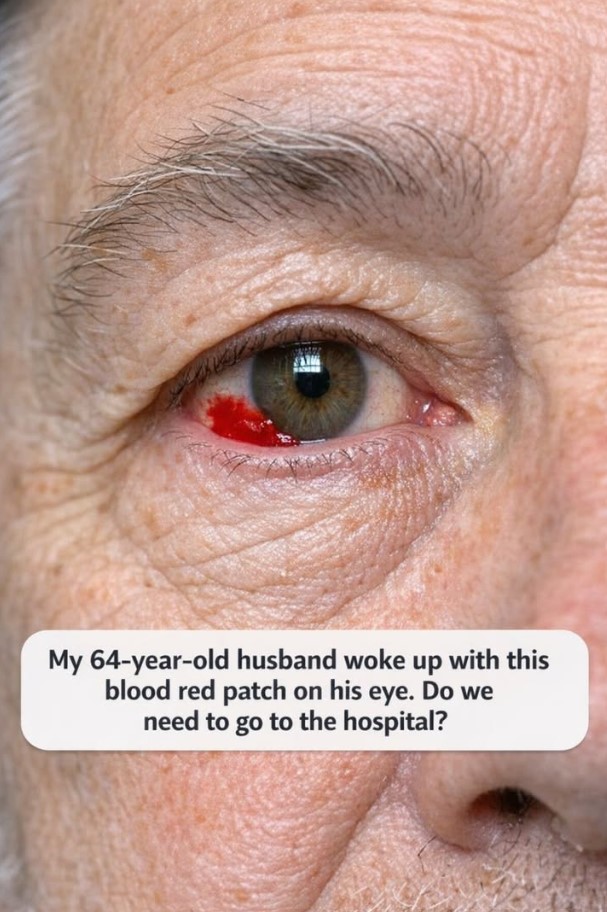
Waking up and noticing something unusual about your body can be unsettling—but seeing a bright blood-red patch in the eye can be especially alarming. It’s the kind of thing that immediately triggers worry. Is it serious? Could it affect vision? Should you rush to the hospital?
For many people, this situation feels urgent and even frightening, especially when it happens suddenly and without any obvious cause. The eye is such a sensitive and important part of the body that any visible change can feel like a major problem.
But before panic sets in, it’s important to understand what might actually be happening. In many cases, this dramatic-looking condition is far less dangerous than it appears.
What is that blood-red patch?
In most situations, a sudden red patch on the white part of the eye is something called a subconjunctival hemorrhage.
This happens when a tiny blood vessel just under the surface of the eye breaks and leaks a small amount of blood.
The result?
- A bright red or dark red spot on the white of the eye
- No bleeding outside the eye
- No spreading across vision
It may look shocking, but it’s essentially similar to a bruise, just in a more visible place.
Why does it happen?
One of the most surprising things is that this can happen without any injury at all.
Common causes include:
- Coughing or sneezing
- Straining (lifting, bathroom pressure, etc.)
- Rubbing the eye
- Minor bumps or irritation
- High blood pressure
- Blood-thinning medications
Even something as simple as a strong sneeze can cause a tiny vessel to burst.
In older adults, it’s even more common because blood vessels become more fragile over time.
Does it hurt or affect vision?
Here’s the reassuring part:
In most cases, it causes no pain and no vision problems.
Typical signs include:
- A bright red patch
- No discharge
- No swelling
- Normal eyesight
Many people don’t even notice it until they look in a mirror.
If there is pain or blurred vision, that could indicate something more serious—and should be checked immediately.
Is it dangerous?
Usually, no—it’s not dangerous.
Although it looks dramatic, a subconjunctival hemorrhage is typically harmless and resolves on its own.
- It doesn’t damage the eye
- It doesn’t spread inside the eye
- It doesn’t affect vision
Most cases clear up naturally within 1 to 3 weeks without any treatment.
When should you see a doctor?
Even though it’s usually harmless, there are situations where medical attention is important.
You should consider seeing a doctor if:
- There is eye pain
- Vision becomes blurred or affected
- It happens frequently
- There was a recent injury
- You have high blood pressure or bleeding issues
Doctors may want to check for underlying conditions, especially in older adults.
What should you do at home?
In most cases, no treatment is needed.
Helpful tips:
- Avoid rubbing the eye
- Use artificial tears if there’s irritation
- Give it time—it will fade like a bruise
The red color may even change to yellow or orange as it heals, which is completely normal.
Conclusion :
Seeing a bright red patch in the eye can be frightening, especially when it appears suddenly and without warning. It’s easy to assume the worst and worry about serious damage or long-term effects. However, in most cases, this condition is simply a subconjunctival hemorrhage—a harmless and temporary issue caused by a small broken blood vessel.
What makes it so alarming is its appearance, not its severity. The eye doesn’t absorb blood as quickly as other parts of the body, so even a tiny amount can look dramatic. But beneath that striking red color, there is usually no real danger, no pain, and no lasting impact on vision.
For many people, especially older adults, this can happen from everyday actions like coughing, sneezing, or even minor strain. While it may feel like something serious has gone wrong, the body typically heals it on its own without any need for treatment.
That said, it’s always important to stay aware of your symptoms. If anything feels unusual—like pain, vision changes, or repeated occurrences—it’s best to seek medical advice for peace of mind.
In the end, while this condition may look scary, it’s often just a temporary and harmless reminder of how delicate the tiny blood vessels in our eyes can be. With a little patience and care, it usually disappears just as suddenly as it appeared.