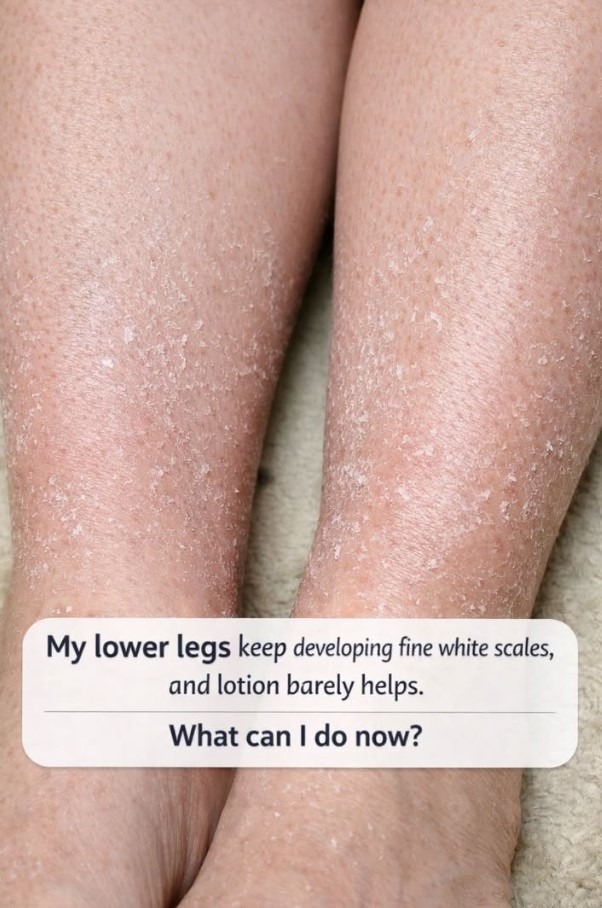
Seeing fine white scales or flaky patches on the lower legs can be frustrating, especially when regular lotion doesn’t seem to make much difference. This is a very common skin concern and often appears on the shins, calves, or ankles where the skin is naturally drier than other parts of the body.
Lower-leg dryness can happen for many everyday reasons, including weather changes, hot showers, harsh soaps, or simply having a naturally weaker moisture barrier in that area. In some cases, the skin becomes so dry that it starts to look “scaly” or ashy, even after applying moisturizer.
The good news is that this condition is usually manageable with the right skincare routine and a few simple habit changes. Understanding why it happens is the first step toward improving it.
Why Fine White Scales Appear on the Lower Legs
The skin on the lower legs is naturally more prone to dryness because it has fewer oil-producing glands compared to other areas of the body. This makes it harder for the skin to stay hydrated on its own.
Common causes include:
- Dry or cold weather
- Long, hot showers
- Harsh soaps or body washes
- Not moisturizing immediately after bathing
- Aging or naturally dry skin type
- Low humidity environments
- Over-exfoliating or under-exfoliating
When the skin loses too much moisture, the outer layer becomes rough and starts to shed unevenly, creating a flaky or “white scale” appearance.
Why Lotion Sometimes Doesn’t Work
It can feel like lotion is “not working,” but in many cases the issue is how and when it is applied.
Common reasons include:
- Applying lotion on completely dry skin instead of damp skin
- Using lightweight lotion when skin needs richer moisture
- Not applying consistently every day
- Using products with alcohol or fragrance that dry the skin further
- Skin barrier already too damaged to hold moisture properly
When the skin barrier is weakened, moisture escapes faster than it can be absorbed, so the dryness returns quickly.
How to Fix White Scaly Dry Skin on the Legs
Step 1: Switch to Gentle Cleansing
Use mild, non-drying cleansers instead of harsh soaps.
Avoid:
- Strong fragranced body washes
- Very hot water
- Over-washing the legs
Instead, choose gentle cleansers that help protect the skin’s natural oils.
Step 2: Moisturize at the Right Time
The best time to apply moisturizer is right after bathing, when the skin is still slightly damp.
This helps:
- Lock in water
- Improve absorption
- Strengthen the skin barrier
Thicker creams or body butters often work better than thin lotions for very dry skin.
Step 3: Use Barrier-Repair Moisturizers
Look for ingredients that help rebuild moisture protection, such as:
- Glycerin
- Ceramides
- Shea butter
- Urea
- Hyaluronic acid
These help the skin hold hydration longer and reduce flaking over time.
Step 4: Gentle Exfoliation (Not Too Often)
Dead skin buildup can make flakes more visible, but harsh scrubbing can make things worse.
Safe options include:
- Soft washcloth exfoliation
- Mild exfoliating lotions
- Light use of exfoliating gloves once or twice a week
The goal is to remove dead skin gently, not irritate the skin further.
Step 5: Protect Skin from Drying Habits
Small daily habits make a big difference:
- Avoid very hot showers
- Use a humidifier in dry environments if possible
- Wear long pants in cold, windy weather
- Drink enough water to support overall skin hydration
Step 6: Be Consistent
Dry skin does not usually improve overnight. It often takes consistent care over several days or weeks to see real improvement.
The key is:
- Moisturize daily
- Avoid triggers
- Be gentle with the skin
When to Pay Attention to Other Causes
If dryness becomes persistent or worsens, it may sometimes be linked to skin conditions such as eczema or other sensitivity issues.
It is a good idea to seek professional advice if you notice:
- Severe itching
- Red or inflamed patches
- Cracks or pain
- No improvement after consistent care
Conclusion :
Fine white scales on the lower legs are usually a sign of dry or weakened skin that is losing moisture faster than it can retain it. While it can be annoying, it is also very common and often improves with the right skincare routine.
The most effective approach is a combination of gentle cleansing, consistent moisturizing, and protecting the skin from drying habits. Instead of relying on lotion alone, focusing on skin barrier repair and daily care habits makes the biggest difference over time.
With steady care and simple adjustments, the skin on the lower legs can become smoother, softer, and much healthier looking again.