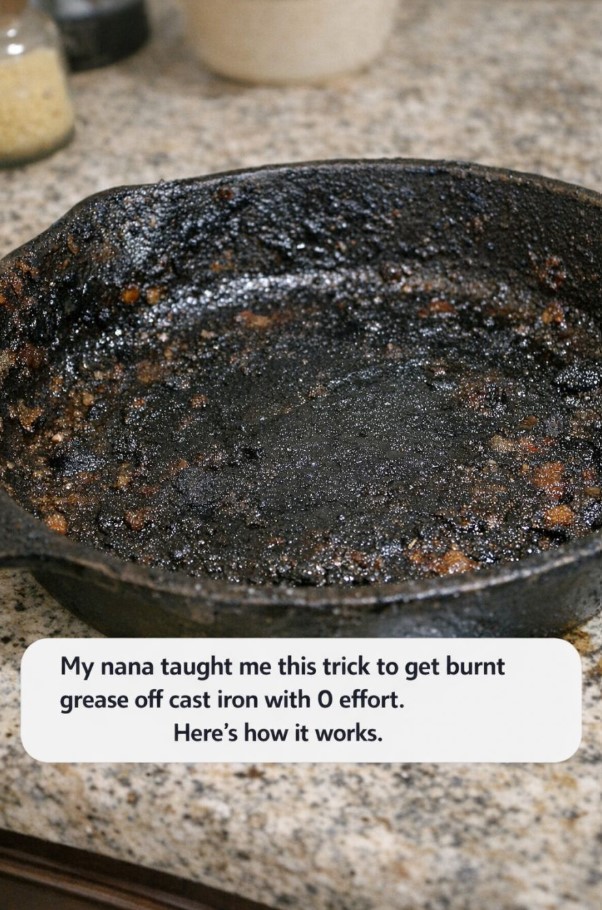
Cleaning burnt grease off a cast iron pan can feel like one of the most frustrating kitchen tasks. The stubborn, stuck-on residue often refuses to budge, no matter how much scrubbing you do. And if you’ve ever owned cast iron cookware, you already know that using the wrong cleaning method can damage the pan’s seasoning, making things even worse.
That’s why simple, old-school tricks—passed down through generations—are so valuable. Many home cooks rely on traditional methods that clean effectively without harming the pan. One of the most talked-about tricks is a surprisingly easy approach that requires minimal effort and uses basic ingredients you likely already have at home.
Instead of aggressive scrubbing or harsh chemicals, this method focuses on softening and loosening the burnt grease so it can be removed gently and safely.
Why Burnt Grease Is So Hard to Remove
Burnt grease sticks so firmly to cast iron because of what happens during cooking. At high temperatures:
- Oils and fats break down and harden
- Food particles become carbonized
- Residue bonds tightly to the pan’s surface
This creates a tough, stubborn layer that doesn’t wash away easily. That’s why simple rinsing isn’t enough—you need a method that breaks down the buildup first.
The “No Effort” Cleaning Trick
The trick your nana might have used is all about loosening the grease instead of fighting it.
What You Need:
- Hot water
- Baking soda
- A small amount of vinegar (optional)
How It Works:
- Let the pan cool slightly
Never clean cast iron while it’s extremely hot. - Add hot water to the pan
This helps soften the burnt residue. - Sprinkle baking soda over the greasy areas
Baking soda acts as a gentle abrasive and cleaning agent. - Add a splash of vinegar (optional)
This creates a fizzing reaction that helps lift stuck-on grease. - Let it sit for several hours or overnight
This is where the “no effort” part comes in—the mixture does the work for you. - Wipe or gently scrub the pan
Most of the grease should come off easily with minimal effort.
This soaking method works by breaking down the hardened residue so you don’t have to scrub aggressively.
Why This Trick Works So Well
The effectiveness of this method comes from simple chemistry:
- Baking soda helps loosen grime with mild abrasion
- Vinegar reacts to lift debris from the surface
- Water softens hardened grease
Together, they weaken the bond between the grease and the pan, making it much easier to remove.
A Safer Option for Cast Iron
One of the biggest concerns with cast iron is preserving its seasoning—the protective layer that keeps it non-stick and rust-free.
This method is gentler than harsh scrubbing, but it’s still important to be careful:
- Avoid soaking for too long if using vinegar (it can strip seasoning)
- Don’t use metal scrubbers unnecessarily
- Always dry the pan thoroughly after cleaning
For stubborn spots, many experts recommend a coarse salt scrub, which removes residue without damaging the surface.
Extra Tips to Keep Your Cast Iron Clean
To prevent heavy buildup in the future:
- Clean the pan shortly after cooking
- Avoid letting grease sit overnight
- Dry immediately after washing
- Lightly oil the pan after cleaning to protect it
These habits help maintain the pan and reduce the need for deep cleaning.
What NOT to Do
- Don’t use harsh chemical cleaners
- Don’t soak cast iron for too long
- Don’t leave it wet (this can cause rust)
- Don’t scrub too aggressively
Using the wrong method can damage the pan and undo its natural non-stick surface.
Conclusion :
This simple, low-effort method for removing burnt grease from cast iron shows that sometimes the best solutions are the most traditional ones. Instead of relying on force, it works by softening and loosening stubborn residue, allowing you to clean your pan without damaging it.
What makes this trick especially useful is its practicality. It uses common household ingredients, requires very little hands-on work, and helps protect the integrity of your cookware. For busy kitchens or anyone tired of endless scrubbing, it offers a smarter and more efficient approach.
At the same time, it’s important to remember that cast iron requires a bit of care and consistency. Regular maintenance, gentle cleaning, and proper drying will keep your pan in excellent condition for years to come.
In the end, this method isn’t just about cleaning—it’s about working with your cookware, not against it. And once you try it, you may find yourself relying on this simple trick every time stubborn grease becomes a problem.