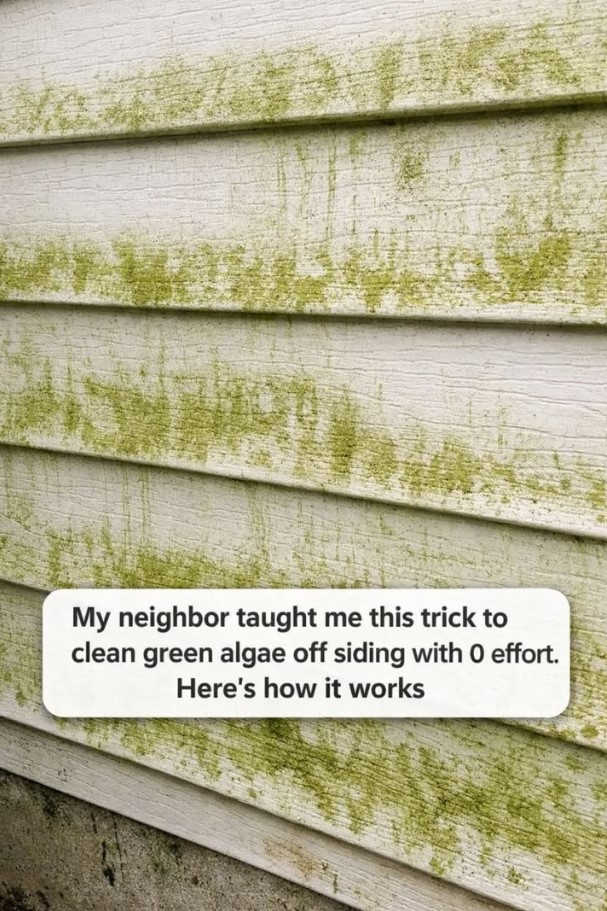
If you’ve ever looked at the outside of your home and noticed streaks of green creeping across the siding, you’re definitely not alone. Green algae is a common problem, especially in areas that stay damp, shaded, or humid. Over time, it can make even a well-maintained home look dirty and neglected.
Many homeowners try pressure washing or scrubbing, only to realize it takes a lot of effort—or worse, risks damaging the siding. That’s why simple, low-effort solutions are so appealing. One popular method involves a no-scrub cleaning mixture that works by breaking down algae so it can be rinsed away easily.
But how effective is this trick really? And how should you use it safely? Let’s break it down step by step.
Why green algae grows on siding
Before cleaning it, it helps to understand why it appears in the first place.
Green algae thrives in:
- Moist, humid environments
- Shaded areas (like the north side of your house)
- Surfaces that trap water, such as vinyl or painted siding
It feeds on moisture and organic residue, which is why it often spreads quickly if left untreated.
Over time, it doesn’t just look bad—it can trap moisture and potentially damage surfaces.
The “no-effort” cleaning trick explained
The method shared in the article is a simple spray-and-wait solution using common household ingredients.
The mixture:
- 1 gallon of water
- 1 cup of white vinegar
- 1 tablespoon of dish soap
The vinegar helps kill and break down algae, while the soap helps the solution stick and spread evenly.
How to use it (step-by-step)
1. Apply with a sprayer
Use a garden sprayer or spray bottle to apply the mixture to the affected areas. Start from the bottom and work upward for even coverage.
2. Let it sit
This is the key step.
- Leave the solution on the siding for 20–30 minutes
- For heavier buildup, you can leave it longer
During this time, the mixture works to loosen and break down the algae.
3. Rinse it off
Use a regular garden hose (no high pressure needed).
- Rinse from top to bottom
- The algae should come off easily, often with little to no scrubbing
Does it really work?
Yes—for light to moderate algae buildup.
Vinegar is effective because its acidity disrupts algae and helps loosen it from surfaces.
However:
- It may not fully remove heavy or long-term buildup
- Some situations still require stronger cleaners or light scrubbing
So while it’s a great low-effort method, it’s not always a complete solution.
Important safety tips
Even though this method is simple, you should still be careful:
- Test a small area first to avoid damage to paint
- Avoid using too much vinegar (strong solutions can be harsh)
- Rinse nearby plants before and after applying the solution
- Keep pets away until everything is rinsed
Common mistakes to avoid
Many people try this trick but don’t get good results because of small mistakes:
- Not letting the solution sit long enough
- Using too weak or too strong a mixture
- Applying it in direct sunlight (it dries too fast)
- Expecting it to remove very heavy buildup instantly
Fixing these can make a big difference.
What works even better (for tough cases)
If the algae is stubborn, you may need stronger methods:
- Oxygen bleach solutions (gentler than chlorine)
- Diluted bleach mixtures for heavy stains
- Soft washing techniques used by professionals
These methods can clean deeper without damaging siding when used correctly.
How to prevent algae from coming back
Cleaning is only half the solution—prevention matters too.
Simple habits that help:
- Trim trees to reduce shade
- Improve drainage around your home
- Keep siding clean and dry
- Wash siding periodically
Algae tends to return every 6–12 months, depending on climate.
Conclusion :
Green algae on siding can be frustrating, especially when it makes your home look older and less cared for than it really is. While many cleaning methods require scrubbing, expensive tools, or even professional help, this simple spray-and-wait trick offers a much easier alternative.
Using a basic mixture of water, vinegar, and dish soap, you can break down algae and rinse it away with minimal effort. For many homeowners, this method is enough to restore the look of their siding quickly and safely.
However, it’s important to keep expectations realistic. This isn’t a miracle fix for every situation—heavier buildup may still require stronger solutions or additional cleaning steps. The key is using the method correctly, allowing enough time for it to work, and repeating it when necessary.
In the end, maintaining clean siding isn’t about one-time fixes, but about simple, consistent care. With the right approach, you can keep your home looking fresh, clean, and well-maintained—without spending hours scrubbing or risking damage.