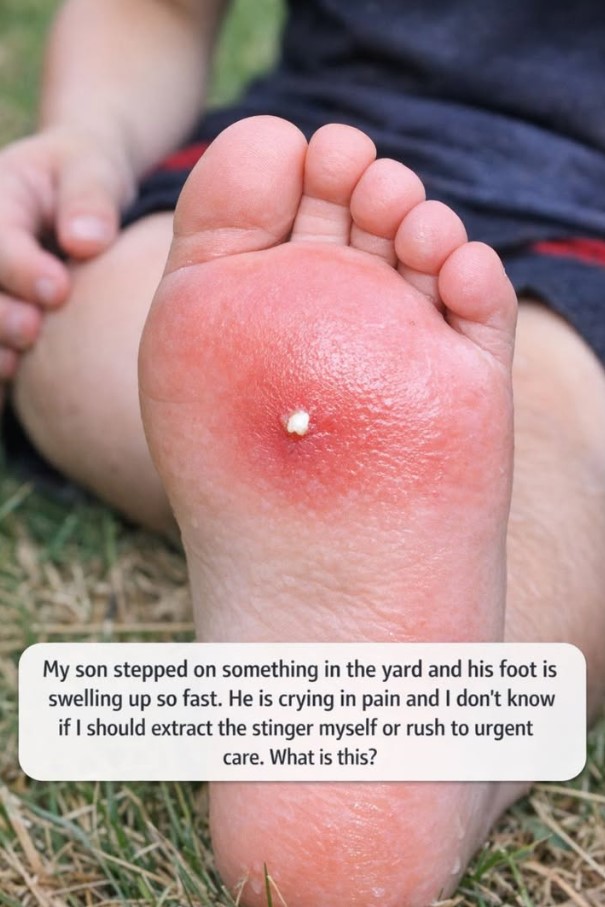
A child stepping on something outside and suddenly developing a rapidly swelling, painful foot is every parent’s nightmare. The situation can look dramatic within minutes—swelling, crying, limping, and uncertainty about whether something is still stuck inside the skin.
In many cases, this type of injury is a puncture wound, which happens when a sharp object (like a nail, stick, glass, thorn, or metal fragment) enters the skin and creates a small but deep injury. Even if the wound looks tiny on the surface, it can push dirt or debris deeper into the tissues, increasing the risk of swelling and infection.
The most important thing in these situations is not panic, but careful observation and avoiding actions that could make things worse.
Why the Foot Can Swell So Quickly
The foot is very sensitive to puncture injuries because it carries body weight and has many small tissues and blood vessels.
Rapid swelling can happen due to:
- Natural inflammatory response of the body
- Pressure from trapped fluid in the injured area
- Possible irritation from a foreign object inside the skin
- Early infection beginning to develop
Foot puncture wounds are especially prone to complications because dirt and bacteria can be pushed deeper under the skin at the moment of injury.
The Most Important Question: Is Something Still Inside?
One of the biggest concerns after this kind of injury is whether a piece of the object broke off in the foot.
Signs that something may still be inside include:
- Pain that gets worse instead of better
- Feeling like “something is still there”
- Swelling that continues to increase
- Difficulty putting weight on the foot
- A small hole that looks deeper than expected
If a foreign object remains, the pain often does not improve until it is removed.
What You Should NOT Do
Even though it can be tempting to act quickly, certain actions can make the injury worse:
- Do not dig into the wound
- Do not try to “cut it open” at home
- Do not squeeze the area aggressively
- Do not ignore rapidly increasing swelling
Trying to remove something deeply embedded without proper tools can push it further in or cause infection.
Safe First Aid Steps at Home
If the injury just happened and you are waiting for medical care, you can:
- Keep the child calm and seated
- Rinse the area gently with clean water
- Apply light pressure if there is bleeding
- Keep the foot elevated
- Cover with a clean, loose bandage
The goal is to protect the wound—not to explore it.
When Swelling Becomes a Red Flag
You should seek urgent medical attention if you notice:
- Swelling increasing quickly
- Severe or worsening pain
- Redness spreading around the wound
- Pus or unusual discharge
- Fever or feeling unwell
- Difficulty walking or standing
Foot puncture wounds can become infected, sometimes within a few days, especially if dirt or debris entered the skin.
In some cases, deeper infections can develop if the wound is not properly treated early.
Why Doctors May Need to Check It
Medical professionals may use:
- Physical examination
- X-rays or imaging
- Careful cleaning of the wound
- Antibiotics if needed
- Removal of any foreign object
Because puncture wounds can look small on the surface but be deeper inside, proper evaluation is important.
Conclusion :
A child stepping on something and developing fast swelling in the foot can look frightening, but it is often the body’s natural reaction to a puncture wound. While some cases are minor, others may involve a retained object or early infection that needs medical attention.
The most important thing is to avoid digging or trying to fix it at home. Instead, focus on keeping the area clean, calm, and protected while watching for warning signs like increasing pain, swelling, or difficulty walking.
In many situations, early medical evaluation is the safest choice, especially when swelling appears quickly. Acting carefully rather than aggressively helps prevent complications and ensures the injury heals properly.
When it comes to puncture wounds, the rule is simple: small-looking injuries can still be serious underneath—and it’s always better to check than to guess.