
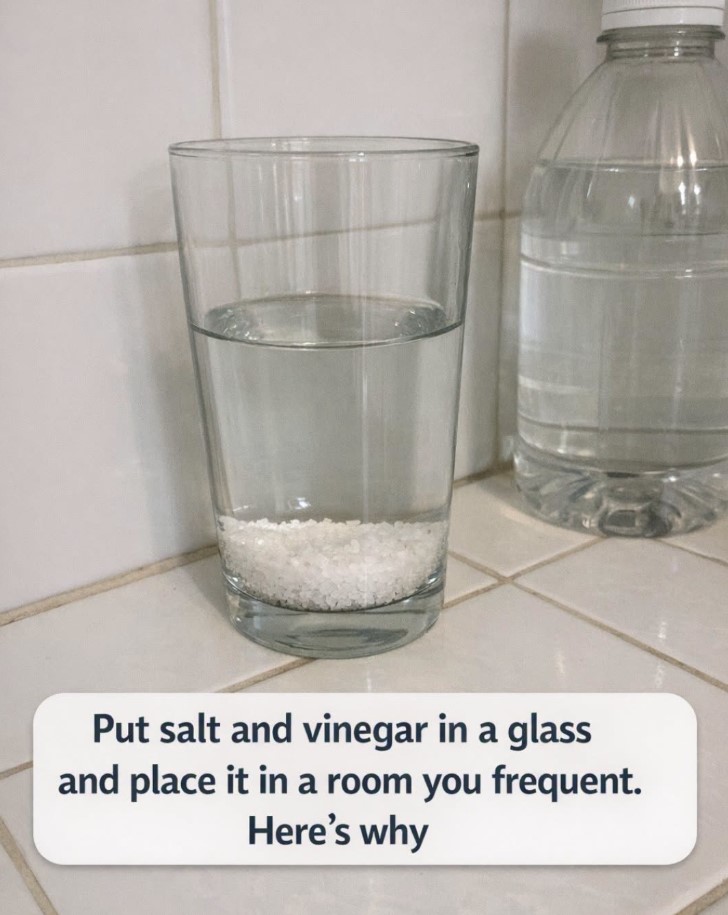
Sometimes, the simplest household tricks are the ones that make us curious. You may have heard that placing a glass filled with salt and white vinegar in a room can help with unpleasant odors and make the space feel fresher. It sounds almost too simple to be useful, especially when many commercial air fresheners and cleaning products promise similar results at a much higher cost.
Yet salt and vinegar are two inexpensive ingredients that have been used in household cleaning for generations. Vinegar contains acetic acid, which can help loosen mineral deposits and certain residues, while salt can absorb some moisture under suitable conditions and provide gentle scrubbing power when used on appropriate surfaces.
The idea behind the glass method is straightforward: combine the two ingredients, leave the mixture in a frequently used room, and see whether it makes a noticeable difference to lingering smells.
However, it is important to understand what this traditional trick can and cannot do. A glass of salt and vinegar is not a proven air purifier, does not eliminate every unpleasant odor, and cannot solve underlying problems such as water leaks or mold. It may be a simple household experiment, but good ventilation and proper cleaning remain essential.
Why Do People Put Salt and Vinegar in a Glass?
The practice is popular because it uses inexpensive ingredients that many people already have in their kitchens. Supporters of the method commonly use it in living rooms, bedrooms, kitchens, bathrooms, and other areas where odors tend to linger.
White vinegar has a strong, distinctive smell of its own. Its acidity makes it useful for certain cleaning tasks, especially when dealing with mineral buildup and some residues on compatible surfaces. Salt, meanwhile, is useful for scrubbing and can take up moisture when conditions allow.
When the ingredients are combined in a glass, however, their effects on the surrounding air are limited. There is not strong evidence that leaving a bowl of salt and vinegar in a room will significantly purify the air, remove airborne contaminants, or control indoor humidity.
The method may be worth trying as an inexpensive household experiment, provided you keep your expectations realistic.
How to Prepare a Glass of Salt and Vinegar
If you would like to try this traditional method, the preparation is simple and requires only a few supplies.
What You Need
- About one-third of a cup of coarse salt or ordinary table salt.
- Approximately one-half cup of plain white vinegar.
- A clean, sturdy glass or small container.
- A stable surface where the container will not be knocked over.
Directions :
Step 1: Choose a suitable container.
Use a sturdy glass or small bowl with enough room for the ingredients. Avoid placing it on a narrow ledge or anywhere it could easily fall.
Step 2: Add the salt.
Pour approximately one-third of a cup of salt into the container. There is no need to pack it tightly.
Step 3: Add the vinegar.
Slowly pour in enough white vinegar to cover the salt. Leave some empty space at the top to reduce the risk of spilling.
Step 4: Choose a suitable location.
Place the container on a stable shelf or table in a room where odors tend to linger. Keep it away from children, pets, food preparation areas, electrical equipment, and surfaces that could be damaged by vinegar.
Step 5: Leave it for a limited period.
Some traditional versions of this trick recommend leaving the mixture undisturbed for 24 to 48 hours. Check it periodically, and do not leave it where someone could accidentally drink it or knock it over.
Step 6: Dispose of the mixture safely.
After the trial period, discard the mixture according to local guidance and wash the container thoroughly. If the vinegar smell becomes unpleasant or irritates your eyes or throat, remove the container sooner and ventilate the room.
Remember that changes in the salt’s appearance do not prove that toxins or negative energy have been removed from the room. The salt may become wet, clump together, or dissolve depending on the amount of liquid, humidity, and other environmental conditions.
1. It May Help Make a Stale Room Feel Fresher
Rooms that remain closed for long periods can develop a stuffy or stale smell. This can happen in guest bedrooms, home offices, storage rooms, or spaces that receive little fresh air.
Some people use a glass of salt and vinegar as part of their effort to freshen these areas. The vinegar’s smell may temporarily change how the room smells, although the mixture has not been proven to remove stale odors reliably from the air.
A more effective first step is to open windows when outdoor conditions permit, improve ventilation, and wash fabrics that may have absorbed unpleasant smells.
If the odor comes from damp walls, mold, or a hidden leak, address the underlying cause rather than relying on a glass of vinegar.
2. Dealing With Lingering Cooking Smells
Cooking odors can remain long after a meal has been prepared. Fried fish, onions, garlic, and other strongly scented ingredients may leave smells in curtains, upholstery, and nearby rooms.
A bowl of vinegar may change the smell in the immediate area, but it is not a substitute for cleaning surfaces and ventilating the kitchen.
To reduce cooking odors more effectively:
- Turn on the kitchen extractor fan while cooking.
- Open a window when it is safe and practical.
- Wash greasy pans and utensils promptly.
- Wipe down the stovetop and surrounding surfaces.
- Empty the rubbish bin if it contains food scraps.
- Wash dish towels and other fabrics that have absorbed strong smells.
You can experiment with the salt-and-vinegar glass after cleaning, but do not expect it to remove every lingering odor on its own.
3. Managing Pet Odors Around the Home
Pets can bring a lot of happiness into a home, but their bedding, litter areas, and favorite resting places sometimes develop noticeable smells.
Some people place a glass of vinegar and salt in a room in an attempt to freshen the air. However, the mixture has not been established as an effective pet-odor remover.
A better approach is to wash pet bedding regularly, clean food and water bowls, remove waste promptly, and use a suitable cleaner for accidents.
If you decide to try the glass method, place it somewhere your pet cannot reach, lick, or knock it over. Vinegar and concentrated salty liquid should not be available for pets to drink.
For persistent odors, investigate the source instead of repeatedly masking the smell.
4. Freshening a Bathroom
Bathrooms are another place where unpleasant odors can accumulate. Poor ventilation, damp towels, dirty bath mats, and drain problems may all contribute to a room that smells less than fresh.
A glass of salt and vinegar is sometimes suggested as a simple alternative to scented sprays. However, its effectiveness is limited, and it will not correct the causes of persistent bathroom odors.
For better results, clean the toilet, sink, and other frequently touched surfaces. Wash bath mats and towels regularly, dry wet areas, and run the exhaust fan when showering.
If the smell appears to come from a drain, investigate the drain itself. A dry plumbing trap, buildup, or another plumbing issue may be responsible.
Never mix vinegar with bleach or bleach-containing cleaning products, because this can release dangerous chlorine gas. Use cleaning products separately and follow their labels.
5. Reducing Musty Smells in a Basement
A basement can develop a musty smell when moisture accumulates. This may be related to poor ventilation, condensation, a plumbing leak, or water entering through the walls or foundation.
A glass of salt and vinegar will not reliably reduce the humidity of an entire basement. Ordinary table salt is not an effective substitute for a properly sized dehumidifier.
If your basement smells musty, inspect the area for visible dampness, leaks, water stains, and signs of mold. Improve ventilation when conditions allow and consider using a hygrometer to measure humidity.
A dehumidifier may help when excess humidity is the problem. If you find persistent water intrusion or extensive mold growth, seek appropriate professional assistance.
The most important goal is to eliminate the moisture source rather than cover up the smell.
6. What About Smoke Odors?
Cigarette smoke and smoke from cooking can cling to soft furnishings and other surfaces. Even after the original source has disappeared, the smell may remain in curtains, carpets, upholstery, and clothing.
Leaving a glass of vinegar in the room is sometimes recommended as a traditional remedy, but it will not remove smoke residue from these materials.
Instead, ventilate the room and wash removable fabrics according to their care instructions. Clean suitable hard surfaces with an appropriate cleaner, and consider professional cleaning for heavily affected upholstery or carpets.
If the smell comes from a fire, especially a significant fire, professional smoke-damage assessment may be necessary.
Vinegar should not be treated as a substitute for removing smoke particles or addressing the source of the contamination.
7. Can Salt and Vinegar Keep Insects Away?
Some household remedies suggest placing vinegar near areas where fruit flies, gnats, ants, or spiders appear.
The results depend on the insect and the situation. Vinegar can attract certain fruit flies when used in a properly designed trap, but a glass containing both salt and vinegar is not a dependable way to control an infestation.
For fruit flies, remove overripe produce, clean food spills, rinse recycling containers, and investigate drains where organic material may accumulate.
For ants, store food in sealed containers and clean up crumbs and sugary spills. Seal entry points where practical.
If insects continue to appear in large numbers, use a control method appropriate for the particular pest rather than relying on the salt-and-vinegar mixture.
8. The Traditional Belief About Removing Negative Energy
One reason this trick continues to attract attention is the belief that a glass of salt and vinegar can absorb negative energy from a room.
For some people, household rituals provide a sense of comfort or a way to make a space feel calmer and more intentional. There is nothing wrong with enjoying a harmless personal ritual when it is done safely.
However, there is no scientific evidence that salt and vinegar absorb negative energy or reveal whether a room contains it.
If the salt changes color, forms a crust, becomes wet, or settles differently, these changes are not reliable signs of hidden energy. They can occur because of moisture, evaporation, temperature, and the way the ingredients were mixed.
You can enjoy the ritual as a personal tradition without treating it as a scientific test or a guaranteed method of improving your home.
9. Other Useful Ways to Use Salt and Vinegar Around the House
Although the glass method has limitations, salt and vinegar can be useful for certain separate cleaning tasks when applied correctly.
Cleaning Suitable Copper and Brass Items
Vinegar’s acidity can help loosen tarnish on some uncoated copper and brass objects. A small amount of salt can provide additional scrubbing power.
Mix a little salt with enough white vinegar to form a paste, then test it on an inconspicuous area before treating the entire object.
This method is not suitable for every finish. Avoid using it on plated, lacquered, or delicate decorative items unless the manufacturer confirms that it is safe. Rinse the surface thoroughly and dry it afterward.
Removing Some Hard-Water Marks
White vinegar can help dissolve mineral deposits left by hard water on compatible surfaces.
For suitable glassware, a diluted vinegar solution may loosen cloudy mineral marks. Follow the manufacturer’s recommendations for special glassware, and avoid abrasive scrubbing that could scratch the surface.
Do not use vinegar on natural stone such as marble or limestone, as its acidity can damage the finish.
Freshening a Cutting Board
Salt can provide gentle scrubbing action, while vinegar can help loosen some residues on compatible cutting boards.
For a board that smells of onions or garlic, wash it with hot water and dish soap according to its care instructions. Rinse and dry it thoroughly. If you use a salt-and-vinegar method, remember that it is not a reliable substitute for proper cleaning and sanitizing when food safety requires it.
Avoid soaking wooden boards for long periods, as excess moisture can cause damage.
Cleaning a Cloudy Coffee Pot
Mineral deposits may accumulate in a coffee pot or carafe over time. A suitable vinegar solution can help loosen some of this buildup.
Use the cleaning instructions provided by the coffee maker’s manufacturer. If cleaning a removable glass carafe, rinse it thoroughly after treatment.
Do not add salt to an electric coffee machine’s internal water system. Salt is unnecessary for descaling and can leave residue.
Removing Light Rust From Some Tools
Vinegar can help loosen rust on certain metal tools. However, prolonged exposure can also damage metal, so the treatment needs to be controlled.
If you try this method, use it only on suitable, inexpensive tools, inspect the metal regularly, and follow with thorough rinsing and immediate drying. Apply an appropriate protective coating afterward if recommended for the tool.
Do not use this approach on delicate, valuable, or precision tools without checking the manufacturer’s guidance.
Dealing With Mild Drain Odors
A drain that smells unpleasant may have a buildup of residue, a dry trap, or another plumbing issue. Cleaning the drain and removing trapped debris may help.
Although salt and vinegar are often recommended as a home remedy, they are not a dependable solution for serious blockages or recurring odors. Salt is not a substitute for proper drain maintenance, and the mixture may not solve the underlying cause.
Avoid combining vinegar with commercial drain cleaners or bleach. If the drain remains slow or continues to smell, contact a qualified plumber.
10. Does the Mixture Actually Remove Moisture From the Air?
Salt can attract moisture under certain conditions, but the small quantity in a glass of vinegar is not an effective way to control the humidity of a room.
The salt also becomes wet when mixed with vinegar, so the resulting container should not be regarded as a reliable dehumidifier.
If you are concerned about excess indoor humidity, use a hygrometer to measure the relative humidity. Improve ventilation where possible, repair leaks, and consider a dehumidifier if needed.
Controlling moisture is particularly important in bathrooms, basements, and other areas where dampness can contribute to mold growth.
A glass of salt and vinegar should never be used as the main solution to a persistent moisture problem.
How Often Should You Replace the Mixture?
Traditional instructions often recommend replacing the salt-and-vinegar mixture after 24 to 48 hours.
If you try the method, treat that time frame as a household suggestion rather than a scientifically established schedule. There is no validated period after which the mixture becomes a more effective air freshener or purifier.
The appearance of the salt may change as it absorbs liquid or dissolves. That does not prove that it has captured pollutants or removed toxins.
When you finish the experiment, dispose of the mixture safely, clean the container, and consider whether the room’s odor has improved. If the smell remains, look for its source instead of repeatedly replacing the glass.
Safety Tips to Remember
Before trying any household remedy, keep a few simple precautions in mind.
- Keep the container away from children and pets. The mixture should never be swallowed.
- Use a stable surface. Spilled vinegar can damage some finishes, and broken glass can cause injuries.
- Avoid contact with sensitive surfaces. Vinegar can damage marble, limestone, and certain metal finishes.
- Do not mix vinegar with bleach. This combination can release dangerous chlorine gas.
- Ventilate the room. Vinegar fumes can irritate the eyes, nose, or throat, especially for sensitive individuals.
- Do not rely on the mixture to treat mold. Persistent dampness requires proper investigation and moisture control.
- Do not use it as an air purifier. A glass of salt and vinegar does not replace ventilation or appropriate filtration.
These precautions help keep a low-cost household experiment from creating a new problem.
Frequently Asked Questions
Does a glass of salt and vinegar really purify the air?
There is no strong evidence that leaving the mixture in a room meaningfully purifies the air or removes airborne contaminants. It may change the smell in the immediate area, but proper ventilation, cleaning, and suitable air filtration are more reliable ways to improve indoor air quality.
Can I leave the glass in my bedroom overnight?
You can choose to try the method, but keep the container away from the bed, electronics, and anything that could be damaged by a spill. If the vinegar smell irritates your eyes, nose, or throat, remove the glass and ventilate the room. Do not treat it as a remedy for breathing problems or congestion.
Can the mixture remove mold?
No. A glass of salt and vinegar cannot eliminate mold growing on walls, ceilings, or other materials. Mold-related problems require identifying and correcting the moisture source and cleaning or removing affected materials appropriately.
Does the salt change color when it absorbs negative energy?
No scientific evidence supports this belief. Changes in the mixture’s appearance can result from moisture, evaporation, temperature, and the amount of vinegar used. The appearance of the salt cannot establish whether negative energy is present.
Is white vinegar better than other types?
Plain white vinegar is commonly chosen for household cleaning because it is inexpensive and has a relatively clear appearance. However, its suitability depends on the task and the surface being cleaned. Always follow the relevant manufacturer’s instructions.
Can I add essential oils to the mixture?
It is generally unnecessary. Essential oils can irritate some people and may be unsafe for certain pets. If you want a pleasant scent, choose a method appropriate for your household and use it according to its safety instructions.
Conclusion :
Putting salt and vinegar in a glass is a simple household trick that continues to interest people because it uses two inexpensive ingredients and requires very little effort. Some people enjoy trying it in rooms where stale or cooking odors linger, while others appreciate the tradition behind the practice.
Still, it is important to separate household folklore from proven results. A glass of salt and vinegar has not been shown to purify indoor air, eliminate negative energy, control humidity effectively, or solve persistent mold and odor problems.
The ingredients can be useful for certain cleaning tasks when used on compatible surfaces, but they should be applied carefully and never mixed with bleach or other unsuitable cleaning products.
If you decide to try the glass method, keep it in a safe location, ventilate the room, and pay attention to the actual result rather than the appearance of the salt. For lasting freshness, regular cleaning, fresh air, and addressing the source of unpleasant odors are far more dependable.
Sometimes the best household solution is not a complicated recipe or an expensive product. It is understanding what a simple trick can realistically accomplish—and knowing when a more effective approach is needed.