There is something exciting about watching Wheel of Fortune from the comfort of home. Viewers love trying to solve the puzzles before the contestants, calling out answers from the couch, and wondering how anyone could miss a phrase that seems so obvious.
But playing a word puzzle on television is very different from solving it at home. Contestants must think quickly, deal with a ticking clock, and remain focused while thousands of dollars are on the line. Sometimes, even a familiar expression becomes surprisingly difficult to recognize.
That was the situation during the March 28, 2025, episode of Wheel of Fortune, when contestant Stephen Sporer reached the Bonus Round after an impressive performance. He had already earned $35,000 and now had the opportunity to win an additional $40,000.
Everything came down to one final puzzle. The answer was a phrase that many people use in everyday conversation: “ON OUR WAY.”
Despite the familiar wording, Sporer could not solve the puzzle before time ran out. The missed opportunity left viewers wondering how such a common phrase could prove so difficult under pressure.
Stephen Sporer Delivers an Impressive Performance
Before the final round, Stephen Sporer had plenty of reasons to feel proud of his performance.
He competed against Christina White and Megan Russell in an episode filled with changing fortunes and challenging puzzles. As the game progressed, Sporer demonstrated his ability to recognize word patterns and respond quickly when opportunities appeared.
One of his strongest moments came during the Triple Toss-Up rounds. He solved all three puzzles, adding $10,000 to his winnings. His performance helped him build momentum and put him in a strong position as the competition continued.
He also solved the final puzzle of the regular game, securing his place in the Bonus Round.
By the end of the main competition, Sporer had accumulated $35,000. That was already a substantial achievement, but the final challenge offered him the chance to increase his winnings even further.
For viewers, the setup was exciting. They had watched him succeed throughout the game and were eager to see whether he could finish with an even bigger victory.
However, the Bonus Round would prove to be a different kind of challenge.
The Final Challenge: A Puzzle Worth Another $40,000
After reaching the Bonus Round, Sporer selected the category “Phrase.”
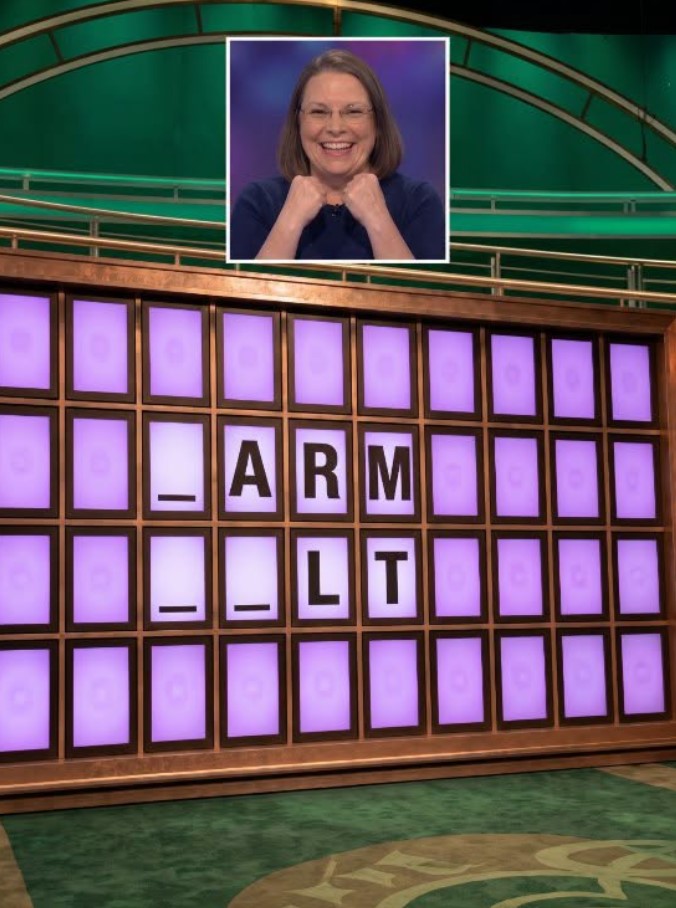
The show’s familiar letter-revealing format gave him a starting point. The board automatically revealed R, S, T, L, N, and E, after which he selected C, M, G, and O as his additional letters.
With the available letters displayed, the puzzle began to take shape. Yet identifying a complete phrase from a partially revealed board can be more complicated than it appears.
The contestant must consider which letters are visible, how the remaining spaces fit together, and which expression makes sense within the category. All of this has to happen within a short countdown.
The correct answer was “ON OUR WAY,” a common expression used when someone is traveling toward a destination or letting another person know they will arrive soon.
For many viewers, the phrase might seem straightforward once it is revealed. But knowing the solution afterward is not the same as discovering it while the clock is running.
Sporer was unable to identify the complete phrase before the time expired. As a result, he missed the opportunity to claim the additional $40,000 bonus prize.
Why Can an Easy Puzzle Be So Difficult?
One of the most interesting aspects of game shows is how differently a puzzle can feel depending on whether you are watching or competing.
From the couch, viewers can relax, study the board, and consider different possibilities. They do not have to worry about being filmed or losing a valuable prize if the correct answer does not come quickly enough.
Contestants face a very different environment.
The Pressure of the Countdown
Time pressure can make even simple tasks more difficult.
When the clock is ticking, a contestant may become so focused on finding the answer that it becomes harder to consider alternative possibilities. A word or phrase that might be obvious in a relaxed setting can suddenly seem unfamiliar.
The pressure also increases as the remaining seconds disappear. Instead of helping someone think faster, the urgency can sometimes make clear thinking more difficult.
Incomplete Information
A puzzle board does not immediately reveal the entire answer. Even when several letters are visible, the remaining spaces may allow multiple possible combinations.
The contestant has to identify the correct arrangement without seeing the complete phrase in advance.
Sometimes, one additional letter is enough to make everything fall into place. Other times, the answer remains elusive until the solution is revealed.
Thinking Too Complicatedly
Another challenge is the tendency to search for an answer that is more complicated than necessary.
When a contestant cannot immediately recognize a phrase, they may begin considering unusual expressions or less obvious combinations. Meanwhile, the simplest answer can remain overlooked.
This is one reason viewers sometimes react with surprise when a solution is revealed. Once the missing phrase becomes visible, it can seem impossible to understand why it was difficult to recognize.
However, the contestant did not have the benefit of knowing the answer beforehand.
Why Watching From Home Is Different
Many people enjoy solving television puzzles alongside the contestants. It can be satisfying to recognize a phrase before the board is complete, especially when the answer seems obvious.
But viewers at home have several advantages.
They can focus entirely on the puzzle without worrying about how they appear on television. They also do not face the same financial pressure or the knowledge that a single missed answer could cost them a significant bonus.
Contestants must manage all those distractions while making decisions in real time.
Even experienced players can struggle when they are under pressure. Familiarity with a language does not guarantee that every expression will immediately come to mind, particularly when only part of a phrase is visible.
Sporer’s experience demonstrates why a puzzle that looks easy on a screen can become challenging when a real prize is at stake.
The Missed Bonus Prize Became a Memorable Moment
The missed “ON OUR WAY” puzzle became the defining moment of Sporer’s appearance because of the contrast between the familiar answer and the difficulty of finding it before time ran out.
Some viewers may have wondered why the phrase did not come to mind sooner. Others may have felt sympathy for the contestant, recognizing how easily pressure can interfere with concentration.
It is understandable that a missed opportunity can become a topic of discussion after a game show airs. Viewers naturally compare their own guesses with the answers contestants provide, especially when a substantial prize is involved.
The moment also highlights an important difference between recognizing an answer and producing it independently. Once the complete phrase is displayed, the solution feels obvious. Before that reveal, however, the contestant must work through the available information without knowing which possibility is correct.
That uncertainty is part of what makes word games entertaining.
Stephen Sporer Still Won $35,000
Although the missed bonus prize attracted attention, it is important not to overlook what Sporer had already accomplished.
He finished the main game with $35,000 after successfully solving several puzzles, including all three Triple Toss-Ups. His performance earned him a place in the final round and gave him the opportunity to compete for an even larger amount.
Missing the bonus prize did not erase those achievements.
Instead, the final moments provided a reminder that success in a game show can depend on a single answer. A contestant may perform consistently well throughout an episode and still face an uncertain result during the final seconds.
For Sporer, the additional $40,000 remained out of reach. Nevertheless, his winnings from the main game were still significant.
His experience illustrates the unpredictable nature of television competitions, where preparation, quick thinking, and a little luck can all influence the outcome.
Conclusion :
Stephen Sporer’s appearance on Wheel of Fortune offered viewers a memorable example of how difficult a seemingly simple puzzle can become under pressure.
After earning $35,000 in the main game, he reached the Bonus Round with the opportunity to win another $40,000. The final puzzle’s solution, “ON OUR WAY,” was a familiar expression, but he could not identify it before the countdown ended.
The moment may have left viewers wondering how the answer was missed, but it also showed that solving a puzzle on television is not quite the same as guessing from home.
A ticking clock, incomplete information, and the pressure of a valuable prize can make even ordinary words difficult to recognize.
Ultimately, that uncertainty is part of what keeps Wheel of Fortune entertaining. Sometimes contestants find the answer just in time, and sometimes it remains hidden until the final reveal. For viewers, the challenge is always the same: look at the board, trust your instincts, and see whether the answer comes to mind before the clock runs out.