A skin rash can have many causes. Sometimes it is nothing more than irritation from a new soap, detergent, plant, medication, or food. Other times, however, a rash can be one of the first visible signs that the body is having a serious allergic reaction. When a rash or hives occurs together with difficulty breathing, wheezing, throat tightness, or swelling of the lips, tongue, face, or throat, the situation should be treated as a medical emergency.
The important thing is not to panic, but also not to dismiss the symptoms as an ordinary rash. Severe allergic reactions can progress quickly, and recognizing the warning signs can make a critical difference. Anaphylaxis is a potentially life-threatening reaction that can affect breathing, blood pressure, the skin, and several other parts of the body at the same time.
A Rash and Breathing Trouble Are Not Symptoms to Ignore
A rash by itself does not necessarily mean something dangerous is happening. Many common rashes are related to allergies, infections, irritation, medications, or chronic skin conditions.
The situation changes when breathing problems appear at the same time.
Hives may appear as raised, itchy, red or pale welts that can move around different areas of the body. If hives or another sudden rash is accompanied by wheezing, shortness of breath, difficulty swallowing, throat tightness, or swelling around the mouth or tongue, it may indicate anaphylaxis.
This is why it is important to look at the whole group of symptoms, rather than judging the seriousness of a rash based only on how it looks.
What Is Anaphylaxis?
Anaphylaxis is a severe allergic reaction that can develop rapidly after exposure to a trigger.
The immune system can mistakenly identify something harmless—or something normally tolerated by the body—as a threat. In response, the body releases chemicals that can cause widespread symptoms.
The skin may develop hives, itching, flushing, or swelling. At the same time, the airways can become narrowed or swollen, resulting in wheezing, coughing, difficulty breathing, or a sensation of tightness in the throat. Blood pressure can also fall, potentially causing dizziness, weakness, fainting, or confusion.
The combination is what makes the situation particularly concerning.
Common Triggers of Severe Allergic Reactions
Anaphylaxis can be triggered by different substances, and the trigger is not always immediately obvious.
Common possibilities include:
Foods: Peanuts, tree nuts, shellfish, fish, milk, eggs, wheat, soy, and other foods can cause serious allergic reactions in susceptible people.
Medications: Certain antibiotics and other medications can trigger allergic reactions. A medication allergy may cause hives, itching, swelling, and breathing difficulties.
Insect stings: Bee, wasp, hornet, and other insect stings can cause severe reactions in some people.
Latex and other substances: Some individuals can experience significant allergic reactions after exposure to latex or other allergens.
Sometimes a reaction occurs shortly after eating a particular food, taking a medicine, or being stung. In other cases, identifying the trigger can be much more difficult.
Warning Signs That Require Immediate Action
A rash becomes much more concerning when it is accompanied by symptoms involving breathing, swallowing, circulation, or swelling.
Seek emergency medical help immediately if a rash or hives occurs with:
- Difficulty breathing or shortness of breath
- Wheezing or persistent coughing
- Tightness in the throat or chest
- Difficulty swallowing
- Swelling of the lips, tongue, mouth, face, or throat
- Feeling faint, dizzy, confused, or unusually weak
- Loss of consciousness
- A rapid or weak heartbeat
- Repeated vomiting or severe gastrointestinal symptoms alongside other allergic symptoms
These symptoms can occur together or develop in stages. A person does not necessarily need to have every symptom before an emergency reaction is suspected.
What Should You Do if This Happens?
If someone develops a rash and has trouble breathing or signs of a severe allergic reaction, seek emergency medical help immediately.
If the person has a prescribed epinephrine auto-injector and their allergy action plan instructs them to use it for a suspected severe allergic reaction, it should be used as directed. Epinephrine is the first-line treatment for anaphylaxis, and emergency medical evaluation is still necessary afterward.
Do not wait to see whether the rash disappears.
Do not assume that taking an ordinary antihistamine is enough when breathing problems or throat swelling are present. Antihistamines may help some skin symptoms, but they do not replace emergency treatment for anaphylaxis.
If the person becomes unconscious and is not breathing normally, emergency responders should be contacted and CPR should be started according to established first-aid guidance.
Why Waiting Can Be Dangerous
One of the biggest mistakes people can make with a serious allergic reaction is waiting for symptoms to become “severe enough.”
Anaphylaxis can worsen rapidly. Someone who initially has only hives and mild symptoms may later develop breathing difficulty, swelling, or problems with blood pressure. Because it is impossible to predict exactly how a reaction will progress, breathing symptoms should be taken seriously from the beginning.
The goal isn’t to determine the diagnosis at home. The goal is to recognize a potentially dangerous pattern and get appropriate medical care quickly.
Not Every Rash Is an Allergy
It is also important not to assume that every rash is caused by an allergic reaction.
Rashes can result from viral infections, skin irritation, contact dermatitis, medications, insect bites, eczema, and many other conditions. In children, for example, many rashes are associated with minor viral illnesses and resolve without serious complications.
A rash without breathing problems, facial swelling, severe illness, or other warning signs may require a completely different approach.
For example, contact dermatitis can develop after exposure to perfumes, certain metals, dyes, latex, soaps, or other substances. Hives can also be triggered by foods or medications. Keeping track of new exposures can help a healthcare professional identify possible causes.
The Difference Between Hives and Other Rashes
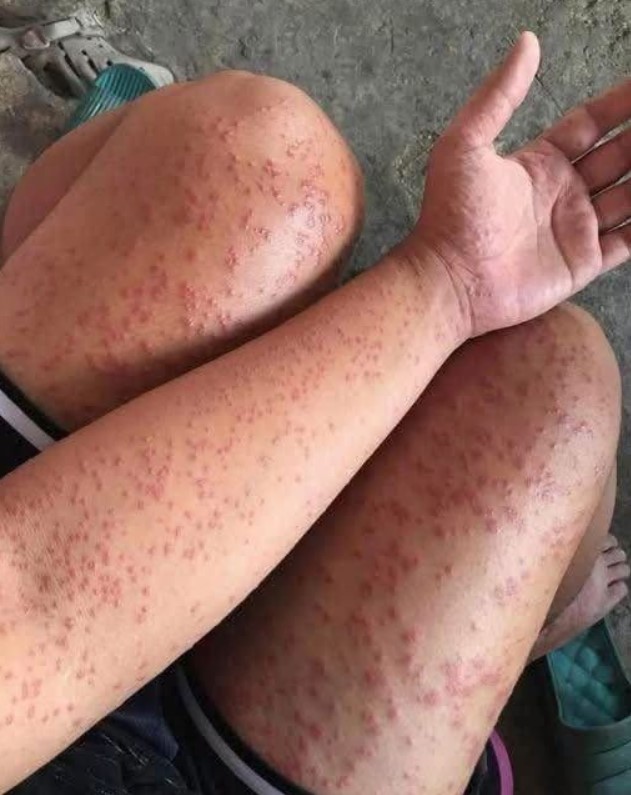
Hives are often raised, itchy welts that can appear suddenly and change location. Individual welts may disappear while new ones appear elsewhere.
Other rashes can look very different. Some may consist of flat red patches, small bumps, scaling, blisters, or areas of irritation.
Because many different conditions can look similar, it is not always possible to identify the cause simply by looking at a photograph or description.
That is especially important when other symptoms are present. Difficulty breathing, swelling, faintness, or severe illness should take priority over trying to identify exactly what the rash looks like.
Other Rash Warning Signs to Know
Breathing trouble is not the only reason a rash may require urgent medical attention.
A rash accompanied by small red or purple spots that do not fade when pressed, especially when combined with fever, severe headache, stiff neck, confusion, or vomiting, can be a sign of a serious infection and requires immediate evaluation.
A rapidly spreading rash with significant illness is another warning sign.
Blistering or widespread peeling of the skin, particularly when accompanied by sores involving the mouth, eyes, or genitals, can also indicate a serious medical condition and should be evaluated urgently.
What About a Rash After Starting a New Medication?
A new medication deserves particular attention if a rash develops afterward.
Some medication reactions are relatively mild, but others can become serious. A medication-related rash accompanied by breathing difficulty, facial or throat swelling, extensive blistering, skin peeling, fever, or severe illness requires urgent medical assessment.
If you suspect a medication caused a reaction, tell the healthcare professional exactly what you took, including the medication name, dose if known, and when you took it.
Do not restart a medication that you believe caused a serious allergic reaction unless a qualified healthcare professional specifically tells you to do so.
Keep Track of Possible Triggers
For people who experience recurring unexplained rashes or suspected allergic reactions, keeping a simple symptom record can be helpful.
Write down:
- What you ate before symptoms appeared
- Any medications or supplements taken
- Recent insect stings
- New soaps, lotions, detergents, or cosmetics
- New foods
- Where the rash appeared
- How quickly the symptoms developed
- Whether breathing, swelling, dizziness, vomiting, or other symptoms occurred
This information can give a doctor valuable clues when trying to identify a possible trigger.
When a Rash Can Be Monitored
If the rash is mild and the person feels otherwise well, breathing normally and showing no signs of facial or throat swelling, immediate emergency treatment may not be necessary.
However, a persistent, recurring, spreading, painful, or unexplained rash may still deserve medical evaluation, particularly if it does not improve or is accompanied by fever or other symptoms.
When there is uncertainty, contacting a healthcare professional is safer than attempting to diagnose the condition based solely on its appearance.
Conclusion :
A skin rash can be alarming, but most rashes are not life-threatening. The important lesson is to pay attention to what else is happening in the body at the same time.
A sudden rash or outbreak of hives combined with breathing difficulty, wheezing, throat tightness, difficulty swallowing, or swelling of the lips, tongue, face, or throat should never be treated as an ordinary skin problem. These symptoms can indicate anaphylaxis, a potentially life-threatening allergic reaction that requires immediate emergency medical attention.
The safest approach is to recognize the warning signs early rather than waiting for the reaction to become worse. If a person has a prescribed epinephrine auto-injector for severe allergies, following their emergency allergy plan and using the medication as directed can be critical, followed by emergency medical evaluation.
At the same time, it’s important to remember that not every rash is an allergic emergency. Skin irritation, viral illnesses, contact dermatitis, medication reactions, and many other conditions can produce rashes with very different levels of seriousness. Learning the difference between a mild skin problem and a combination of symptoms that signals danger can help you respond appropriately.
Ultimately, don’t let the appearance of a rash alone determine how serious the situation is. Look at the complete picture. If breathing or circulation is affected, or if swelling develops around the mouth or throat, treat the situation as an emergency and seek professional help immediately. Being prepared, recognizing the red flags, and acting quickly can make all the difference when a severe allergic reaction occurs.