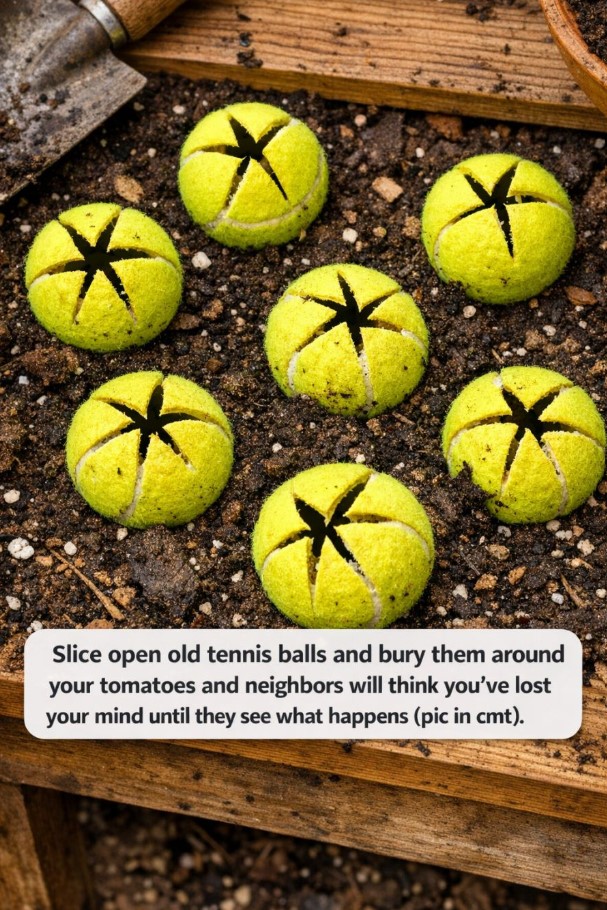
Every now and then, gardening “hacks” go viral that sound so strange they make neighbors question your sanity. One of the more unusual ones is the idea of cutting open old tennis balls and burying them around tomato plants to boost growth or improve yields.
At first glance, it sounds like some kind of secret trick—maybe the rubber releases nutrients, or the fuzzy surface helps the soil. But like many garden “life hacks,” the real explanation is much more practical (and less magical).
Let’s break down what this trend is supposed to do, and what actually happens in your garden.
Where This Idea Comes From
This kind of tip usually spreads from the idea that anything added to soil must help plants grow better. Garden myths often involve unusual household items like eggs, nails, or kitchen scraps being buried near plants.
In reality, most of these methods are based on the assumption that materials will slowly release nutrients into the soil—but science doesn’t always agree. For example, even items rich in minerals (like eggshells or metal) often break down too slowly to have a meaningful effect during a single growing season.
So where do tennis balls fit in? Unfortunately, not as a nutrient source at all.
What Tennis Balls Are Actually Made Of
A tennis ball is mainly:
- Rubber or synthetic rubber
- Felt outer covering
- Pressurized air inside
None of these materials provide nutrients that plants can use. Unlike compost or organic matter, they do not break down into plant food in any useful timeframe.
So burying them near tomatoes does not improve soil fertility or plant health.
Does It Help Tomatoes Grow?
Short answer: not really
There is no solid gardening science showing that tennis balls benefit tomato plants.
Tomatoes do benefit from things like:
- Deep planting to encourage strong root systems
- Compost and organic matter in soil
- Consistent watering
- Good sunlight and support structures
These proven methods improve growth by strengthening roots and improving nutrient uptake.
Tennis balls, on the other hand, don’t contribute to any of those processes.
Possible “Effects” People Might Notice
Even though the tennis balls themselves don’t help plants, some gardeners might still think they see benefits. That usually comes from other factors:
1. Soil disturbance
Digging holes and burying objects can loosen soil, which sometimes helps roots spread more easily.
2. Improved watering habits
If someone changes their routine while trying a new “method,” the plants may benefit from better care overall.
3. Coincidence
Tomatoes naturally grow fast in warm seasons, so improvements often happen anyway.
This is similar to many gardening myths where results are misattributed to the “hack” instead of normal plant growth patterns.
Potential Downsides
While tennis balls won’t poison your plants, they’re still not a great addition to a vegetable garden:
- They don’t decompose
- They can leave non-natural material in soil
- They take up space where roots should grow
- They add nothing beneficial to soil structure or nutrients
So at best, they do nothing—and at worst, they just clutter the soil.
What Actually Works Better for Tomatoes
If the goal is healthier, bigger tomato plants, these methods actually help:
- Planting deep so stems grow extra roots
- Adding compost or well-rotted manure
- Using mulch to keep soil moisture stable
- Watering consistently (not too much, not too little)
- Providing strong staking or cages
These are all backed by real gardening science and widely used by experienced growers.
Conclusion
Burying tennis balls around tomato plants might sound creative, but it doesn’t offer any real benefit to plant growth. Unlike compost or organic soil amendments, tennis balls don’t break down into nutrients and don’t improve soil health.
At best, it’s a harmless experiment. At worst, it’s just unnecessary clutter in your garden beds.
The real secret to strong tomato plants isn’t buried objects—it’s simple, consistent care: good soil, steady watering, sunlight, and proper support.
In the end, tomatoes don’t need tricks. They just need the basics done right.