There is something fascinating about turning over garden soil in early spring. Beneath the surface, an entire hidden ecosystem has been quietly developing while the garden above appears dormant.
But sometimes that first dig can produce a discovery that is much less exciting.
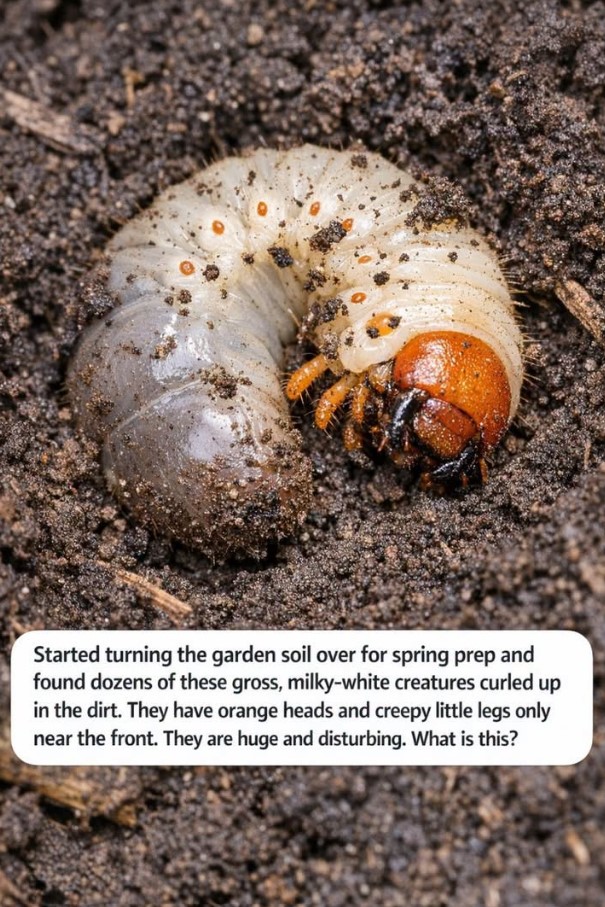
You turn over a shovel of soil and suddenly find dozens of large, curled, milky-white creatures staring back at you. They have orange or reddish-brown heads, tiny legs clustered toward the front of their bodies, and a distinctive C-shaped appearance. If you’ve never encountered them before, they can look downright alarming.
Fortunately, these strange underground creatures are usually white grubs, the immature, larval stage of several types of beetles. They are common residents of lawns, gardens, and soil, and although they play a role in the natural ecosystem, large populations can become a problem because some species feed on plant roots.
So what exactly have you uncovered, and should you be worried about your garden?
What Are These Milky-White Grubs?
The creatures you’re seeing are most likely white grubs, which are beetle larvae.
Several beetle species can produce this type of grub, including Japanese beetles, June bugs, and European chafers. Although the adult beetles can look very different from one another, their larvae can have a remarkably similar appearance.
A typical white grub has:
- A soft, creamy-white body
- A darker orange, reddish, or brown head
- Three pairs of small legs near the head
- A curved or C-shaped body
- A relatively soft abdomen
- A habit of living beneath the soil
They can grow to roughly an inch long, although their exact size varies depending on species and stage of development.
When you uncover several of them at once, the sight can be disturbing. However, their appearance is actually quite characteristic of beetle larvae.
Why Do They Have Legs Only Near the Front?
One of the easiest ways to recognize a white grub is by looking at its legs.
Unlike many caterpillars, these grubs have three pairs of small, stubby legs located close to the head. The rest of the body is legless.
Their darker head capsule also contrasts strongly with their pale bodies.
If you find a curled, white larva underground with a brownish-orange head and three pairs of tiny legs near the front, you’re likely looking at a beetle grub rather than an ordinary earthworm or another soil creature.
Why Are They Curled Into a C Shape?
The curled position is another characteristic feature.
White grubs commonly form a C-shaped posture when disturbed or removed from the soil. Their bodies are soft and flexible, making this position quite natural for them.
If you dig one up and see it immediately curl into a tight C, there’s no reason to assume something is wrong with it. It’s simply part of the way these larvae naturally behave.
How Did They Get Into Your Garden?
The story of these grubs begins with adult beetles.
During warmer months, adult beetles can lay their eggs in the soil. Those eggs eventually hatch into tiny larvae.
As the larvae grow, they remain underground and feed on available organic material and, depending on the species, plant roots.
When temperatures fall, many grubs move deeper into the soil to survive the colder period. Once conditions become warmer again, they gradually move toward the upper layers of soil.
That’s why spring digging can sometimes reveal a surprising number of them all at once.
Why Do You Find Them During Spring Garden Preparation?
Spring is a time when soil temperatures begin rising after winter.
As the ground warms, underground organisms become more active. White grubs that spent the colder months deeper in the soil may begin moving upward again to feed.
At the same time, gardeners are turning beds, adding compost, removing weeds, and preparing planting areas.
All of this digging exposes creatures that normally remain hidden.
So finding grubs while preparing your garden doesn’t necessarily mean they suddenly appeared. They may have been living beneath the surface for months.
Are White Grubs Dangerous to People?
Despite their unpleasant appearance, white grubs generally aren’t dangerous to people.
They don’t have a reputation for biting or stinging humans, and they aren’t considered a direct threat to gardeners.
The real concern is what they may be doing underground.
Depending on the species and population size, grubs can feed on roots. A few may not make any noticeable difference, but a large population can weaken plants, lawns, and young seedlings.
So you don’t need to panic if you find one while digging.
The more important question is whether you’re seeing a handful or a significant infestation.
Can They Damage Your Plants?
Yes, some white grubs can cause substantial plant damage.
Their underground feeding can affect the roots of grasses, seedlings, vegetables, and other plants.
When roots are damaged, plants may have difficulty taking up water and nutrients. The visible symptoms may include:
- Yellowing foliage
- Wilting
- Poor growth
- Weak plants
- Stunted seedlings
- Patches of dying grass
- Plants that suddenly fail despite receiving adequate water
Young plants can be particularly vulnerable because they have smaller root systems.
If you’ve noticed unexplained plant problems and then discover a large number of grubs beneath the soil, the two issues may be connected.
Why Lawns Can Be Especially Vulnerable
White grubs are notorious for causing problems in lawns.
They can feed on grass roots beneath the surface, gradually weakening the turf.
As the damage progresses, sections of grass may turn brown or become thin. In serious cases, weakened grass can sometimes be lifted from the soil surprisingly easily because its root system has been damaged.
Another clue can be increased activity from animals.
Birds and other wildlife may suddenly show more interest in a particular section of lawn because grubs are an attractive food source.
So if you notice brown patches combined with unusually active birds or animals digging around, it’s worth checking beneath the surface.
How Many Grubs Are Too Many?
Finding a few grubs doesn’t automatically mean you have an infestation.
These organisms are naturally present in soil and are part of the underground ecosystem.
The concern increases when their numbers become high enough to cause visible plant or lawn damage.
A commonly cited threshold for lawns is around 10 grubs per square foot as a level at which noticeable damage may occur, although the actual risk depends on the species, plant health, soil conditions, and other factors.
Vegetable gardens can be different.
A smaller number of grubs may still be concerning if they are concentrated around young seedlings with delicate root systems.
Instead of focusing only on the number you find, look at the overall condition of your plants.
Should You Remove Every Grub You Find?
Not necessarily.
It can be tempting to remove every grub immediately after discovering them, but some soil organisms play useful ecological roles.
White grubs can contribute to the breakdown of organic material and are also food for birds and other wildlife.
If your plants are healthy and you’re only finding a few grubs, there may be no reason to launch an aggressive treatment.
On the other hand, if you discover large numbers and your plants or lawn are clearly suffering, management may be justified.
The goal isn’t necessarily to eliminate every creature underground. It’s to keep pest populations at a manageable level.
Natural Ways to Control White Grubs
If you determine that the grubs are causing problems, there are several approaches you can consider before turning to chemical treatments.
Encourage Birds
Birds naturally feed on many insects and soil-dwelling larvae.
Providing a welcoming environment with suitable habitat, water, and appropriate food sources can encourage birds to spend more time around your garden.
When they forage through soil and grass, they may find and consume grubs.
Hand-Pick During Soil Preparation
If you’re already turning over garden soil, manually removing exposed grubs is one straightforward option.
As you prepare the beds, collect the grubs you encounter and remove them from areas where you don’t want them.
This can be particularly practical for a small garden where the infestation is limited to a manageable area.
Consider Beneficial Nematodes
Beneficial nematodes are microscopic organisms that can be used as a biological control against certain soil-dwelling pests.
They can be introduced into soil under suitable conditions and may help reduce grub populations.
However, effectiveness can depend on the specific grub species, nematode species, soil moisture, and application conditions.
Always follow the product instructions carefully.
What About Chemical Treatments?
Chemical controls are available for some types of grub problems, but they shouldn’t automatically be the first solution.
If only a few grubs are present and your plants are healthy, aggressive treatment may be unnecessary.
If a severe infestation is causing significant damage, an appropriate treatment may be worth considering.
Timing matters as well. Treatments can be more effective when susceptible grubs are actively feeding close to the soil surface.
If you’re unsure what species you’re dealing with or what treatment is appropriate, contacting a local extension service or qualified gardening professional can help you choose a suitable approach.
Always follow the product label exactly when using pesticides.
Don’t Forget About the Beneficial Side of Soil Life
It’s easy to think of every strange creature in the garden as a pest.
But healthy soil is full of life.
Earthworms, microorganisms, insects, larvae, beetles, and countless other organisms contribute to decomposition and nutrient cycling.
Some organisms can become pests when their populations grow too large, but that doesn’t mean every individual needs to be eliminated.
A healthy garden isn’t a completely insect-free garden.
It’s an ecosystem in which pests, predators, plants, microorganisms, and decomposers interact.
How to Reduce Future Grub Problems
There are several gardening practices that may help reduce the likelihood of serious grub problems.
Keep Plants Healthy
Strong, healthy plants are generally better able to tolerate minor pest pressure.
Provide appropriate water, nutrients, and growing conditions for your particular crops.
Avoid Excessive Fertilization
Using more fertilizer than necessary doesn’t automatically create a healthier garden.
Follow the needs of your plants and avoid excessive applications that can disrupt the balance of your soil.
Maintain Your Lawn Properly
Healthy turf can tolerate some pest activity better than stressed grass.
Proper watering, mowing, and soil management can help keep your lawn vigorous.
Rotate Crops
If you’re managing a vegetable garden, crop rotation can help reduce the buildup of certain pests and diseases associated with repeatedly growing the same crops in the same location.
When Should You Be Concerned?
The appearance of a few grubs isn’t usually a reason to panic.
You should pay closer attention if you notice:
- Large numbers of grubs in a small area
- Repeated plant failure
- Yellowing or wilting without an obvious cause
- Brown or thinning lawn patches
- Grass that lifts unusually easily
- Extensive root damage
- Increasing grub populations year after year
In these situations, identifying the pest and assessing the extent of the damage is more useful than simply reacting to their appearance.
When Is It Better to Leave Them Alone?
If the grubs are present in small numbers and your plants appear healthy, leaving them alone may be the most sensible option.
They are part of the soil food web and can serve as food for birds and other wildlife.
The garden doesn’t need to be completely free of insects to be healthy.
Instead, monitor the situation and intervene if the population begins causing meaningful damage.
Final Thoughts
Discovering dozens of milky-white, C-shaped creatures beneath your garden soil can certainly be unsettling, especially when they have orange-brown heads and tiny legs clustered near the front.
But once you know what you’re looking at, the mystery becomes much less frightening.
These creatures are most likely white grubs—the larval stage of various beetles. They commonly live underground and can survive the colder months by moving deeper into the soil before returning toward the surface as temperatures rise.
A few grubs are simply part of normal soil life. The real concern is a large population that begins feeding heavily on roots and causing visible damage to lawns, vegetables, or young plants.
Before reaching for a chemical treatment, inspect the extent of the problem. Hand-picking, encouraging natural predators, and considering beneficial nematodes can provide alternatives for gardeners who prefer a more natural approach.
Most importantly, don’t judge your soil ecosystem solely by the creatures that make you uncomfortable. Beneath every healthy garden is a busy community of organisms doing everything from breaking down organic material to providing food for wildlife.
So the next time you turn over a shovel of spring soil and discover a handful of creepy white grubs, don’t panic. Take a closer look, determine whether they’re actually damaging your plants, and then decide whether they need to be managed—or simply allowed to remain part of the fascinating underground world beneath your garden.