Have you ever wondered whether the little things you notice first can reveal something about your personality? Sometimes, a simple picture can make us pause, look a little closer, and think about the way we behave, communicate, and interact with other people. That is one of the reasons visual personality tests have become so popular. They are easy to try, fun to share, and can lead to interesting conversations about our strengths and weaknesses.
Every person has qualities that help them succeed in life. Some people are naturally confident, while others are patient, thoughtful, or determined. At the same time, everyone has habits or personality traits that may occasionally create difficulties. We might become impatient when things do not go according to plan, refuse to change our minds, or struggle to trust people even when they have given us no reason for concern.
The interesting part is that these weaknesses are not always easy to recognize in ourselves. We may notice them in other people long before we realize that we sometimes behave in similar ways.
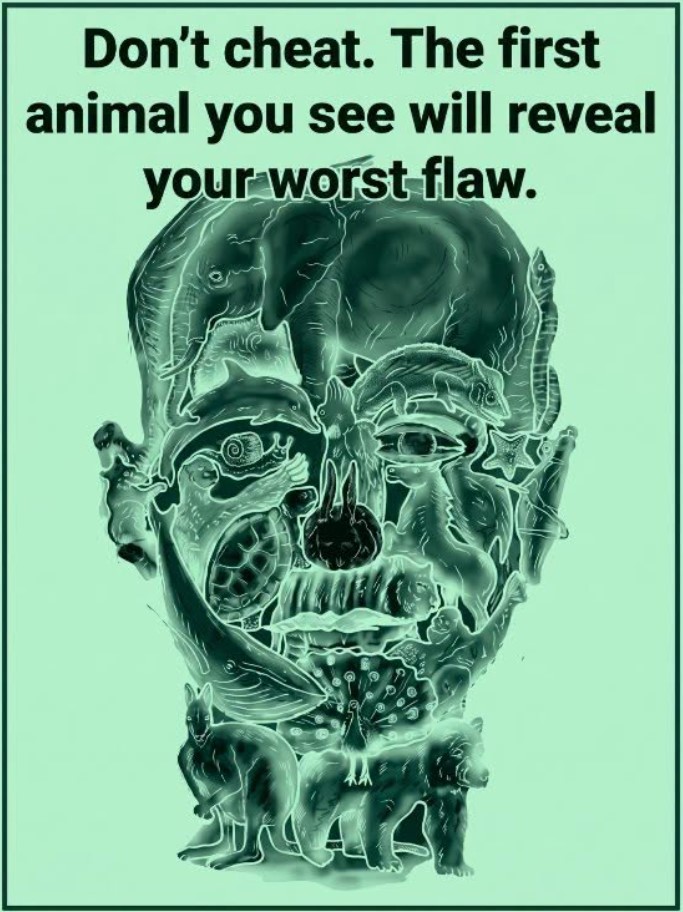
This animal personality test offers a playful way to explore that idea. The image is designed to resemble a human face, but several different animals are hidden within its features. Depending on what catches your attention first, you may be encouraged to reflect on a particular habit or aspect of your personality.
Before you begin, remember that this is an entertaining exercise rather than a scientific psychological assessment. Your first impression cannot determine your entire character, but it might give you an interesting opportunity to think about yourself from a different perspective.
How to Take This Animal Personality Test
Taking the test is simple. Start by looking at the image for a few moments without trying too hard to identify every detail. Instead of searching carefully for all the hidden animals, allow your eyes to settle naturally on the shape that attracts your attention first.
You might immediately recognize an animal, while someone else looking at exactly the same picture may notice something completely different. That difference is part of what makes optical illusions and visual personality challenges so enjoyable.
Try not to change your answer after discovering the other figures in the image. The goal is to identify your first impression, not to choose the animal that seems most interesting or flattering.
Once you have identified the animal you noticed first, think about the personality trait associated with it in the interpretation of the test. Does the description remind you of a habit you sometimes display? Does it suggest a weakness you have already been working to improve? Or does the interpretation seem completely unrelated to your personality?
There is no need to force yourself to accept a description that does not fit. The most useful part of the exercise is the opportunity to reflect honestly on your behavior rather than simply accepting a label.
What Does Your First Animal Reveal About You?
Visual personality quizzes often connect different animals with recognizable human characteristics. Depending on the image and the interpretation accompanying it, these characteristics may include impatience, stubbornness, insecurity, excessive pride, or difficulty trusting other people.
However, the specific meaning of each animal depends on the individual test. Without a verified guide identifying every animal in the original image and explaining its assigned interpretation, it would be misleading to claim that a particular animal definitely represents one specific flaw.
Instead, you can use the general themes associated with these quizzes to explore some common personality challenges.
Impatience: When Everything Needs to Happen Immediately
Impatience is a familiar struggle for many people. You may become frustrated when someone takes too long to make a decision, when a project progresses more slowly than expected, or when circumstances prevent you from reaching a goal quickly.
Being eager to move forward can be helpful. It can motivate you to work hard, stay focused, and take action rather than waiting for opportunities to appear. However, impatience can become a problem when it causes you to overlook important details or react harshly toward others.
Learning to pause before responding, accept that some things take time, and focus on what you can control can make a significant difference. Progress does not always happen at the speed we want, and patience can be just as valuable as determination.
Stubbornness: Finding It Difficult to Change Your Mind
Stubbornness can sometimes be mistaken for strength. People who stand firmly behind their decisions may appear confident, independent, and determined. They are often willing to defend their beliefs, even when others disagree.
Nevertheless, refusing to consider another point of view can create unnecessary conflict. If you automatically reject advice or interpret every disagreement as a personal challenge, you may miss opportunities to learn something useful.
Being open-minded does not mean abandoning your principles whenever someone disagrees with you. It means being willing to listen, examine the available information, and admit when another person has a reasonable argument.
A healthy balance between determination and flexibility allows you to remain true to your values without becoming trapped by your own assumptions.
Insecurity: Worrying Too Much About What Others Think
Insecurity can influence decisions in ways that are not always obvious. You might hesitate to share an idea because you are afraid of being criticized, compare your progress with someone else’s achievements, or repeatedly question whether people genuinely appreciate you.
Everyone experiences moments of uncertainty. The problem arises when the fear of making mistakes or receiving negative feedback prevents you from pursuing meaningful opportunities.
Building confidence takes time. It can begin with recognizing your achievements, setting realistic goals, and learning to separate constructive criticism from unfair judgment. You do not have to be perfect to deserve respect, and other people’s opinions do not determine your entire worth.
Pride: Struggling to Admit When You Are Wrong
Confidence is valuable, but excessive pride can make relationships more difficult. Sometimes, people find it uncomfortable to apologize, acknowledge a mistake, or accept help because they worry that doing so will make them appear weak.
In reality, admitting that you are wrong can demonstrate maturity and self-awareness. It shows that you value honesty and personal growth more than the temporary satisfaction of winning an argument.
If you recognize this tendency in yourself, consider how you respond when someone offers criticism or points out a mistake. Do you immediately become defensive, or can you listen before deciding how to respond?
Learning to apologize sincerely and acknowledge other people’s contributions can strengthen relationships and create more opportunities for personal development.
Difficulty Trusting Others: Expecting Disappointment
Trust is essential in friendships, romantic relationships, families, and professional environments. However, previous disappointments can sometimes make it difficult to believe that other people have good intentions.
Being cautious is not necessarily a weakness. It is reasonable to establish boundaries and take time to get to know someone before sharing personal information or depending on them.
Problems may arise when past experiences cause you to assume that everyone will eventually disappoint you. Constant suspicion can prevent healthy relationships from developing and may lead you to interpret harmless actions as signs of dishonesty.
Trust does not have to be given immediately or without limits. It can grow gradually through consistent actions, honest communication, and mutual respect.
Why Understanding Your Weaknesses Matters
Recognizing a personal weakness is not the same as criticizing yourself. In fact, honest self-reflection can be one of the most useful steps toward becoming a more understanding, confident, and emotionally balanced person.
The first step is to notice recurring patterns. Perhaps you regularly become defensive during disagreements, avoid difficult conversations, or become frustrated when other people do not share your expectations. These reactions may seem insignificant in the moment, but repeated habits can influence your relationships and the decisions you make.
Once you recognize a pattern, you can begin asking questions that help you understand it.
When does this behavior usually appear? What situations trigger it? How do you feel immediately before reacting? Does your response solve the problem, or does it make the situation more complicated?
These questions encourage you to look beyond the behavior itself and consider what may be contributing to it.
For example, impatience may become stronger when you feel overwhelmed or under pressure. Stubbornness may appear when you are afraid of losing control. Difficulty trusting others may be connected to previous disappointments rather than the actions of the person standing in front of you.
Understanding the circumstances surrounding a behavior can help you respond more thoughtfully. Instead of assuming that a particular trait defines who you are, you can recognize it as a habit that may change with practice.
It is also important to remember that many personality traits have both positive and negative sides. Determination can become stubbornness when you refuse to reconsider your choices. Confidence can become excessive pride when you stop listening to others. Caution can turn into suspicion when you expect dishonesty everywhere.
The goal is not to eliminate every imperfect quality. It is to recognize when a useful characteristic becomes excessive and begins affecting your happiness or relationships.
Can a Visual Personality Test Really Reveal Your Worst Flaw?
Although these quizzes can be entertaining, it is important to understand their limitations. There is no reliable scientific basis for concluding that the first animal someone notices in a picture reveals their worst personality flaw.
What catches your attention may depend on several factors, including the image’s colors, shapes, contrast, familiarity, and overall design. Your visual attention can also be influenced by your expectations and the way you approach the challenge.
Two people can look at the same image and notice different animals without either result revealing something definite about their character.
A visual personality test should therefore be treated as a conversation starter rather than a psychological diagnosis. It can encourage you to think about your habits, but it cannot replace careful self-reflection or a proper psychological assessment.
If the interpretation feels accurate, consider why it resonates with you. Perhaps it describes a behavior you have already noticed, or perhaps it gives you a new way to think about a familiar challenge.
If the description does not fit, there is no reason to force yourself into it. You know much more about your life, experiences, and behavior than a single image could ever reveal.
Conclusion
The first animal you spot in this visual may offer an entertaining way to reflect on your personality, but its real value lies in the questions it encourages you to ask yourself. Whether you recognize a tendency toward impatience, stubbornness, insecurity, excessive pride, or difficulty trusting others, the most important thing is to approach the exercise with curiosity rather than judgment.
Everyone has weaknesses, and having them does not make you a bad person. What matters is whether you are willing to recognize your habits, understand how they affect the people around you, and make changes when necessary.
Personal growth often begins with small decisions. You might choose to listen more carefully during a disagreement, take a moment to calm down before reacting, apologize when you make a mistake, or give someone a fair opportunity to earn your trust.
These actions may seem simple, but practicing them consistently can help you develop healthier relationships and a better understanding of yourself.
Remember that your personality is much more complex than a single animal hidden in an image. Your experiences, values, choices, and relationships all contribute to the person you become. No visual test can capture all those dimensions or define your future.
So, enjoy the challenge, compare your first impression with those of your friends and family, and use the experience as an opportunity for a thoughtful conversation. The most meaningful discovery will not necessarily be the animal you noticed first, but what you learn when you take an honest look at your own behavior and decide which parts of yourself you would like to improve.